ACE Money Transfer
ACE Money Transfer

23 Oct 2026
IndusInd Bank served approximately 42 million customers through 3120 branches and banking outlets. For those customers needing to send money abroad, the bank offers wire transfers via branches and net banking, an online foreign exchange portal called IndusForex.com, and Indus Fast Remit for NRI inward remittances powered by a partnership with Wise. These three channels cover the most common reasons Indians send funds overseas: tuition fees for universities in the USA, UK, Canada, or Australia; family maintenance payments; medical treatment costs; travel expenses; and business payments to suppliers in multiple countries.
This guide answers the core question directly: how does an IndusInd Bank international money transfer work, what costs may apply, and how does the exchange rate affect the amount received? How fast does the money arrive? Beyond that, it walks through a concrete alternative. Dedicated remittance services, such as ACE Money Transfer, provide international transfer options. Transfer times, fees, exchange rates and available payout methods vary by provider, destination country and payment method. By the end, you will have enough detail to compare both routes for your specific corridor and pick the best way to move your money.
Here is what the article covers:
IndusInd Bank's transfer channels, step-by-step process, and real costs
How foreign exchange rates and forex card features factor in
How ACE Money Transfer works as a faster, often cheaper alternative
Practical tips to save on any international transfer
IndusInd Bank customers can send money abroad through three main routes: traditional wire transfers initiated via branches or IndusNet (the bank's net banking platform), the IndusForex.com portal for foreign exchange and telegraphic transfers, and Indus Fast Remit for NRIs sending funds into India. Each channel follows Reserve Bank of India regulations, and outward remittances from India fall under the Liberalised Remittance Scheme (LRS) set by the RBI.
"International money transfers" here means account-to-account remittances, not travel spending on a forex card or cash exchange at an airport counter. IndusInd Bank’s website states that it maintains relationships with more than 250 correspondent banks worldwide. However, as the claim is not dated, it should be removed unless a current, dated primary source can be provided. Source: IndusInd Bank. IndusInd Bank allows international transfers 24/7 via its net banking portal, though actual processing depends on cut-off times and banking hours in both countries.
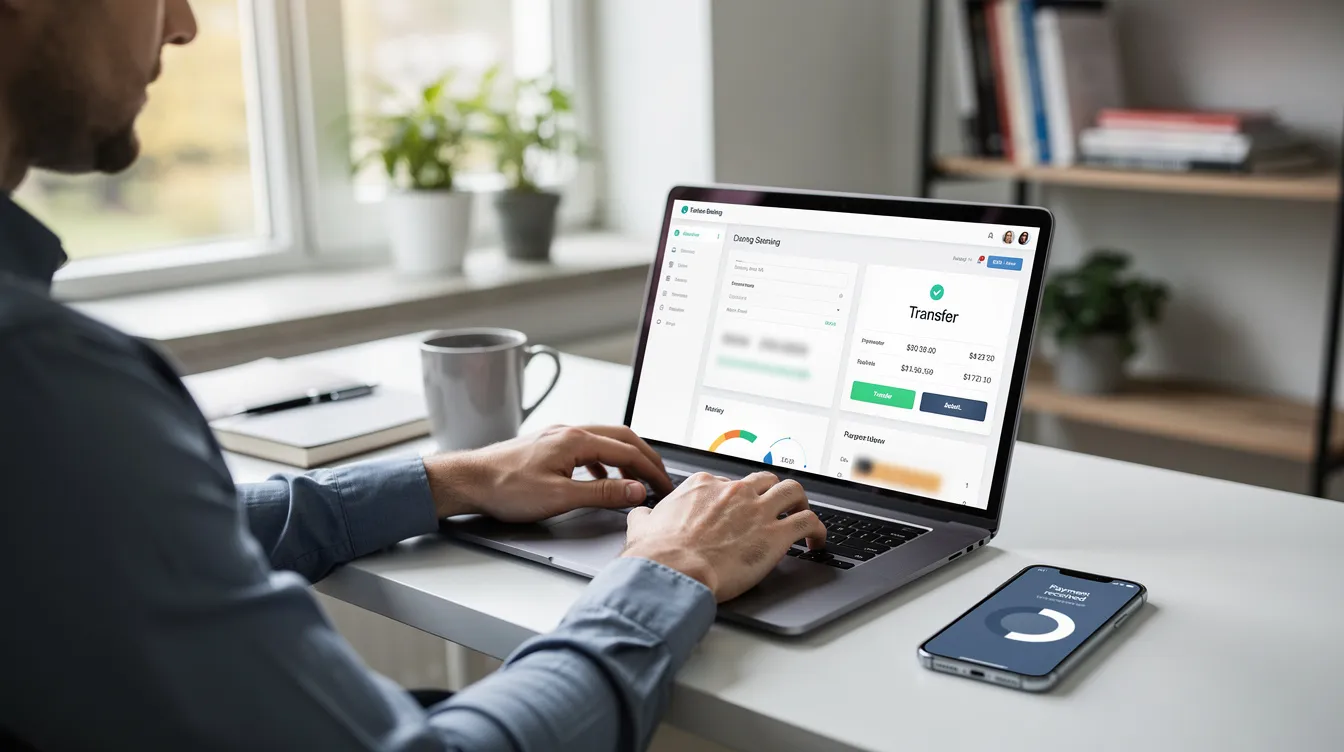
You can transfer money online using IndusInd Bank's net banking. The process works like this:
Log in to IndusNet (net banking) and navigate to international transfers or foreign outward remittance.
Enter the beneficiary's details. Beneficiary information must include name, address, account number, bank name, and SWIFT/BIC code. You need the recipient's SWIFT number for international transfers; without it, the bank cannot route the payment.
Select the transfer purpose code from the RBI-approved list (education, medical, family maintenance, etc.). Specific documentation is required for purposes like education and medical treatment, such as university fee letters or hospital invoices.
Confirm the amount in the destination currency (USD, EUR, GBP, or others) and review the exchange rate quoted by the bank.
Submit the request. The bank debits your account in INR at the quoted rate plus applicable fees.
Wire transfer processing times vary by destination country and the banks involved, currency, and the number of correspondent banks in the chain. Customers can also visit a branch with KYC documents and supporting invoices or fee letters to complete a telegraphic transfer form in person.
Online transfers through IndusInd Bank can be initiated via the IndusForex portal, which serves as the bank's dedicated foreign exchange platform. Both IndusInd and non-IndusInd customers can register to send money abroad in around 16 major currencies, including USD, EUR, GBP, AUD, CAD, and the Singapore dollar.
On IndusForex, users can book forex rates online, initiate telegraphic transfers, and manage foreign exchange orders without needing to visit a branch. Outward remittance fees and correspondent bank charges may vary. Check the bank’s official website for current charges before initiating a transfer.
For money flowing the other direction, IndusInd launched Indus Fast Remit in mid-2023. Through the Wise Platform partnership, NRIs in the USA and Singapore can send money to India with no exchange rate markup. Customers see the mid-market rate with a separate, transparent fee. Transfer times vary by payment method and destination. Where available, customers can view the estimated arrival time before confirming a transfer.
Several factors determine how long an IndusInd Bank international transfer takes:
Destination country and currency corridor. Sending USD to a US bank account clears faster than sending to a country where multiple intermediary banks are involved. Wire transfers take 2 to 4 business days to complete for most major corridors.
Payment method. Payment method affects transfer costs and speed. A bank transfer within India is typically processed faster than a card-funded payment on a partner platform abroad.
Cut-off times and holidays. Transfers initiated after the bank's daily forex cut-off (often midday for forex branches) roll to the next business day. Weekends and public holidays in India or the receiving country add additional delays.
Bank fees for international transfers may include flat transaction charges and intermediary fees. Here is what to expect:
| Cost component | Typical amount |
|---|---|
| Outward remittance fee (branch/net banking) | ?500 flat |
| IndusForex processing fee | ?750 |
| SWIFT/wire transfer charge (online) | ~?1,000 |
| Correspondent bank deductions | Variable; often $15–$30 per transfer |
| Exchange rate margin over mid-market | Estimated 1–1.5%, not published |
The "effective" cost depends heavily on the foreign exchange rate applied. For a USD 2,000 transfer, a 1.5% FX margin costs roughly ?2,500 more than the mid-market rate, on top of the visible fees. This margin is the largest component of the total cost for most transfers.
The RBI’s LRS limit is USD 250,000 per financial year for resident individuals, RBI source. Rules may change. A valid Permanent Account Number (PAN) is mandatory for all resident individuals making LRS remittances.
IndusInd Bank: Transfer directly from your existing bank account; integrated banking relationship; ability to negotiate rates for large amounts via a relationship manager; branch support for complex documentation.
Wise (via Indus Fast Remit): Exchange rates, transfer fees and delivery times vary by provider and corridor. Check the provider’s current rates, fees and estimated delivery time before transferring; ~55% instant delivery for supported corridors (USA/Singapore to India).
ACE Money Transfer: Exchange rates and fees vary by provider and corridor. Check current rates before transferring; the rate offered may differ from the mid-market rate. Exchange rates, fees and delivery times vary by provider and corridor. Check current rates and applicable fees before transferring, as the rate offered may differ from the mid-market rate. Providers may display applicable fees before confirmation, offer different delivery times depending on the corridor, and support payout methods such as bank deposits, cash pickup and mobile wallets.
When you send 5,000 USD from India, the INR amount you pay is determined by the exchange rate the bank applies. A rate that is ?1 higher per dollar costs you ?5,000 extra. Exchange rate markups are typically applied in international money transfers, and this markup is often a higher cost than the visible transfer fee.
IndusInd Bank, like most banks, sets its own "selling rate" for each currency, which includes a margin above the mid-market (interbank) rate. IndusInd Bank’s applicable foreign exchange rates and any spread over the mid-market rate may vary. Check the bank’s current exchange rate before initiating a transfer.
How to check and compare:
Log in to IndusNet or IndusForex to see the bank's current quoted rate for your currency pair.
Contact a branch for a live quote, especially for large transfers.
Compare that rate to an independent source such as the Wise live rate or Reuters. For example, compare the bank’s quoted USD/INR selling rate with the prevailing mid-market rate to calculate the difference. The percentage difference will vary with the rates at the time of transfer.
The Wise Platform partnership in Indus Fast Remit works differently. When NRIs use this route to send money to India, they see the mid-market rate with a separate, clearly stated fee and no hidden exchange rate markup.
Optimising your exchange rate:
Plan transfers during periods of relative currency stability rather than during high volatility (for example, avoid major policy announcement days).
Larger transfers may qualify for better negotiated rates via a relationship manager, particularly for premium or wealth management customers.
IndusInd Bank offers attractive foreign exchange rates for transfers, but verifying against mid-market benchmarks before each transaction is the only way to confirm you are getting a fair deal.

Sending money abroad is not the only way to manage foreign currency. IndusInd Bank also offers a multi-currency forex card for travellers, which complements but does not replace bank-to-bank international transfers.
IndusInd Bank Multi-Currency Forex Card features:
Forex cards can be loaded with up to 14 currencies, including USD, EUR, GBP, AUD, CAD, and SGD. Forex card features, supported currencies, issuance fees and reload charges vary by provider. Check the issuer’s current fee schedule and terms before applying for or reloading a card.
Exchange rates are locked at the time of loading the card. This protects cardholders from later currency fluctuations during a trip.
Forex cards eliminate the need to carry physical cash, reducing the risk of loss or theft while travelling.
Benefits for international travel:
Tap or swipe abroad like a local debit card at hotels, restaurants, and stores, often without additional markup within the loaded currencies.
Forex cards allow cash withdrawals from any VISA-enabled ATM worldwide, sometimes with promotional waivers on ATM withdrawal fees.
Reduced exposure compared to carrying large amounts of foreign currency notes.
Security and control:
Chip-and-PIN protection, with online hot-listing if the card is lost or stolen.
Instant transaction alerts are provided for forex card users via SMS and email for every transaction.
Online portals or apps let users track balance and transactions, set spending limits, and download statements for budgeting.
When to use which:
| Scenario | Best option |
|---|---|
| Paying daily expenses while travelling abroad | Forex card |
| Paying overseas university fees directly from India | International money transfer |
| Tuition deposit while visiting the destination country in person | Forex card |
| Monthly family support to a recipient's foreign bank account | International money transfer |
| Medical bill payment to an overseas hospital | International money transfer |
The forex card is ideal for in-person spending abroad. International transfers are better for paying overseas university fees, medical bills, or maintaining a family member's foreign bank account from India.
ACE Money Transfer is an international money transfer service offering an alternative to bank-based transfers. Any FCA authorisation claim should include the verified legal entity, status and register link. It operates digitally across multiple countries, with exchange rates and fees varying by destination, transfer method and amount. Users can check the applicable rates and fees before confirming a transfer. For corridors such as the UK to India, Europe to Pakistan, and the Middle East to Bangladesh, transfer delivery times depend on the destination, payment method and recipient payout method. Rates and fees may vary. Visit acemoneytransfer.com for current rates.

ACE Money Transfer displays the exchange rate and fee upfront before you confirm, allowing you to compare the total cost against a bank quote in seconds.
International transfer times vary by provider, destination, payment method and intermediary banks. Check the relevant provider’s current estimated delivery time, rates and fees before initiating a transfer. Rates and fees may vary. Visit acemoneytransfer.com for current rates.
Bank transfer fees and exchange rates through ACE Money Transfer vary by destination, transfer amount and payment method. Check the applicable charges before confirming your transfer, though the platform also accepts debit card and credit card payments. Extra costs may apply when using debit or credit cards, so check the fee breakdown before paying.
ACE Money Transfer offers three payout methods (bank deposit, cash pickup, mobile wallet), while IndusInd Bank's outward remittance generally supports only beneficiary bank credit.
The transfer process is straightforward:
Sign up or log in. Create an online account using your email, Google, or Apple ID. Registration takes a few minutes and requires basic KYC verification.
Choose your destination. Select the country you are sending money to and pick a payout option: bank deposit, mobile wallet credit, or cash pickup at partner locations worldwide.
Enter recipient details. Add the recipient's full name, bank name, account number or IBAN, or mobile wallet number where applicable. Double-check these details to ensure the transfer is completed without delays.
Select a payment method. Customers can pay via debit card, credit card, or online bank transfer, depending on what is supported in their sending country.
Review and confirm. Add the payment reason (family support, education, medical, savings, etc.) and review the exchange rate, transfer fee, and expected arrival time. Click "Pay Now" to initiate.
Track your transfer. ACE Money Transfer provides a unique reference number for every transaction, allowing you to track status in real time through the website or app. Transfer tracking updates vary by provider, corridor and payment method. Check the provider’s available tracking information for the latest status.
Bank Deposit: Direct credit to the recipient's bank account in the destination country. Delivery times vary by corridor and payment method. Rates and fees may vary; check acemoneytransfer.com for current rates.
Cash Pickup: Over-the-counter collection at authorised partner bank branches and payout agents. This is useful for recipients who do not have a bank account and need to receive funds fast.
Mobile Wallet: Funds may be credited to supported digital wallets, depending on the corridor and provider. Delivery times, rates and fees may vary. Visit acemoneytransfer.com for current rates.
Use IndusInd Bank when:
You are making large, infrequent transfers and prefer dealing only with your primary bank.
You want to negotiate the FX rate through a relationship manager for premium or high-value transactions.
Your transfer requires specific LRS documentation that is easier to handle through a full-service bank branch.
Use ACE Money Transfer when:
Regular remittances may be used for monthly family support or quarterly fees. Compare applicable rates and fees before transferring. This is not financial or legal advice. Please consult a qualified professional.
Fee transparency matters to you; you want to see the exact cost before paying.
Your recipient prefers cash pickup or mobile wallet instead of a bank deposit.
If transfer speed is a priority, check the estimated delivery time for your destination. Rates and fees may vary. Visit acemoneytransfer.com for current rates.
Explore your specific route today. Whether you are sending from the UK, EU, or Middle East to India, Pakistan, Bangladesh, Nepal, or Africa, get a free quote from ACE Money Transfer and compare it with IndusInd Bank's rate. The numbers will tell you which option balances cost, speed, and convenience for your needs.
These apply whether you use IndusInd Bank or ACE Money Transfer:
Compare total cost, not just the fee. Combine the transfer fee and the exchange rate margin into a single number. A "zero fee" transfer with a 2% rate markup costs more than a ?500 fee transfer at the mid-market rate.
Avoid last-minute transfers. Needing to send money urgently limits your options and often forces you into worse rates or faster (more expensive) delivery tiers. Plan ahead by at least 3 to 5 business days.
Schedule recurring payments. For predictable payments like monthly family support or quarterly university fees, set calendar reminders and initiate transfers during favourable rate windows rather than waiting until the due date.
Verify recipient details before submitting. A wrong SWIFT code, misspelled name, or incorrect account number can cause the transfer to bounce. Reversal fees vary by bank and transaction. Double-check all transfer details before sending to help avoid delays or additional charges.
Keep records. Save transfer confirmations, reference numbers, and bank statements. These are essential for tax compliance (TCS under LRS), dispute resolution, and audit trails.
Review your options periodically. FX markets shift, and both banks and remittance platforms run promotional campaigns. A platform that was cheapest for your corridor six months ago may not be today. Check live quotes from both IndusInd Bank and ACE Money Transfer before each transfer to ensure you are getting the best deal.

The best way to send money abroad depends on your destination, transfer amount, fees and preferred payout method. IndusInd Bank offers international transfer services through its banking channels. ACE Money Transfer provides an international remittance service with available transfer and payout options varying by corridor. Check each provider’s current rates, fees and estimated delivery times before transferring.
Check the current rates and fees for your next transfer. Sign up on ACE Money Transfer, get a real-time quote for your destination country, and compare it against IndusInd Bank's rate. The difference in total cost will guide your decision.
Disclaimer: This article is intended for general informational and educational purposes only and should not be construed as legal, regulatory, tax, business, or financial advice. While reasonable efforts have been made to ensure that all facts, figures, and data are accurate and valid as of the date of publication, no warranty or guarantee is given as to the ongoing completeness, accuracy, or currency of the information.
The content is based on information available at the time of publication. Regulations, government policies, market conditions, and service offerings may change over time and vary across jurisdictions and providers. As a result, some information may no longer be current or applicable. Readers should independently verify all information and consult qualified professional advisors before making any financial, legal, or business decisions.