ACE Money Transfer
ACE Money Transfer
21 May 2026
Have you ever hit the "send" button on a bank transfer and immediately felt a knot in your stomach? You’ve worked long hours in the bustling kitchens of Rome or the logistics hubs of Milan, and now you’re trying to send those savings home for your daughter’s wedding or your parents' retirement. Suddenly, the screen asks for an 11-digit code you’ve never seen before. You pause—one wrong letter could mean your money vanishes into a banking void for weeks. This is the reality for thousands of expats in Italy every day. But what if you had the exact key to unlock a smooth, worry-free transfer right now?
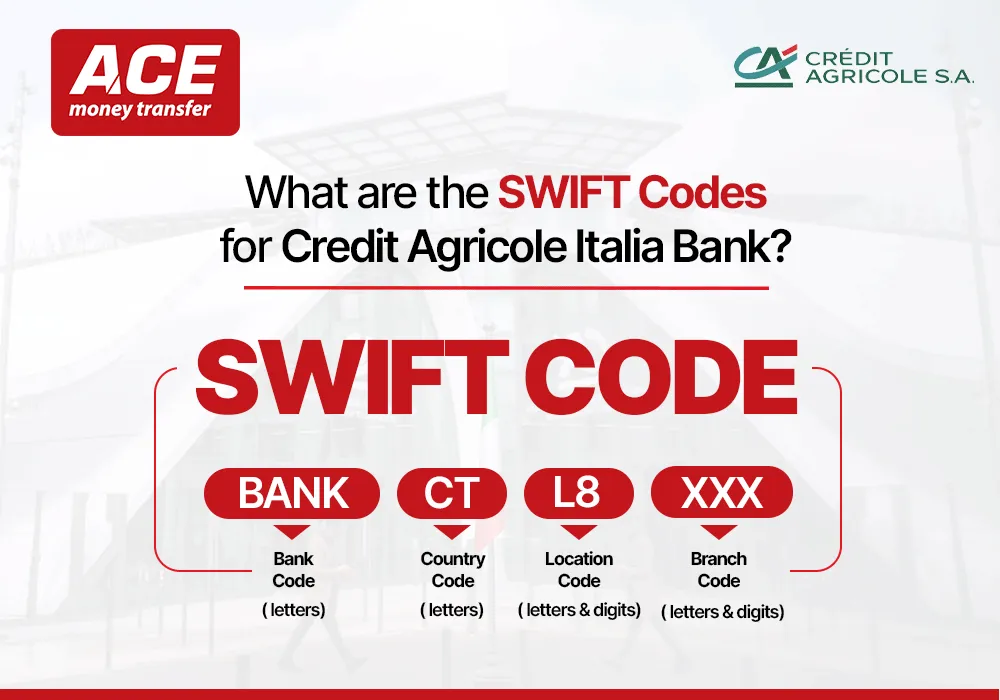
When you are navigating the complex world of international finance, a SWIFT code (or BIC) acts as the precise GPS coordinate for your money. For an institution as large as Intesa Sanpaolo, which manages billions in transactions, these codes ensure your funds don't get lost between branches. Using an incorrect or outdated code is the #1 reason for "frozen" transfers and frustrating bank disputes.
Italy’s migrant community is a powerhouse of support for families back home. In fact, new data reveals that immigrant remittances from Italy reached a record €8.6 billion in 2025, marking a 3.9% increase from the previous year. With so much at stake, getting the technical details right isn't just a formality—it's about protecting your family's future.
To ensure your money reaches the heart of Intesa Sanpaolo’s processing system without a hitch, you should use the primary head office code. While there are many branch-specific variations, the most reliable and widely accepted code for international transactions is:
Sending money abroad from Italy doesn't have to be a headache. Whether you are using the Intesa Sanpaolo mobile app or visiting a physical branch, the process generally follows these steps:
While traditional banks are reliable, they are often the most expensive way to send money. The Global average cost to send $200 (approximately €185) currently stands at 6.35%, which is more than double the UN Sustainable Development target of 3%.
For expats sending money to countries like Bangladesh—which received nearly 20% of all Italian remittances in 2025—or India, these percentages add up quickly. To save money, consider these tips:
Most delays aren't the bank's fault—they are usually caused by tiny data entry errors. The most common mistakes include:
You shouldn't have to be a financial expert to take care of your loved ones. By using the verified BCITITMMXXX SWIFT code and staying informed about the latest remittance trends, you are taking control of your financial journey in Italy. Don't let your hard-earned Euro get eaten up by unnecessary errors or hidden bank fees.
Start sending money smarter today. Whether it's for a house back home or monthly bills, your family deserves to receive every cent you send.
In most cases, using the 8-digit code (BCITITMM) is perfectly fine as it identifies the bank's head office. However, many modern international systems prefer the 11-digit version (BCITITMMXXX) because the "XXX" explicitly confirms that the funds should be routed to the primary headquarters for central processing. Using the full 11 digits is a safer bet to avoid any system-generated errors or manual review delays.
While Intesa Sanpaolo has thousands of branches across Italy, the vast majority of international transfers are processed centrally using the Milan head office code. While specific branches in cities like Naples or Rome might have their own unique codes, BCITITMMXXX is the standard "default" that ensures your money arrives safely at the bank's main hub before being routed to the specific local account number you provided.
Standard bank-to-bank transfers typically take between 3 to 5 business days. This timeframe depends on several factors, including the "cut-off time" of the bank, whether the day is a public holiday in both Italy and the receiving country, and the number of intermediary banks involved in the chain. If you are in a rush, digital-first remittance apps can often complete these same transfers in minutes or even seconds.
Yes, if someone is sending you money from outside the SEPA zone (like from the UK, USA, or Pakistan) to your Intesa Sanpaolo account, you must provide them with the BCITITMMXXX code along with your IBAN. Without this code, the sending bank will not be able to identify where to route the Euro. Be sure to check with your branch if there are any specific fees for receiving "extra-EU" transfers, as these are often higher than local transfers.
Banks are required by law to monitor international transactions to prevent fraud. If you are sending a larger amount than usual, or if the destination country is flagged for extra security, your bank might pause the transfer for a quick review. To speed this up, ensure the recipient's name exactly matches their bank records and that you have clearly stated the purpose of the transfer (e.g., "Family Support").
Enjoy guaranteed competitive PKR exchange rates, ultra-fast transfers, and zero fee promotions directly to bank accounts and mobile wallets.