ACE Money Transfer
ACE Money Transfer

21 Oct 2026
Sending money abroad from India can be done through digital banking services or other international transfer providers. AU Small Finance Bank offers online outward remittances to eligible customers, subject to its terms and RBI requirements. This guide covers eligibility, transfer limits, taxes, the process, and ACE Money Transfer as an international remittance option.
Exchange rates fluctuate and the rate you receive may differ from any rates quoted. Always check the live rate at acemoneytransfer.com before sending.
AU Small Finance Bank enables international money transfers through its digital platform called AU Remit, available via its web portal and the AU 0101 mobile app. The service is designed for resident Indians with an AU savings account and NRIs holding AU NRE accounts, allowing them to send money overseas 24/7 with a completely paperless process.
Whether you’re paying tuition from India or receiving family support from abroad, compare transfer fees, exchange rates, and delivery times to see which option may suit your needs. Costs and timing vary by provider and transaction.
Key use cases covered under AU Remit include overseas education fees, medical treatment abroad, family maintenance, gifts, emigration expenses, investments, and travel - all falling under the Reserve Bank of India's Liberalised Remittance Scheme. Inward remittances to AU NRE, NRO accounts, and resident savings accounts also benefit from zero forex margin, maximizing value for NRIs sending money to India.
Here is a quick snapshot of benefits:
Multiple currencies supported: USD, EUR, GBP, AED, CAD, SGD, CNY
Coverage across 40+ destination countries
Real-time tracking of remittance status
Zero forex markup on currency conversion
Digital, paperless onboarding and transfers
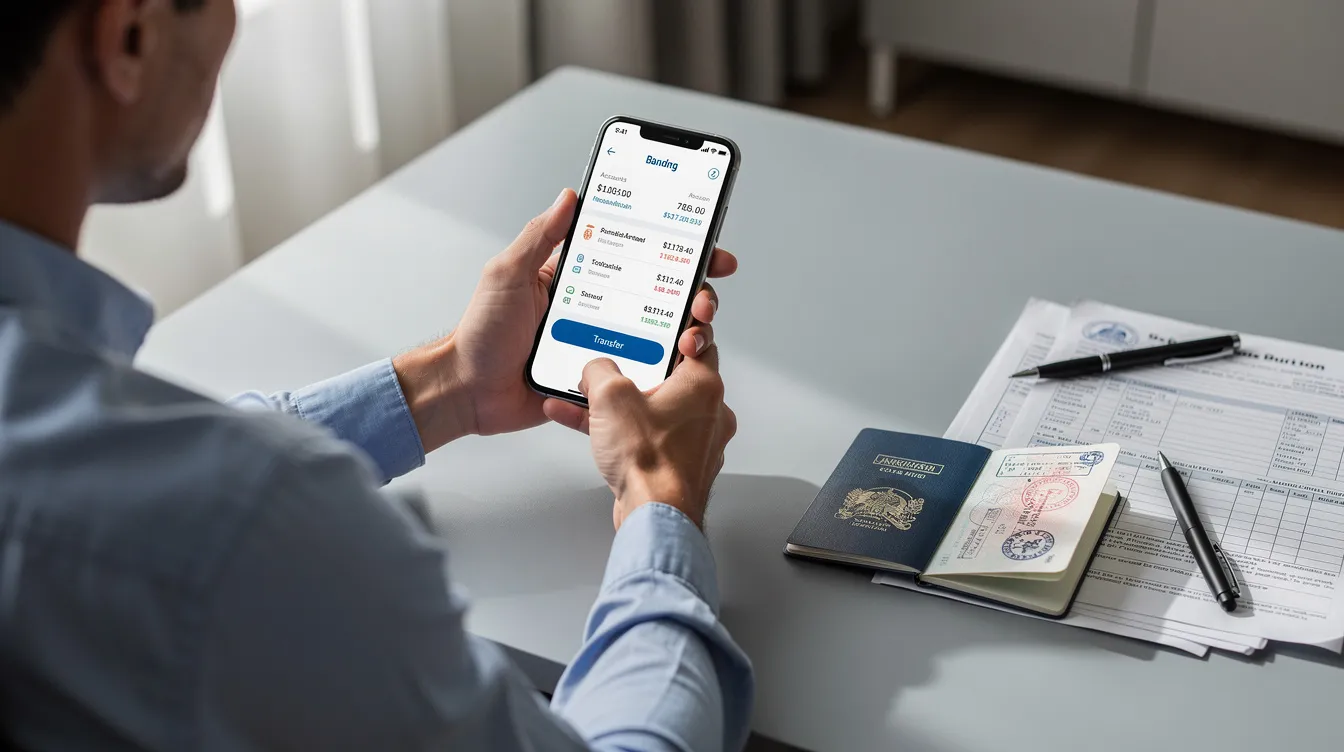
The Liberalised Remittance Scheme is the RBI framework that governs how much money Indian residents can send abroad each year. It matters because every outward remittance you make through AU Small Finance Bank - or any bank - must comply with LRS guidelines.
Under India’s Liberalised Remittance Scheme (LRS), resident individuals may remit up to USD 250,000 per financial year (April–March) for permitted current or capital account transactions, subject to applicable conditions. Source: RBI Master Direction on LRS. Check the latest RBI guidance before remitting. This USD 250,000 limit is cumulative across all banks and all purposes. For education, medical treatment, or emigration, higher limits may apply with additional documentation and RBI approvals.
Typical permitted purposes include:
Education fees abroad
Family maintenance and gifts
Business travel and pilgrimage travel
Medical treatment overseas
Investment in equity shares abroad
Purchase of real estate abroad
Other RBI permitted purposes
Only resident individuals under FEMA 1999 can use LRS. Corporations and trusts cannot use the LRS for remittances, nor can Hindu Undivided Families or partnership firms. Minors are currently not allowed to perform outbound remittances through AU Small Finance Bank under current regulations. PAN and KYC compliance are mandatory for all remitters.
AU Small Finance Bank processes international remittance only for its own account holders. You need an AU Savings or NRE account for remittances - there is no workaround for non-customers.
You must hold either an AU Savings Account (resident) to send money overseas under LRS, or an AU NRE account to repatriate funds abroad. NRE accounts allow unlimited repatriation of funds abroad, making them ideal for NRIs who want to move foreign earnings back to their country of residence. Non-customers must first open an account via branch or digital onboarding before initiating any transfer.
Joint account holders can remit, but only the first holder can initiate transactions via AU Remit due to system and regulatory controls.
Here is a quick comparison:
| Feature | AU Savings (Resident) | AU NRE (NRI) |
|---|---|---|
| LRS limit applies | Yes (USD 250,000/year) | No (freely repatriable) |
| Zero forex margin | Yes | Yes |
| Tax-free interest | No | Yes (subject to tax laws) |
| Ideal for | Outward remittance under LRS | Parking overseas income in INR |
AU Remit is AU Small Finance Bank's digital platform for international transfers, accessible through both the web portal and AU 0101 app. AU Remit is available for over 40 destination countries, excluding Nepal, Bhutan, and OFAC or RBI-sanctioned jurisdictions.
Major corridors include the USA, UK, Canada, UAE, Singapore, and Eurozone countries. Supported currencies for outward remittance include USD, EUR, GBP, AED, CAD, SGD, and CNY. If you want to send funds to a Eurozone country like Germany or Austria that does not appear separately, select the "Eurozone" option and enter the relevant IBAN and SWIFT details.
AU Remit allows eligible account holders to send funds globally via SWIFT and partner correspondent banks. International transfers often use the SWIFT network, and transfers typically credit the payee's bank within 1–2 working days depending on the destination country and time of initiation.
| Country/Region | Currency |
|---|---|
| United States | USD |
| United Kingdom | GBP |
| UAE | AED |
| Singapore | SGD |
| Canada | CAD |
| Eurozone | EUR |
| China | CNY |
Indian residents can remit up to USD 250,000 annually under LRS, covering all banks and purposes combined. The online transfer limit for AU Remit is up to $75,000 USD per transaction. For higher amounts, you need to visit a forex-enabled AU Small Finance Bank branch with documents. The minimum amount for a single transfer is $50 USD or equivalent.
There is no separate daily limit from the bank's side beyond internal risk checks - customers simply must remain within the annual LRS ceiling and per-transaction cap.
TCS on remittances under India’s Liberalised Remittance Scheme (LRS) generally applies to amounts exceeding ?10 lakh in a financial year, with rates depending on the purpose of the remittance. See the Income Tax Department’s TCS rates (updated 30 April 2026) for current details. Laws and regulations may change. Please verify with a local professional.
Education funded by loan: NIL
Education/medical (own funds): 2% on amount above threshold (with PAN); 5% without PAN
Any other purpose: 20% on amount exceeding the threshold
No GST is levied on TCS itself
TCS can be claimed as credit in your Income Tax Return
Currency Conversion Tax is applicable on transfers and is separate from bank charges. AU Small Finance Bank does not levy additional fees or forex margin but must collect these statutory taxes. Always verify current slabs on the AU Small Finance Bank website or with your tax advisor, as rules evolve.
AU Small Finance Bank processes outward and inward international money transfers with zero forex margin and no bank transfer fee. This means competitive exchange rates that sit right at the interbank reference rate - no hidden spread added on top.
Union Bank of India follows applicable RBI and FEMA requirements, while ACE Money Transfer Limited is authorised and regulated by the UK FCA to provide payment services (FRN 506692; FCA Register). When sending money for tuition or family support, compare total costs and delivery estimates, as fees, exchange rates, and transfer times vary. Comparing options may help you identify a suitable method, but savings are not guaranteed.
Before confirming any transaction, AU Remit and AU 0101 display the applied exchange rate, all taxes, and estimated correspondent bank charges - giving you full transparency on the transfer amount before you hit confirm.
Example: Exchange rates and transfer fees vary by provider and transaction. Compare the total cost—including fees and the exchange rate applied—and estimated delivery time before choosing a transfer method. Costs and timing depend on the amount, destination, and payment requirements.

Outward remittances can be initiated through AU Small Finance Bank's internet banking web portal using AU Remit, and through the AU 0101 mobile app via the "Send Money Abroad" option.
Here is how the process works:
Log in using your customer ID and password or MPIN on AU Remit or AU 0101. Verify identity via OTP sent to your registered mobile and email.
Add or select a beneficiary. Choose the destination country, enter the SWIFT/BIC code, beneficiary bank name, IBAN or account number, address, and a nickname. Authorize the addition via OTP. Beneficiary details must include the recipient's name, overseas bank account number, and SWIFT/BIC code.
Choose the purpose of remittance from the RBI-approved list - education, family maintenance, medical, travel, investments, emigration, and other RBI permitted purposes. Upload supporting documents if prompted.
Enter the transfer amount either in INR or foreign currency. The system shows live exchange rates and total INR debit including taxes.
Confirm details and authorize the transfer with OTP. A reference number is generated for tracking.
Transactions booked before approximately 3:30 PM IST are typically processed the same business day. Transactions generally take 1 to 3 business days to process, with most credits arriving within 1–2 working days at the payee's bank. Customers can track status updates on the dashboard and receive SMS and email alerts. Digital debit receipts and SWIFT confirmations are available for download - useful for visa or university proof.
Inward remittance is the process of receiving money from abroad into AU Small Finance Bank accounts. NRIs and foreign-based customers can remit funds to AU NRE accounts with zero forex margin, allowing the full value of their foreign earnings to be converted at competitive rates and credited in INR.
Key benefits of AU NRE accounts:
Funds and interest are fully and freely repatriable back overseas
Interest is generally tax-free in India (subject to prevailing tax laws)
Ideal for parking overseas income in INR while retaining repatriation flexibility
NRO accounts serve a different purpose - they hold income earned in India such as rent, dividends, and pension. Different tax treatment applies, and repatriation from NRO accounts has a regulatory cap of USD 1 million per financial year with documentation and tax clearance.
For inward remittance, the sender abroad initiates the transfer using SWIFT or a money transfer operator, providing AU Small Finance Bank's SWIFT code and beneficiary account details. Funds are converted to INR at zero forex margin and credited after standard AML and KYC checks. Customers can request inward remittance instructions from the bank's website or branch.
Union Bank of India operates under RBI and FEMA requirements, while ACE Money Transfer Limited is authorised and regulated by the UK FCA to provide payment services (FRN 506692). Compare transfer fees, exchange rates, and delivery times, as costs and outcomes vary by provider and transaction. This is not financial or legal advice. Please consult a qualified professional. ACE Money Transfer is an online platform that allows users in various countries to create an account, pay by debit card, credit card, or online bank transfer, and send money directly to Indian bank accounts - including AU Savings, AU NRE, or NRO accounts.
Here is how a typical ACE Money Transfer transaction works:
Register or log in using your email, Google, or Apple ID.
Select the sending country and India as the destination country. Choose a payout method: bank deposit to AU Small Finance Bank, cash pickup at authorized partner branches, or mobile wallet where available.
Enter recipient details including AU Small Finance Bank account number and IFSC code, or choose a previously saved recipient.
Select payment method - debit card, credit card, or online bank transfer - and specify the amount and currency.
Add the reason for transfer (family support, education, savings), then confirm and click "Pay Now."
Track the transaction in real time using the reference tracking number provided via the ACE Money Transfer app or web dashboard.
Available payout methods may include bank deposit, cash pickup at supported locations, and mobile wallet transfers. Receiving options, currency, and delivery times depend on the destination and service availability. Rates and fees may vary. Visit acemoneytransfer.com for current rates. For AU account holders, bank deposit is the primary mode.
ACE Money Transfer provides online remittance services to India, subject to service availability. AU Small Finance Bank’s zero-forex-margin offer applies to eligible transfers credited to its accounts and should not be assumed to apply to ACE transfers. Rates and fees may vary. Visit acemoneytransfer.com for current rates. Always double-check that you enter accurate AU account and IFSC details to avoid delays or rejections.

Correctly managing beneficiaries is crucial for smooth international money transfers. On AU Remit, you can add a new beneficiary by entering the country, SWIFT code, bank name, account number or IBAN, address, and nickname, then confirming via OTP. Existing beneficiaries appear in the "Receiver" or "Beneficiaries" section of the portal or app, where you can modify or delete details.
Typical reasons for rejection or failure include:
Exceeding the LRS limit or internal per-transaction limits
Insufficient balance (including shortfall due to TCS deduction)
Incorrect beneficiary details - wrong SWIFT/IBAN or non-permitted countries
Compliance flags at AU Small Finance Bank or intermediary banks
For rejections, correct the information, provide requested documents, or reduce the amount and reinitiate. For failures at the beneficiary bank, funds are usually returned within up to 7 working days, minus any correspondent bank charges.
Transfers already sent on SWIFT may be recalled only on a best-effort basis. Recall or amendment may attract charges from overseas banks and may not succeed if the beneficiary has already been credited.
For support, contact AU Small Finance Bank's toll-free number at 1800 1200 1200 or email customercare@aubank.in. For complex financial transactions, reach out to your Relationship Manager or nearest forex-enabled branch.
AU Small Finance Bank follows RBI guidelines, FEMA, and AML/CTF regulations for all international remittances. Both outward and inward transactions are monitored for safety and legal compliance. In India, AU Small Finance Bank received an RBI Authorised Dealer Category-I licence under FEMA on 19 April 2023. AUSTRAC registration applies to remittance providers operating in Australia, not to Indian remittance services. Source: AU Small Finance Bank’s regulatory disclosure; AUSTRAC guidance.
AU Remit and AU 0101 use secure login, OTP-based verification, and encrypted channels to protect account and transaction data. Keep your login credentials, OTPs, and debit card PINs confidential. Never respond to phishing emails or suspicious calls claiming to be from the bank.
Always verify recipient details, double-check purpose codes, and retain transaction receipts for visa, tax, and documentation purposes. People with similar interests in cross-border finance will find that maintaining organized records simplifies future transactions.
Important disclaimers:
Features, supported currencies, exchange rates, and transfer limits (including LRS, TCS, and forex rules) can change based on RBI guidelines and internal bank policy
Customers should refer to the official AU Small Finance Bank website or contact customer care for the latest information before initiating large international money transfers
Whether you are funding overseas education, supporting family abroad, or investing internationally. AU Small Finance Bank’s official AU Remit page states that it offers zero forex markup and transfer charges; applicable taxes, including CCT and TCS where required, may still apply. Check its current terms and charges for details.
ACE Money Transfer Limited is authorised and regulated by the UK Financial Conduct Authority (FCA) to provide payment services (FRN 506692). Verify its status on the FCA Register. Service availability, fees, exchange rates, and delivery times vary by transaction.
This is not financial or legal advice. Please consult a qualified professional.
Disclaimer: This article is intended for general informational and educational purposes only and should not be construed as legal, regulatory, tax, business, or financial advice. While reasonable efforts have been made to ensure that all facts, figures, and data are accurate and valid as of the date of publication, no warranty or guarantee is given as to the ongoing completeness, accuracy, or currency of the information.
The content is based on information available at the time of publication. Regulations, government policies, market conditions, and service offerings may change over time and vary across jurisdictions and providers. As a result, some information may no longer be current or applicable. Readers should independently verify all information and consult qualified professional advisors before making any financial, legal, or business decisions.