
ACE Money Transfer
ACE Money Transfer

21 Mar 2025
If you've ever tried to transfer money to or from an Indian bank account, you've probably been asked for an IFSC code. But is it always necessary? This guide breaks down exactly when you need it, when you don't, and how to use it correctly for both domestic and international transfers.
The short answer: yes, for most bank-account-based transfers within India and for the domestic leg of international payments into India. If you're using NEFT, RTGS, and IMPS to send money between bank accounts, the IFSC code is mandatory. The same applies when you use UPI in "account number + IFSC" mode. IFSC codes are mandatory for online fund transfers in India without exception.
For international money transfers into an Indian bank account, you typically need both the recipient's SWIFT code (for the cross-border routing) and the bank's IFSC code (for final credit to the correct branch). Transfers to HDFC Bank, ICICI Bank, or State Bank of India from countries like the US, UK, or Germany will ask for the recipient's bank account number plus IFSC code alongside the SWIFT/BIC.
There are exceptions. An IFSC code is not needed for UPI transactions using a UPI ID or QR code, since those rely on a virtual payment address instead of branch-level routing. Wallet-to-wallet transfers and pure cash payouts also skip IFSC entirely.
Here's a quick summary:
| Transfer Type | IFSC Required? |
|---|---|
| Domestic bank transfer (NEFT/RTGS/IMPS) | Yes |
| UPI via account number + IFSC | Yes |
| UPI via VPA / UPI ID / QR code | No |
| International transfer to an Indian bank account | Yes (with SWIFT) |
| Wallet-to-wallet or card-to-card | No |
IFSC stands for Indian Financial System Code. It is an 11-character alphanumeric code assigned to each bank branch in India that participates in electronic funds transfer systems like National Electronic Funds Transfer (NEFT), Real Time Gross Settlement (RTGS), and IMPS.
Think of the IFSC code as a digital postal code for a bank branch. Just as a postal code routes a letter to the right neighbourhood, the IFSC code ensures your fund transfer reaches the correct bank branch and, from there, the right account.
IFSC codes are 11 characters long and specific to India. They are 11-digit alphanumeric identifiers for individual bank branches.
The Reserve Bank of India (RBI) regulates the issuance of IFSC codes for Indian banks and maintains a master directory of all active codes.
Each bank branch in India has a unique IFSC code. Whether it's an HDFC Bank branch in Mumbai or an ICICI Bank branch in Chennai, every specific branch gets its own unique IFSC code.
The first four characters of the IFSC code represent the bank name (the bank code), the fifth character is always zero (reserved by the Reserve Bank), and the last six characters of the IFSC code pinpoint the specific branch - the branch code that indicates the exact location.
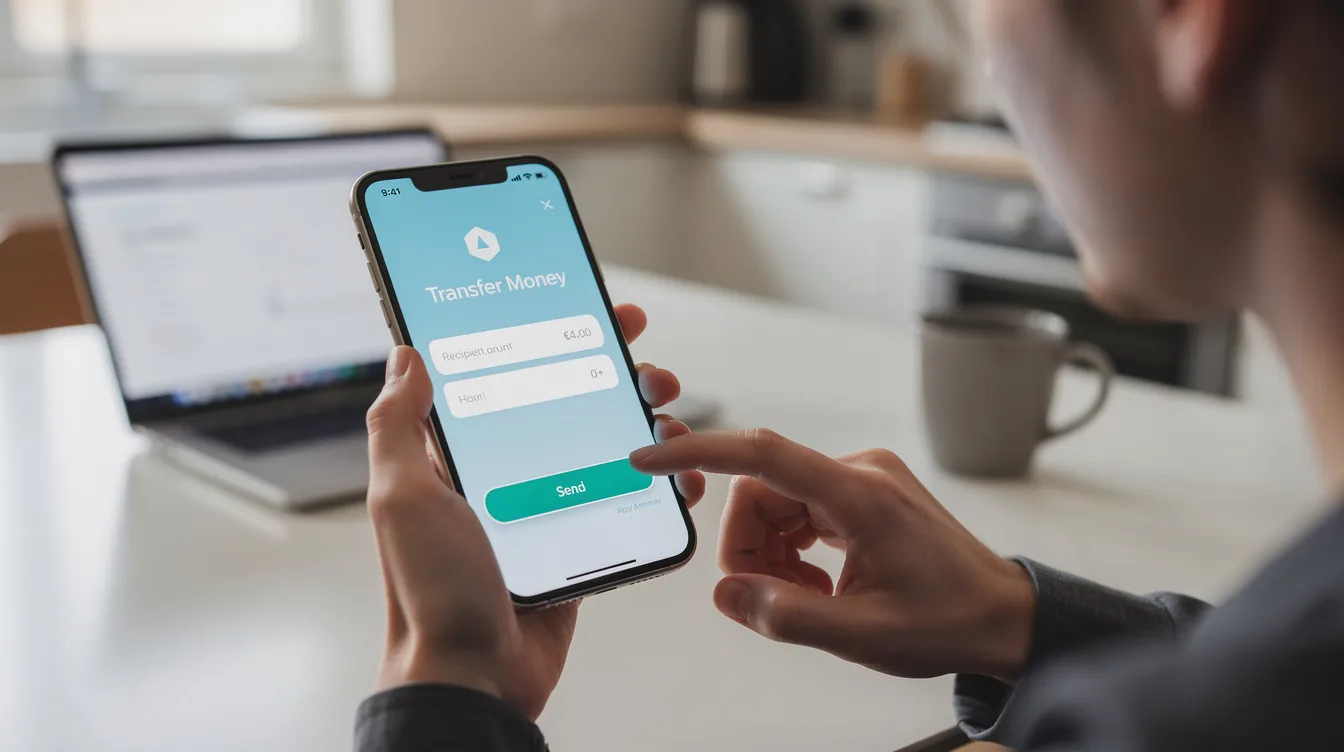
Understanding how an IFSC code works in practice helps you see why it matters. Here's what happens behind the scenes when you transfer money:
First, the sender enters the beneficiary's bank account number and the bank's IFSC code into their online banking or mobile app. Second, the banking system - whether NEFT, RTGS, or IMPS - validates the IFSC against its database and uses it to route the payment instructions to the recipient's bank and specific bank branch. Third, the receiving bank matches the account number and branch code to credit the right account. The IFSC code ensures funds reach the correct bank branch in India, and the IFSC code ensures accurate routing of funds in electronic transfers at every step.
The IFSC code also establishes an immutable audit trail for transactions and helps prevent misrouted funds while facilitating transaction monitoring. Every electronic transfer through Indian banks relies on this code to confirm the exact branch and bank location.
For international transfers, the process adds one layer. Say you're sending money to India - specifically EUR from Germany to an HDFC Bank account in Delhi. Your German bank uses the SWIFT code to route the payment to HDFC's correspondent bank. Once the funds reach India, HDFC uses the IFSC code to credit the exact bank branch in India where the recipient holds their account. Without the correct IFSC code, the Indian bank may need manual intervention, causing delays before the money reaches the right account.
Every IFSC code follows a standard 11-character structure set by the Reserve Bank of India:
Characters 1–4: The bank code - an alphabetic abbreviation of the bank name (e.g., HDFC, ICIC, SBIN).
Character 5: Always "0" (zero), reserved by RBI for future use.
Characters 6–11: The branch code - an alphanumeric sequence identifying the specific bank branch and its bank location.
Here are verified examples from major Indian banks:
SBIN0000691 - State Bank of India, Parliament Street Branch, New Delhi. "SBIN" is the bank code for State Bank; "000691" is the location code for that specific branch.
ICIC0000007 - ICICI Bank, main branch in Mumbai. The bank code "ICIC" identifies the bank name; "000007" tells you the exact branch.
HDFC0000001 - HDFC Bank, Fort Mumbai branch. "HDFC" is the bank code; "000001" is the branch code.
After the wave of PSU bank mergers post-2019, some branches have had their IFSC codes changed or consolidated. Always confirm the latest code from official sources rather than relying on old cheque book leaves or outdated lists.

Domestic transfers: An IFSC code is mandatory for NEFT, RTGS, and IMPS transfers. If you're making online transfers between one bank account and another within India, you must provide the correct IFSC code alongside the account number. This applies to high value transactions through RTGS and routine NEFT payments alike.
UPI & wallets: When UPI uses "account + IFSC" mode, the code is required. However, if you pay via a VPA (like someone@okaxis) or scan a QR code, you don't need it. Card swipes, ATM withdrawals, and wallet transfers also skip the IFSC. The payment service handles routing internally.
International transfers: When sending money to India from abroad, most financial institutions require the SWIFT code for the international leg and the IFSC code for the domestic credit. If you're sending money outside India entirely, IFSC is irrelevant - only SWIFT/BIC or other country-specific codes (like IBAN) apply.
Business payments: Payroll, vendor payments, and bulk corporate transfers in India all require each employee's or vendor's bank account number and IFSC code. Some apps auto-fetch the IFSC from account details, but the code is still used in the background to route the payment to the correct branch.
You can find the IFSC code from several reliable sources:
Bank passbook and bank statements: Your bank's IFSC code is printed on your passbook and appears on account statements, making this one of the easiest places to check.
Cheque book: You can find IFSC codes on bank websites or cheque books. Look at the cheque leaf - the code usually appears near the bank's address or MICR line on each cheque book page.
Official bank websites: Major banks like HDFC Bank, ICICI Bank, State Bank of India, Axis Bank, and Canara Bank all host searchable branch-wise IFSC lists, updated after any branch merger or relocation.
RBI website: The Reserve Bank of India's official IFSC directory lists all participating branches and is updated on a fortnightly basis. This is the most authoritative source.
Ask the account holder: The most reliable method. The recipient can check their own online banking or mobile app and share their bank's IFSC code directly.
Always double check your code against an official or regulated source, especially after large-scale bank mergers. Third-party aggregators can go stale quickly, and two IFSC codes for what seems like the same branch might indicate an outdated entry.
SWIFT (also called BIC) is a global identifier that lets banks worldwide communicate and process international payments. SWIFT codes range from 8 to 11 characters for international transfers and are used for international money transfers between banks. In contrast, IFSC is a purely domestic routing code within India, meaningful only for Indian banks.
For incoming international money transfers into India, SWIFT and IFSC codes play distinct but complementary roles:
What SWIFT does: The sender's bank abroad uses the SWIFT code to route funds across the SWIFT network to the recipient's bank (or its correspondent bank) in India. SWIFT codes identify banks globally and facilitate secure payments across borders.
What IFSC does: Once the funds arrive in India, the receiving bank uses the Indian Financial System Code to credit the exact branch and bank account. Without the correct code, the bank may need to manually identify the correct branch, causing delays.
You cannot substitute one for the other. International transfer forms from banks like Chase and Bank of America explicitly list both the SWIFT code and the Indian bank's IFSC code as mandatory fields when the destination country is India. Some remittance providers label the field simply as "branch/IFSC" - in such cases, still confirm both codes with the recipient's bank before sending money.

Using an incorrect IFSC code can result in failed transfers, and the consequences depend on the type of mismatch. Funds cannot be settled into the wrong account accidentally thanks to built-in validation checks, but the process of correcting mistakes still costs time.
Wrong IFSC, correct account number: The clearing system may detect the mismatch (account doesn't exist at that branch), hold the transaction in suspense, or return it. Incorrect IFSC codes can delay or return transactions by several working days.
Both IFSC and account number mismatch: The transfer will usually be outright rejected by the electronic transfers system. Incorrect IFSC codes can lead to delayed or failed transactions.
International remittances: Recovery is slower and costlier. A wrong IFSC code on an international transfer can mean days of manual investigation before the money reaches the intended recipient.
Early error detection in transactions is facilitated by verification of the IFSC code before hitting "send." Double-checking the IFSC code prevents significant delays and avoids the hassle of contacting your bank to initiate a trace or reversal.
If you've already sent money with the wrong IFSC code, contact your bank immediately with the transaction reference ID. Provide proof of the correct IFSC code and beneficiary details so the bank can trace and reverse the payment.
Save verified beneficiaries: Store frequently used recipients (family, landlord, SIP accounts, suppliers) with their verified IFSC codes in your net banking or mobile app. This reduces repeated typing errors during domestic transfers.
Copy, don't type: Copy IFSC codes directly from official bank websites or messages instead of entering them manually. Always verify one final time before confirming high value transactions via RTGS or NEFT.
Update after mergers: If you receive a notification about a bank branch merger, bank name change, or RBI announcement, update stored IFSC codes immediately. This is especially important for PSU banks that underwent consolidation after 2019–2020.
Always confirm the IFSC code with the recipient before transferring money. Ask them to check their bank passbook, online banking profile, or latest bank statements for the current code.
Keep your own details handy: Maintain a secure note of your own bank's IFSC code, account number, bank name, and bank's address so you can quickly share payment instructions with employers, clients, or overseas relatives making an international transfer.
The right IFSC code is a small detail that makes a big difference. Keep your codes updated, double check before every transfer, and you'll avoid the most common payment headaches - whether you're sending money across town or receiving money to India from the other side of the world.