ACE Money Transfer
ACE Money Transfer

23 Dec 2024
Ireland's banking sector looks very different today compared to even a decade ago. Between high-profile exits, post-crisis restructuring, and the rise of digital challengers, knowing which banks actually matter in Ireland right now is more useful than ever. This guide covers the top 10 banks in Ireland, explains how each one works, and helps you decide which is the best fit for your personal, business, or international banking needs.
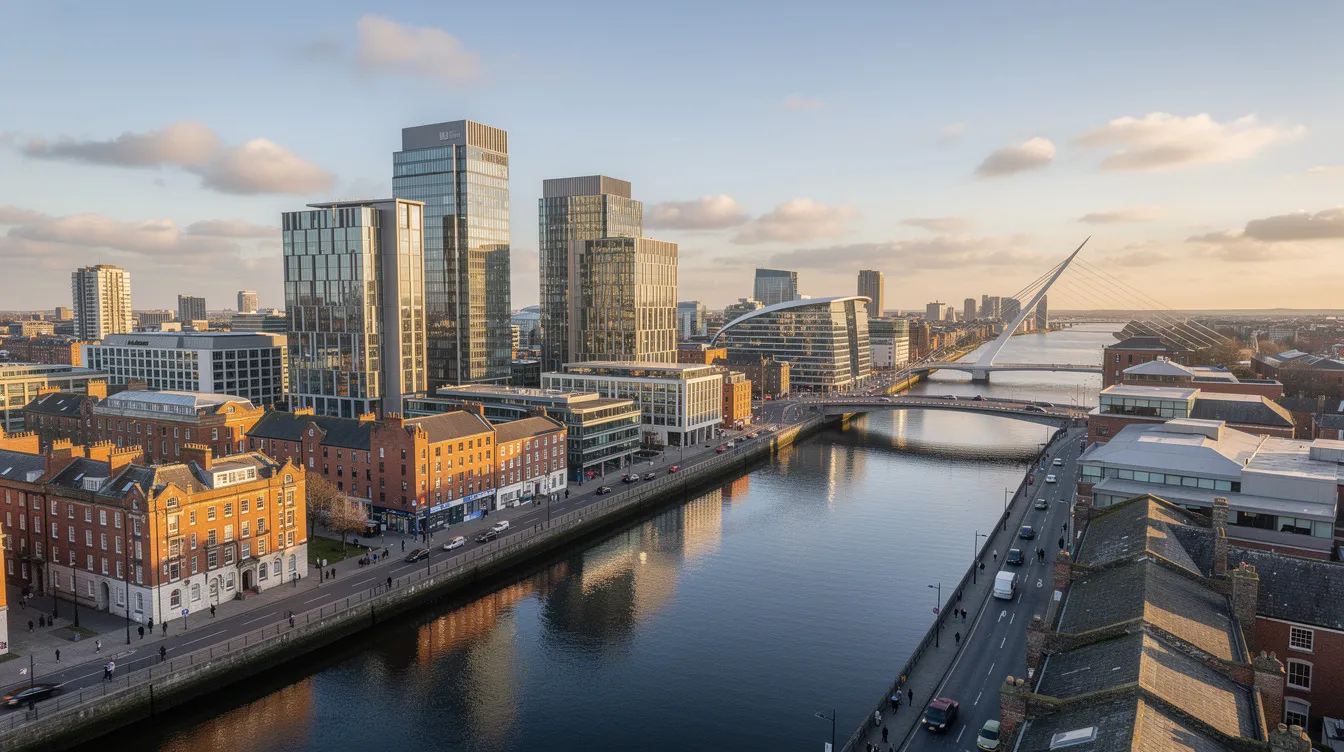
The Irish banking landscape is shaped by a mix of domestic and international institutions. Some are headquartered in Dublin and serve millions of retail customers. Others are foreign-owned operations that use Ireland as an EU hub for wholesale, corporate, or institutional finance. All are regulated by the Central Bank of Ireland, with the largest also falling under the European Central Bank's Single Supervisory Mechanism.
This guide answers a straightforward question: which are the top 10 banks in Ireland, how do they differ, and who does each one suit - whether you need everyday personal banking, business lending, savings, mortgages, or international money transfers?
To understand the present, it helps to know the recent past. The 2008 financial crisis hit the Irish banking sector harder than almost any other country in Europe. During the boom years from 2002 to 2008, Irish banks' lending grew by 25% annually, fuelled by a property boom that pushed house prices to unsustainable levels. By 2008, Irish banks had the highest loan-to-deposit ratio in the EU, with those ratios exceeding 100%. Wholesale funding rose to 55% of Irish banks' assets by 2008, and the institutions relied heavily on short-term funding for long-term loans. The introduction of the euro in the early 2000s had led to lower interest rates in Ireland, which in turn supercharged borrowing and property developments across the country.
When the world economy turned, the consequences were severe. Commercial property loans had a 56.9% impairment rate by 2013. The Irish state had to step in with massive recapitalisations, bank guarantees, and the creation of NAMA to absorb toxic debt. Anglo Irish Bank's market share had grown significantly from 1995 to 2005, but the bank eventually went bankrupt and was wound down. Increased competition from foreign banks, which intensified in the Irish market post-1999, had led to lower lending standards across Irish banks during this period. Ireland's economy fell into a deep recession, and Spain faced similar property-related banking difficulties.
Here are the key takeaways about where the sector stands now:
The market is dominated by fewer, stronger retail banks after the exits of Ulster Bank and KBC from the Republic.
AIB and Bank of Ireland are considered the two largest banks in Ireland by assets, customers, and economic significance.
International banks based in Dublin's IFSC play a large role in employment, funds management, and cross-border finance, even if everyday consumers rarely interact with them.
Ireland's banking sector expanded internationally in the late 1990s, but most banks have since pulled back to focus on domestic and European operations.
Regulation is far tighter than before 2008, with stronger capital requirements, stress tests, and limits on risky property lending.
Digital banking and neobanks are becoming increasingly popular alternatives in Ireland, changing how consumers interact with money.
Here is the list. "Top" is defined by a mix of total assets, customer base, regulatory significance, and economic impact - not simply branch count or number of ATMs.
Bank of Ireland (Dublin) – Universal bank with a major retail, mortgage, business, and corporate presence across Ireland and the UK.
Allied Irish Bank (AIB) (Dublin) – One of Ireland's two pillar banks, with the widest branch and ATM network and a broad range of retail and business products.
Permanent TSB (Dublin) – Focused retail bank, strongest in residential mortgages and personal banking, with growing business lending.
Ulster Bank – Historically one of the "big four" in the Republic; now largely wound down in the Republic, with operations continuing in Northern Ireland under NatWest Group.
KBC Bank Ireland – Belgian-owned digital-led bank that has fully exited the Irish retail market; its banking licence was returned in April 2024.
EBS – A mortgage and savings brand operating under AIB Group, with roots as a mutual building society.
Danske Bank – Focuses on corporate and institutional clients in Ireland; no longer a mass-retail player in the Republic.
Citibank Europe plc (IFSC, Dublin) – Wholesale and corporate bank regulated in Ireland; recently surpassed Bank of Ireland by balance sheets, with total assets of approximately €171.7 billion at end-2024.
Barclays Bank Ireland PLC (Dublin) – Corporate, wealth, and investment banking; limited retail presence.
Irish Life – Not a deposit-taking bank but a leading life assurance, pensions, and investment provider that forms an important part of the broader Irish financial ecosystem.
Irish banks expanded internationally in the late 1990s and early 2000s, acquiring operations in the UK, Poland, and elsewhere. Today the market is more focused, more regulated, and more domestic - but still deeply connected to Europe and the world economy.
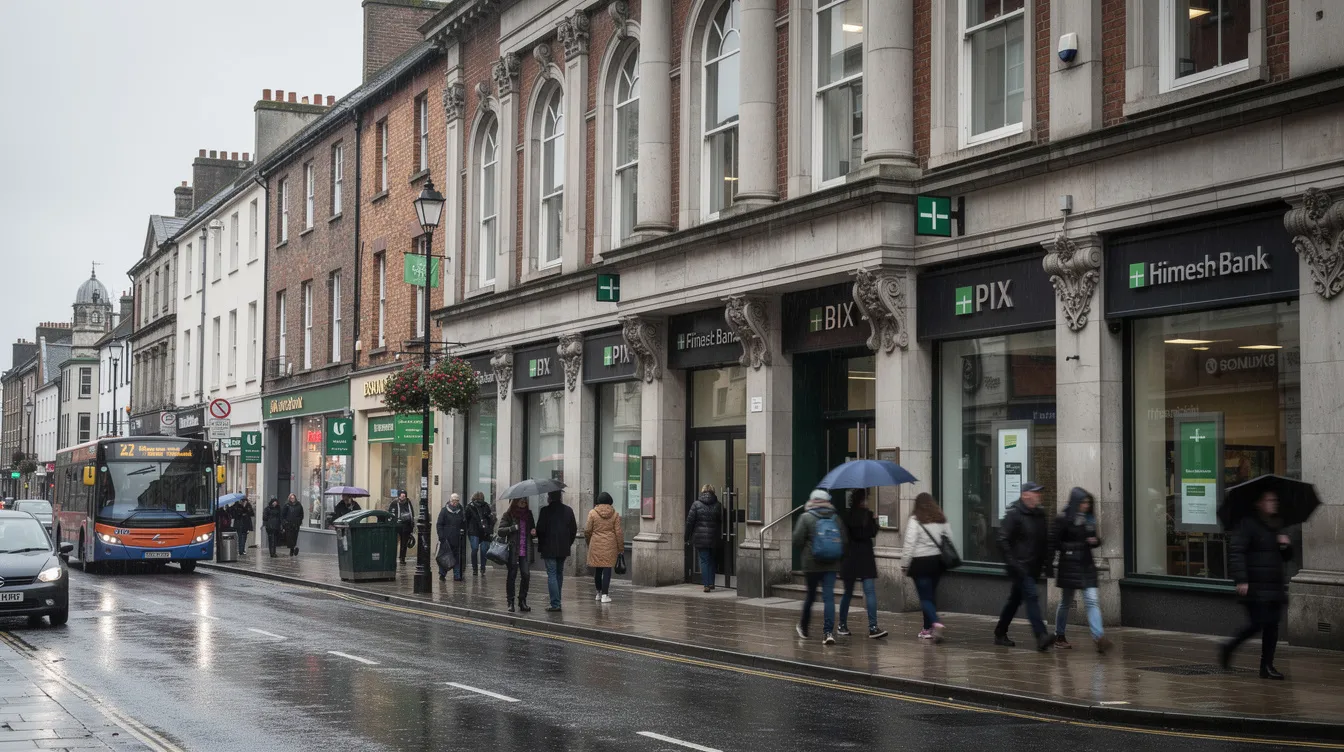
The Irish Central Bank - formally the Central Bank of Ireland - is the primary regulator of all banking activity in the country. Its responsibilities span prudential supervision, consumer protection, macroprudential policy, and financial stability. It works closely with the European Central Bank through the Single Supervisory Mechanism, which directly oversees "significant institutions" like Bank of Ireland and Allied Irish Bank.
Here is how the regulatory structure works in practice:
The Central Bank of Ireland sets and enforces capital adequacy, liquidity, and risk management requirements for all licensed banks, payment institutions, and credit unions in Ireland.
Under the SSM, the ECB takes the lead on supervising the largest banks (those deemed "significant"), while the Central Bank supervises "less significant institutions" under the ECB's overall governance framework.
Post-2008 reforms introduced much tighter rules: higher additional capital buffers, mandatory stress tests, recovery and resolution planning, and strict limits on lending to the property market (including loan-to-value and loan-to-income caps for mortgages).
The Individual Accountability Framework, introduced in 2023, holds senior bankers personally responsible for failures in governance and risk management.
The Central Bank uses a risk-based supervision model called PRISM, which is outcomes-focused and forward-looking rather than purely rules-based.
In 2026, the Central Bank's published priorities include managing geoeconomic risk, strengthening cyber and operational resilience, addressing climate and sustainability risks in bank lending, and modernising its own supervisory tools.
These reforms have made the Irish banking sector materially safer than it was during the property boom, though no system is entirely without risk.
Bank of Ireland is the oldest of the major Irish banks and remains one of the two pillars of the country's financial system. Established in 1783 and headquartered in Dublin, it has played a central role in funding Ireland's economy for over two centuries. During the boom years, it expanded aggressively - Bank of Ireland purchased Bristol and West in the UK in 1997 as part of a broader international push.
The 2008 crisis forced the bank into state support. The government injected €2 billion in December 2008 through preference share purchases, later increased to €3.5 billion in early 2009. NAMA absorbed large volumes of distressed property debt from its balance sheets. The Irish government fully exited its shareholdings in Bank of Ireland in 2022, marking the completion of a long recovery.
Services: Current and savings accounts, residential mortgages, buy-to-let lending, SME and corporate loans, wealth management, treasury and trade finance, and international banking.
Digital: Full mobile app and online banking suite, contactless card payments, online mortgage applications, and digital onboarding for new customers.
Presence: Extensive branch and ATM network across Ireland, significant operations in the UK, and international business lines.
Crisis legacy: State support fully repaid; the bank returned to profit and private ownership over the course of many years of restructuring.
Best for: Everyday banking customers, households seeking home loans, established SMEs, corporate clients needing a full-service bank, and anyone who values wide branch access alongside digital tools.
Bank of Ireland has come a long way since the dark days of the recession. Its recovery is often cited as a sign that the broader Irish economy has stabilised.
Allied Irish Bank is one of the largest Irish banks by assets and customers. Headquartered in Dublin, it operates the country's most extensive branch and ATM network and offers an extremely broad product range. During the late 1990s, AIB was an ambitious international player - AIB acquired Bank Zachodni in Poland in 1999, among other investments. Like other Irish banks, it was heavily invested in the domestic property market and the lending that fuelled the boom.
The crisis was devastating for AIB. The bank was nationalised, with the Irish state acquiring a majority stake through massive recapitalisations. AIB relaxed underwriting standards to maintain market share amid competition during the boom, which contributed to the scale of losses. Over the following decade, the government gradually divested its holding. As of June 2025, AIB returned to full private ownership - a landmark date for the institution and for the broader Irish banking sector.
Key products: Current and savings accounts, mortgages (through AIB, EBS, and Haven brands), SME lending, agricultural finance, corporate banking, digital-only channels, and investment services.
Brands: AIB Group includes EBS and Haven, giving it multiple routes to market in mortgages and savings.
Branch and ATM network: The largest among Irish-headquartered banks, with strong coverage in both urban and rural areas.
Digital capability: Fully digital onboarding, app-based account management, and online lending applications.
Best for: Individuals wanting broad branch access, small business owners needing a relationship manager, mortgage customers comparing across AIB's multiple brands, and agricultural or rural businesses.
AIB's journey from nationalisation to full private ownership is one of the defining stories of the post-crisis Irish economy.
Permanent TSB was formed from the merger of Irish Permanent and TSB building society in the early 2000s. It is headquartered in Dublin and positions itself as a focused retail and mortgage lender, rather than a universal bank trying to do everything.
The bank played a significant role in absorbing legacy mortgage portfolios when other lenders exited the Republic. Its new mortgage lending market share reached approximately 20.2% in Q4 2024 - a substantial advance given its smaller size relative to AIB and Bank of Ireland. Permanent TSB has also been growing its SME and business banking portfolios at double-digit rates.
Main strengths: Home loans (first-time buyers, movers, switchers), personal loans, current accounts, savings products, and a growing business lending book.
Mortgage appeal: Competitive fixed-rate and variable-rate offerings; well-regarded among first-time buyers in particular.
Legacy portfolios: Took on large volumes of mortgage and deposit accounts from exiting banks, especially Ulster Bank, giving it a broader customer base.
Branch network: Smaller than AIB or Bank of Ireland but still sufficient for local representation; the bank is increasingly digital-first.
Digital: Expanding mobile and online banking capabilities, online account opening, and digital mortgage applications.
Best for: Households, first-time buyers, and individuals who want a bank focused on mortgages and personal finance, with a blend of digital and in-branch service.
PTSB may not have the scale of the two pillar banks, but its focused strategy and growing market share make it a serious contender for anyone in the mortgage market.
Ulster Bank, part of the Royal Bank of Scotland (now NatWest Group), was historically one of Ireland's "big four" banks. It had a strong footprint in both Northern Ireland and the Republic, offering retail, mortgage, and business banking services for many years.
In Q1 2021, Ulster Bank announced a phased withdrawal from its retail and deposit business in the Republic of Ireland. The wind-down was one of the most significant events in Irish banking in a generation, affecting hundreds of thousands of customers.
Timeline: Announcement in 2021; customer communication and account migration from mid-2022 onwards; retail accounts and current accounts now closed in the Republic; loans being serviced or transferred.
Services formerly offered: Current accounts, savings, personal loans, mortgages, SME lending, and commercial property loans.
Current status: Not accepting new business in the Republic. Operations in Northern Ireland (UK jurisdiction) continue under NatWest.
Market impact: Over one million accounts from Ulster Bank and KBC have closed following their exit from the market. The loss of Ulster Bank as a competitor increased the market share of Bank of Ireland, AIB, and Permanent TSB and reduced consumer choice.
The exit of Ulster Bank, combined with KBC's departure, is one of the most concerned developments in the recent history of Irish retail banking. It raised questions about competition and whether remaining banks would raise fees or reduce the quality of service. The country lost two significant retail players in a short window.
KBC Bank Ireland, owned by Belgian parent KBC Group, had carved out a niche as a digital-led retail bank. It was particularly popular for its competitive mortgage rates and technology-friendly customer experience, targeting younger and more tech-savvy consumers.
KBC grew steadily through the 2000s. However, in 2021, the bank entered talks to sell its performing loan book and began the process of exiting the Irish retail market. The Central Bank approved the scheme of transfer, and many loans, mortgages, and deposits were transferred to Bank of Ireland and other institutions. On 30 April 2024, KBC Bank Ireland returned its banking licence to the Central Bank of Ireland, formalising its exit.
What happened to customers: Borrowers with KBC mortgages had to transfer title deeds and servicing arrangements; deposit customers were migrated or asked to close accounts. The process required significant legal and operational work.
Market effects: The exit of Ulster Bank and KBC has significantly altered the competitive landscape in Ireland. With fewer retail players, the remaining banks face less pressure on pricing - though regulators continue to monitor fees and rates closely.
Legacy: KBC's competitive fixed-rate mortgage deals and digital-first approach set a benchmark that other Irish banks have since tried to match. Its departure removed a source of innovation and price competition, particularly in the mortgage market.
The combined departures of KBC and Ulster Bank represent a structural shift. Over one million accounts were affected, and the demand for services at AIB, Bank of Ireland, and Permanent TSB surged as a result.
EBS - originally the Educational Building Society - began life as a mutual building society with a strong community ethos. It was established to help members save and access affordable home loans, and for many years it operated independently of the major banks.
EBS was acquired by Allied Irish Bank in the mid-2010s and now operates as a brand within AIB Group. Its regulation, capital, and systems are those of AIB, but customers may still see separate EBS branches and branding.
Key offerings: First-time buyer mortgages, home improvement loans, children's savings accounts, regular saver accounts, and family-oriented financial products.
Branch experience: EBS branches still operate with their own branding, but all products are backed by AIB Group's financial strength and regulatory framework.
Mutual heritage: Some customers prefer EBS precisely because of its building society roots and the perception of more personalised, community-based service.
Best for: First-time buyers seeking specialist mortgage advice, savers looking for dedicated savings products, and customers who favour the smaller-scale, community-focused experience that EBS offers within the security of a major banking group.
EBS is not a separate bank in regulatory terms, but its distinct brand and product range make it a meaningful choice for certain types of customers.
Danske Bank's Irish operations trace back to National Irish Bank, which was subsequently rebranded. Over time, Danske strategically exited retail banking in the Republic and repositioned itself as a corporate and institutional-focused bank.
Core services: Corporate lending, cash management, trade finance, treasury services, and cross-border financial solutions for large Irish and multinational firms.
Nordic connections: As part of the wider Danske Bank Group, the Dublin operation provides links to Nordic and European markets, which can benefit Irish companies with international business.
Who it's for: Larger Irish firms, export-oriented companies, and multinationals needing sophisticated corporate banking, international cash management, or trade finance - not everyday retail customers.
Strategic shift: The exit from retail banking in the Republic was a deliberate decision to focus on higher-value corporate relationships where the bank could compete more effectively.
If you're a consumer looking for a current account or a mortgage, Danske Bank is not the right fit. But for corporate treasurers, it remains an established and capable player in the Irish market.
The International Financial Services Centre opened in Dublin in 1987 and has since grown into one of Europe's most important hubs for cross-border financial services. Today, the IFSC and surrounding docklands area host the licensed Irish operations of many of the world's largest banks.
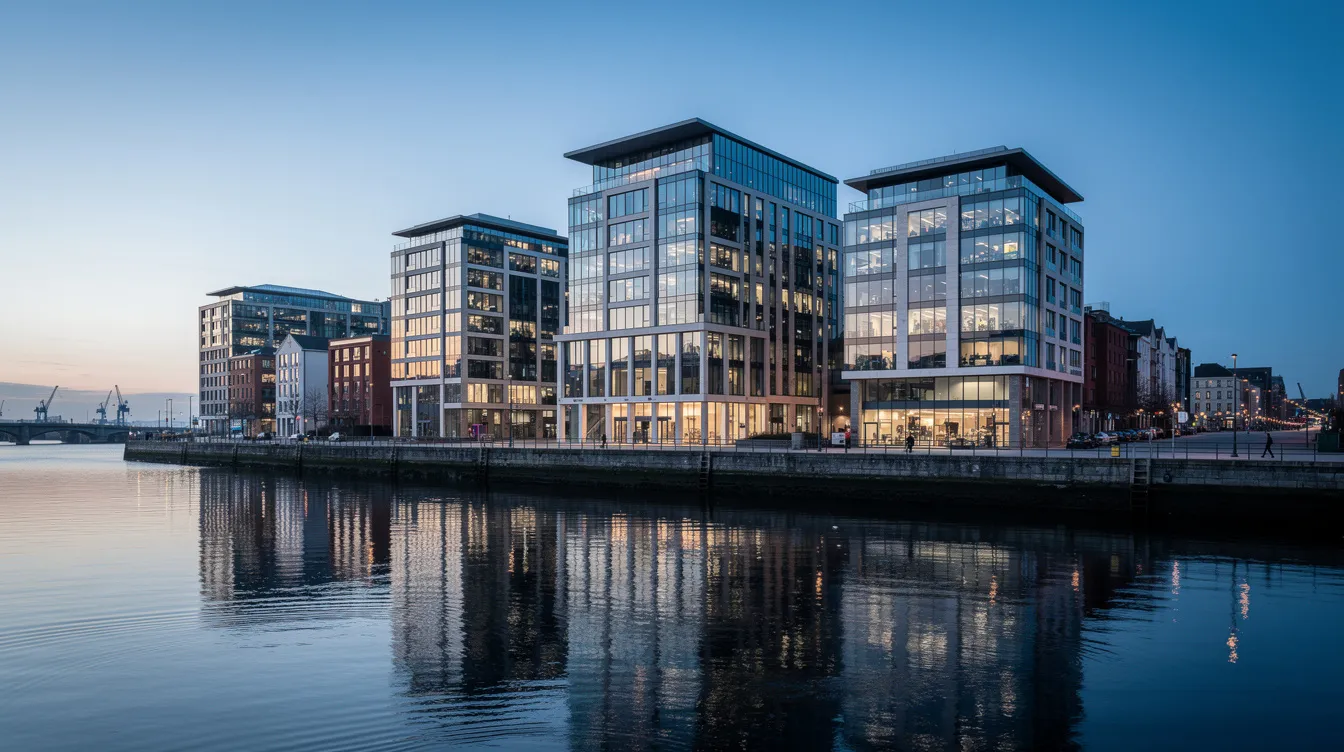
Citibank Europe plc: Based in the IFSC, Citi's EU hub has experienced significant balance sheet growth, with total assets reaching approximately €171.7 billion at end-2024 - surpassing Bank of Ireland's €162 billion. It serves corporates, funds, and institutional investors on a wholesale and investment banking basis.
Barclays Bank Ireland PLC: Handles corporate, wealth, and investment banking from Dublin. Its focus is on high net worth and institutional clients rather than mass-market retail.
Other IFSC banks: Numerous global banks maintain licensed Irish operations for treasury, fund administration, capital market activities, and cross-border lending. These operations are critical to Ireland's economy in terms of employment, tax revenue, and investment flows.
Relevance to consumers: While these banks are not typically used for everyday personal banking, their presence in Dublin creates thousands of jobs, drives demand for professional services, and strengthens Ireland's position as a financial gateway to Europe. The funds they manage and the capital they deploy are an important part of the country's economic infrastructure.
The IFSC's role has only grown since Brexit, as many London-based financial firms moved or expanded operations to Dublin to maintain access to the EU market.
Credit unions are a distinctive and deeply rooted feature of Ireland's financial landscape. They are member-owned cooperatives, governed by their members, and regulated by the Central Bank of Ireland. Although they are not part of the "top 10 banks" list, they are a vital alternative in the Irish financial ecosystem.
Scale: Ballinasloe Credit Union, for example, has over 19,500 members and €127 million in assets - a significant community institution by any measure.
Worker cooperative banks: Credit Union Plus LTD is the largest worker cooperative bank in Ireland. As of September 2026, 29 worker cooperative banks are headquartered in Ireland, with Abbeyquarter North having the highest concentration of worker cooperative banks.
What they offer: Savings accounts, personal loans (often at favourable rates), and increasingly some current account-style services. Credit unions are known for flexible, community-focused decision making.
Pros: Local governance, supportive of members who may be underserved by big banks, often competitive loan rates, strong community ties.
Cons: Digital services are generally less advanced than at the major banks; product range is narrower (no mortgages or complex business banking in most cases); deposit and lending limits may apply.
Regulation: Credit unions are fully regulated by the Central Bank of Ireland and deposits are protected under the same guarantee scheme as bank deposits.
Modernisation: Many credit unions have been investing in online and mobile access, but they remain best suited for straightforward savings and lending needs rather than complex financial products.
For personal loans and community-oriented savings, credit unions remain an excellent option - and for many Irish people, they are the first financial institution they ever join.
Irish Life is one of Ireland's leading providers of life assurance, pensions, and investment funds. It is not a traditional bank - it does not take deposits or offer current accounts - but its influence on household finances in Ireland is substantial.
Products: Life insurance, retirement and pension savings, unit trusts, investment funds, and insurance-based savings policies. These products are often distributed through bank channels, meaning customers may encounter Irish Life products when dealing with AIB, Bank of Ireland, or other lenders.
Ownership: Irish Life is part of Great-West Lifeco, a Canadian insurance and financial services group. It was sold by the Irish state in 2013 after a period of public ownership.
Relevance: In a discussion of the top banks in Ireland, Irish Life matters because it provides the investment and protection products that sit alongside bank deposits in most households' financial plans. Pensions, life cover, and long-term savings are not covered by deposit guarantees - they are regulated under insurance rules - but they are a necessary companion to banking for most people.
Relationship with banks: Many banks in Ireland partner with Irish Life to distribute investment and pension products to their customers. This makes Irish Life an integral, if often invisible, part of the banking experience.
If you are thinking only about where to put your cash on deposit, Irish Life is not your answer. But if you are planning for retirement, protecting your family, or investing for the medium to long term, it is one of the most relevant names in Ireland.
If you are concerned about the safety of your money in an Irish bank, here is what you need to know about deposit protection and regulation.
Deposit Guarantee Scheme: Under EU rules, deposits up to €100,000 per depositor per institution are guaranteed. This applies to all licensed banks in Ireland, including Bank of Ireland, AIB, Permanent TSB, and others. If a bank fails, the scheme is designed to pay out within a set timeframe.
Coverage: The guarantee covers current accounts, savings accounts, and term deposits. It does not cover investment products (such as funds managed by Irish Life or other asset managers), which carry market risk.
Investor Compensation Scheme: For certain investment services, there is a separate investor compensation scheme that provides a limited level of protection.
Central Bank oversight: The Central Bank of Ireland continuously monitors bank stability through capital and liquidity requirements, stress tests, and macroprudential tools. It can intervene - and has done so - when a bank's solvency or conduct falls below required standards.
Post-crisis improvements: Since 2008, banks are required to hold much higher capital buffers, maintain detailed recovery and resolution plans, and submit to regular supervisory review. The goal is to make taxpayer-funded bailouts far less likely.
What consumers should do: Check that your bank is licensed by the Central Bank of Ireland (listed on its website), understand the €100,000 limit, and spread deposits across institutions if your savings exceed that threshold.
The deposit guarantee is one of the most secure protections available to savers in Europe, and it applies equally across all major Irish banks.
The way Irish people bank has changed dramatically. Mobile apps, online onboarding, contactless payments, and app-based budgeting tools are now standard expectations rather than nice-to-have extras.
Big bank investment: Bank of Ireland, AIB, and Permanent TSB have all invested heavily in digital platforms. Online mortgage applications, instant account opening, and real-time notifications are now available from all three. The cost of maintaining large branch networks has pushed banks to encourage digital adoption.
Fintech challengers: Companies like Revolut and N26 serve large numbers of Irish residents, offering low-fee accounts, competitive foreign exchange rates, and slick mobile interfaces. However, these often operate under foreign licences (e.g., Lithuanian banking licences for Revolut), meaning they are not regulated directly by the Irish Central Bank - though they are covered by EU deposit guarantee schemes in their home jurisdictions.
Pros of fintechs: Fast onboarding, lower or zero fees for certain transactions, excellent user experience, and competitive FX rates for international spending and transfers.
Cons of fintechs: Potentially less local regulatory accountability, limited or no branch access, narrower product range (most do not offer mortgages or complex business lending), and customer support can be harder to access in person.
Open banking: EU regulations (PSD2) have enabled open banking APIs, allowing third-party apps to access bank data (with customer consent) for budgeting, comparison, and payment services.

For everyday transactions, many Irish consumers now use a fintech alongside a traditional bank. The fintech handles day-to-day spending and international payments, while the traditional bank holds the mortgage, savings, and deposit-guaranteed accounts.
If you run a business in Ireland, your choice of bank matters more than you might think. Here is how the main options compare.
Bank of Ireland: Offers a full suite of business banking - overdrafts, working capital, term loans, merchant services, online business banking, and corporate treasury. Strong in SME lending with a wide branch network for face-to-face relationship management.
AIB: Equally comprehensive, with particular strength in agricultural finance, sector-specific expertise (tech, food, export), and a large team of dedicated relationship managers. AIB's digital business tools have improved significantly in recent years.
Permanent TSB: Growing its SME and asset finance portfolios at double-digit rates. A good option for smaller businesses that want a more focused, less bureaucratic banking relationship.
Danske Bank, Citi, Barclays: For larger and multinational firms, these IFSC-based and international banks offer corporate lending, cross-border cash management, trade finance, and treasury services. They are less relevant for a local shop or startup but essential for companies operating across borders.
What SMEs should consider when choosing a bank:
Quality and availability of relationship managers in your region and sector
Sector expertise - does the bank understand your industry (agriculture, tech, export, hospitality)?
Digital tools for cash management, invoicing, and payroll
Pricing transparency - interest rates on lending, overdraft charges, and transaction fees
International capabilities - foreign exchange, SEPA and SWIFT payments, trade finance
International businesses increasingly use Irish banks for EU treasury centres and cross-border cash management, taking advantage of Ireland's position within the eurozone and its favourable regulatory environment.
The Irish mortgage market is now dominated by three lenders: AIB, Bank of Ireland, and Permanent TSB. The exits of Ulster Bank and KBC removed two significant competitors and concentrated the market.
During the property boom, lending standards deteriorated across the sector. Irish banks offered 100% mortgages starting in 2005, eliminating the need for a deposit and dramatically increasing borrowing. Buy-to-let mortgages became popular during the property boom, and tracker mortgages - linked directly to the ECB rate - were widely sold. When the market collapsed, the cost to banks and borrowers was enormous. Commercial property loans had an impairment rate of 56.9% by 2013, and residential mortgage arrears rose sharply during the recession and period of low growth that followed.
Today, the Central Bank of Ireland imposes strict macroprudential rules to prevent a repeat:
Loan-to-value (LTV) limits: First-time buyers can borrow up to 90% of the property value; second and subsequent buyers are limited to 80%.
Loan-to-income (LTI) limits: Generally capped at 3.5 times gross income, with limited exceptions.
Income verification: Banks must fully verify income, employment, and credit history before approving a mortgage.
What to compare when shopping for a mortgage:
APR (annual percentage rate), which includes fees and gives a true cost comparison
Fixed vs variable vs tracker rates - fixed offers certainty; variable can be cheaper but exposes you to rate changes; tracker mortgages are now rare in new lending
Flexibility - can you overpay, take a payment holiday, or switch rates?
Cashback offers vs long-term interest cost - a large cashback can look attractive but may mask a higher rate over the life of the loan
Legal costs, valuation fees, and property insurance requirements
The mortgage market in Ireland in 2026 is far safer and better regulated than during the boom years, but house prices remain a significant concern for buyers, and demand in the property market continues to outstrip supply in many areas.
If you have money to save or invest, Irish banks offer a range of products - though the returns you earn will depend heavily on interest rates set by the European Central Bank.
Instant access accounts: Available from all major banks; useful for emergency funds; typically offer lower interest but full liquidity.
Fixed-term deposits: Lock your money away for a set period (3 months to 5 years) in return for a higher rate. Available from AIB, Bank of Ireland, PTSB, and EBS.
Regular savers: Monthly contributions with a set interest rate; popular for building a savings habit; often limited to a maximum monthly deposit.
Notice accounts: Require advance notice (e.g., 30 or 90 days) before withdrawal; rates typically sit between instant access and fixed-term.
Investment options:
Many banks partner with firms like Irish Life and global asset managers to offer unit trusts, investment funds, pension savings, and insurance-based savings products.
These carry market risk and are not covered by the Deposit Guarantee Scheme. Returns are not guaranteed, and fees apply.
Diversification is critical - spreading across deposit and investment products helps manage risk.
What to keep in mind:
Deposits are low risk and protected up to €100,000 per person per institution.
Investment products (funds, pensions, equities) offer potentially higher returns but with corresponding risk.
ECB rate changes directly affect what banks pay on deposits. In periods of low rates, real returns after inflation can be negative.
Always check the terms, early withdrawal penalties, and any fees before committing to a product.
The right mix of savings and investment depends on your time horizon, risk appetite, and financial goals. A secure deposit account for short-term needs and an invested fund for longer-term goals is a common and sensible approach.
Banking in Ireland is not free. Understanding the fee structure before you open an account can save you a meaningful amount of money each year.
Common fees on Irish current accounts:
Quarterly or monthly maintenance fees (typically €4–€6 per quarter at major banks, though this varies)
Per-transaction charges on certain account types (ATM withdrawals, direct debits, standing orders)
Overdraft interest and arrangement fees
Foreign currency transaction fees and overseas ATM charges
Cheque processing fees (increasingly rare but still applicable)
Ways fees differ between banks:
Some banks waive maintenance fees for students, under-25s, or over-66s.
Some offer "fee-free" current accounts if you maintain a minimum monthly lodgment or keep a minimum balance.
Digital banks and fintechs typically charge no maintenance fees and offer better foreign exchange rates, but may lack branch access and cheque services.
Tips to minimise costs:
Choose an account type that matches your actual usage - don't pay for features you don't need.
Consolidate your banking to one institution if possible, as some banks offer fee reductions for bundled products.
Use your bank's own ATM network to avoid out-of-network charges.
Avoid unnecessary overdrafts - the interest cost can be steep.
Compare foreign transfer fees with specialist providers before using your bank for international payments.
Read fee schedules carefully. Banks are required to publish them, and the Central Bank of Ireland provides comparison tools on its website.
The cost of everyday banking in Ireland is a legitimate concern for consumers, but with some attention to account selection and usage patterns, it is possible to keep charges low.
Whether you are sending money to family overseas, paying an international supplier, or receiving payments from abroad, understanding how Irish banks handle cross-border transfers is essential.
SEPA transfers:
Euro transfers within the SEPA zone (covering all EU and EEA countries plus a few others) are usually free or very low cost and settle within one business day. This is the standard for most intra-European payments.
SWIFT and non-SEPA transfers:
For payments outside the euro zone or to non-SEPA countries, banks use the SWIFT network. These transfers typically involve beneficiary bank fees, correspondent bank fees, and FX markups. Settlement can take several business days depending on the destination country.
Foreign currency accounts:
Some Irish banks offer foreign currency accounts (e.g., GBP, USD), which can be useful for businesses or individuals with regular non-euro income or expenses. These may carry maintenance fees and the exchange rate offered by the bank may not be the most competitive.
Specialist remittance platforms:
Many customers also use specialised online remittance platforms to send money abroad. These can be faster or cheaper for some corridors than traditional bank transfers, especially for regular remittances to family in non-EU countries. Platforms in this space typically allow you to register online, enter recipient details, and pay via debit card, credit card, or bank transfer. Payout options often include bank deposit, mobile wallet, or cash pickup at authorised locations.
Practical advice for international transfers:
Compare your bank's FX spread and fees with specialist providers before committing, especially for regular or large transfers.
Check cut-off times - missing a daily cut-off can add a day to settlement.
Verify that any provider you use is regulated and that your money is protected during the transfer process.
For business, consider whether your bank offers integrated cash management and FX hedging tools to manage currency risk across Europe and beyond.
Cross-border banking is one area where competition has genuinely benefited consumers. The combination of SEPA efficiency within Europe and specialist remittance platforms for non-euro corridors means you have more options - and lower costs - than ever before.
With fewer retail banks in the market and more digital options available, choosing the right bank requires some thought. Here is a practical checklist:
Personal vs business: If you need both, consider whether one bank can serve both needs well, or whether you benefit from separating them.
Branch access vs digital-first: If you regularly need to visit a branch (for cash lodgments, in-person advice, or complex queries), AIB and Bank of Ireland have the widest networks. If you are comfortable doing everything online, Permanent TSB or a fintech may suit you.
Mortgage needs: If you are buying a home, compare APRs, fixed vs variable rates, cashback offers, and flexibility across AIB, Bank of Ireland, and PTSB. EBS (under AIB) also offers specialist mortgage advice.
International needs: If you regularly send or receive money from abroad, check your bank's FX rates and transfer fees, and compare with specialist remittance providers.
Safety: Ensure your bank is licensed by the Central Bank of Ireland, understand the €100,000 deposit guarantee limit, and spread your deposits if necessary.
Cost: Read the fee schedule before opening an account. Factor in maintenance fees, transaction charges, and any penalties for overdrafts or foreign transactions.
Customer service: Check independent reviews, Central Bank consumer notices, and complaints data. A bank with low fees but poor service is not a good deal.
Product range: Do you need just a current account, or do you also need savings, investments, insurance, and lending? A full-service bank like AIB or Bank of Ireland covers more ground; a focused lender like PTSB may be better for mortgages.
The best bank for you depends on your specific circumstances. There is no single "best" bank in Ireland - only the best fit for your needs.
The Irish banking sector will continue to evolve. Here are the trends and developments most likely to shape the next three to five years:
Digitalisation will advance further. Expect more automation, AI-driven customer service, enhanced security against cyber risk, and continued reduction in branch numbers. Banks that fail to invest in digital will lose ground to fintechs and better-resourced competitors.
Sustainable finance will grow in importance. Green mortgages and loans are already appearing, and banks will face increasing pressure to integrate ESG criteria into their lending decisions. Climate risk disclosure will become more rigorous, driven by both the Central Bank of Ireland and EU-level regulation.
EU regulatory demands will increase. Operational resilience, management of non-financial risks, digital finance oversight, and new rules around crypto assets will all require investment and adaptation from Irish banks.
Competition may intensify. With Ulster Bank and KBC gone, the market is concentrated - but there is scope for new entrants, fintech partnerships, and possible consolidation among smaller players. Foreign banks could re-enter the Irish market in new, digital-first formats.
Customer expectations will rise. Demand for transparency, lower fees, better user experience, and more product customisation will continue to grow. Banks that deliver on these fronts will win in favour with both retail and business customers.
Interest rates and the broader euro area economy will shape lending and deposit pricing. If the European Central Bank adjusts rates in response to inflation or low growth across Europe, Irish banks will need to adapt their mortgage and savings products accordingly.
Understanding the top 10 banks in Ireland - how they work, what they offer, and how they are regulated - puts you in a stronger position whether you are opening your first account, applying for a mortgage, or managing a company's finances. Take the time to compare, read the fine print, and decide based on your own priorities. The Irish banking sector is safer and more transparent than at any point in its modern history, and the tools to make an informed choice have never been more accessible.