
ACE Money Transfer
ACE Money Transfer

31 Jan 2025
Moving to Australia without a local bank account is like landing without a phone charger - technically survivable, but unnecessarily painful. This guide walks you through everything you need to know about how to open an australian bank account for non residents, from choosing the right bank to understanding tax rules that could quietly eat into your savings.
Yes. Most australian banks allow non residents to open an australian bank account, and many let you start the application process online before you even board your flight. However, the exact eligibility criteria depend on your visa type, how long you plan to stay, and which bank you choose.
This guide is for foreigners, expats, international students, working holiday makers, skilled migrants, remote workers, and even Australian citizens living overseas who need an australian account.
You have two main paths:
Open a bank account online from overseas and finalise identity verification in-branch after arrival.
Wait until you land in Australia and open entirely in person at a bank branch.
You will typically need a valid passport, visa details, an email address, and an australian residential address. Some banks allow account setup without an australian address initially, accepting a temporary or overseas address for pre-arrival applications. You need an australian address to fully activate the account later.
One important nuance: "non-resident" for immigration purposes is different from "non-resident" for tax purposes. Both can usually open accounts, but tax treatment on interest and some account features may differ.
Everyday transaction accounts - sometimes branded as an everyday smart access account - are generally the easiest entry point. And if you later leave Australia, you can usually keep your account open as long as you maintain up-to-date contact and tax details.
The term "non-resident" means different things depending on whether you are talking to a bank, an immigration officer, or the australian taxation office. Understanding the distinction matters because it affects which accounts you can open and how your money is taxed.
Immigration status categories:
Visitor visas (subclasses 600, 601, 651) - short-stay, generally considered non-resident
Student visa (subclass 500) - temporary, but may become a tax resident if staying long enough
Working holiday visas (417, 462) - temporary
Temporary skill shortage (482), temporary graduate (485) - temporary but often tax-resident
Permanent residents - usually treated as residents for both banking and tax
ATO tax residency is assessed through specific tests: the resides test, the 183-day test, the domicile test, and the superannuation test. A person on a temporary visa can be a tax resident if they live in Australia long enough and establish a home. Conversely, an australian citizen living in London may be a non-resident for tax purposes.
Banks care about where you physically live, how long you intend to stay (often at least six months), and what country you are currently a tax resident in - for FATCA and CRS reporting, not just your passport.
Two concrete examples:
A German student on a Subclass 500 visa living in Sydney for two semesters is an immigration non-resident, but likely becomes a tax resident after 183 days.
An Australian citizen living in London who opens an AUD account from overseas is a non-resident for tax. Interest may be subject to withholding, and they must declare foreign tax residency information.
If you are unsure about your status, confirm with the ATO or a tax adviser rather than guessing.
Non residents usually start with a basic transaction account and can add savings accounts, term deposits, or foreign currency features once they are settled. Common account types include transaction and savings accounts, though the full range depends on each bank's policies. Joint accounts can also be opened with a spouse or partner.
Transaction accounts are used for everyday spending needs - receiving salary, paying rent, pay bills, and making atm withdrawals. They come with a debit card (often a debit mastercard), online banking, and contactless payments through apple pay or google pay. Many banks offer unlimited transactions on these accounts.
Savings accounts offer better interest rates than transaction accounts. Some include bonus interest conditions, like making a minimum deposit each month or avoiding withdrawals. Certain high interest savings accounts may require you to be a tax resident to access the best rates.
Term deposits lock money for a set period (3–12 months) with higher interest rates. Non-residents can sometimes access these, but minimum deposit amounts may be higher and early break penalties apply.
Foreign currency and global accounts let you hold multiple currencies under one aud account, which is useful if you regularly send money between other countries and Australia.
Credit cards and personal loans are harder for non-residents. Most banks require Australian income, a local credit history, and stable residency before approving borrowing products. Most new arrivals start with a debit card only.
| Feature | Transaction | Savings | Term Deposit | Multi-Currency |
|---|---|---|---|---|
| Purpose | Daily spending | Earn interest | Locked savings | Hold multiple currencies |
| Access | Debit card, ATM, online | Online transfer | No access until maturity | Card + online |
| Typical monthly fees | $0–$6 | $0 | $0 | $0–$15 |
| Non-resident eligible? | Yes (most banks) | Usually yes | Sometimes | Select banks only |
This is the core "can I qualify?" section. While policies vary between banks, most share a common set of requirements.
Length of stay: Many banks expect you to be staying at least six months. NAB, for example, explicitly requires this for its main transaction accounts. Non-residents need a valid Australian visa to open an account.
Visa and nationality: Most work, study, and temporary resident visas are accepted. Some banks explicitly exclude short-term tourist or visitor visas (subclasses 600, 601, 651) from certain account types.
Age: You must be at least 18 years old to open a full transaction account and receive a debit card. Some banks allow 14–17 year olds to open restricted student account products, often requiring a guardian.
100-point ID check: A 100-point ID check is required for account opening. You need a valid passport to open a bank account, and secondary identification documents build up the remaining points. You can open an account up to 12 months after arriving in Australia, but if you do it within six weeks of arrival, many banks accept your passport alone as sufficient ID.
Tax residency: Banks ask whether you are a tax resident in Australia or elsewhere, and may require your foreign tax identification number for CRS/FATCA reporting.
Address: An australian residential address is typically needed for full activation. Some banks accept a temporary address for non-residents, such as a hostel or hotel booking.
Australian citizens living abroad can usually open or maintain accounts, but certain "moving to Australia" products may be unavailable if you are not physically relocating.
Non-residents face extra documentation checks, so gather everything before starting the application process. Here is what most banks require.
Identity documents:
A current, valid passport is almost always mandatory (worth 70 points in the 100-point system)
Secondary identification can include an international driver's license or a birth certificate, a national id card, or a foreign bank card (worth 25–40 points each)
Proof of address:
You must provide proof of address, like a utility bill, tenancy agreement, employer letter, or university enrolment letter
If applying before arrival, some banks accept an overseas address initially
Visa and immigration documents:
Electronic visa grant notice, eVisa screenshot, or passport stamp
Banks use this to confirm your visa type and duration
Tax details:
Australian tax file number (TFN) if you have one
Foreign tax identification numbers (e.g. US SSN, UK NINO) for reporting purposes
You can open an account without a TFN, but interest may be taxed at the highest rate until you provide it
Employment or study evidence:
Job offer letter, employment contract, or Confirmation of Enrolment (CoE) for international students
Example document combinations reaching 100 points:
| Scenario | Documents | Points |
|---|---|---|
| Overseas applicant | Passport (70) + Foreign driver's license with photo (40) | 110 |
| Already in Australia | Passport (70) + Lease agreement (35) | 105 |
Non-residents can open an australian bank account online, and most big banks let you begin the online application from overseas. Opening an account can take 5 to 10 minutes online. Here is how the process typically works.
Step 1 - Choose your bank and account type. Compare everyday transaction accounts, student or newcomer accounts, and global options. Focus on bank fees, international money transfers costs, minimum deposit requirements, and mobile app quality. Pick the right bank for your situation.
Step 2 - Start the online application. Enter your personal details: name, date of birth, passport number, visa type, intended arrival date, email, mobile number, and residential address (Australian or overseas). You can apply online through most banks' websites.
Step 3 - Upload or enter identification documents. Scan or photograph your passport photo page and visa grant notice. Some banks also accept a driver's license or other secondary ID at this stage. You must complete a 100-point ID check to open an account.
Step 4 - Provide tax residency information. Declare whether you are a tax resident of Australia or another country, and enter your TFN or foreign tax IDs. This satisfies CRS and FATCA reporting obligations.
Step 5 - Provisional approval and account details. Many banks issue a customer number, BSB, and account number within a few minutes of conditional approval. You can already receive money in australian dollars using those details before you arrive.
Step 6 - Activate in Australia. Full account activation requires identity verification with original documents at a branch. Most banks require you to visit in person after arrival. Your debit card is then mailed to your australian address or collected in person. Verification usually requires an in-person visit to a bank branch in Australia.
International students should select a specific student account where offered, as these often waive monthly fees.
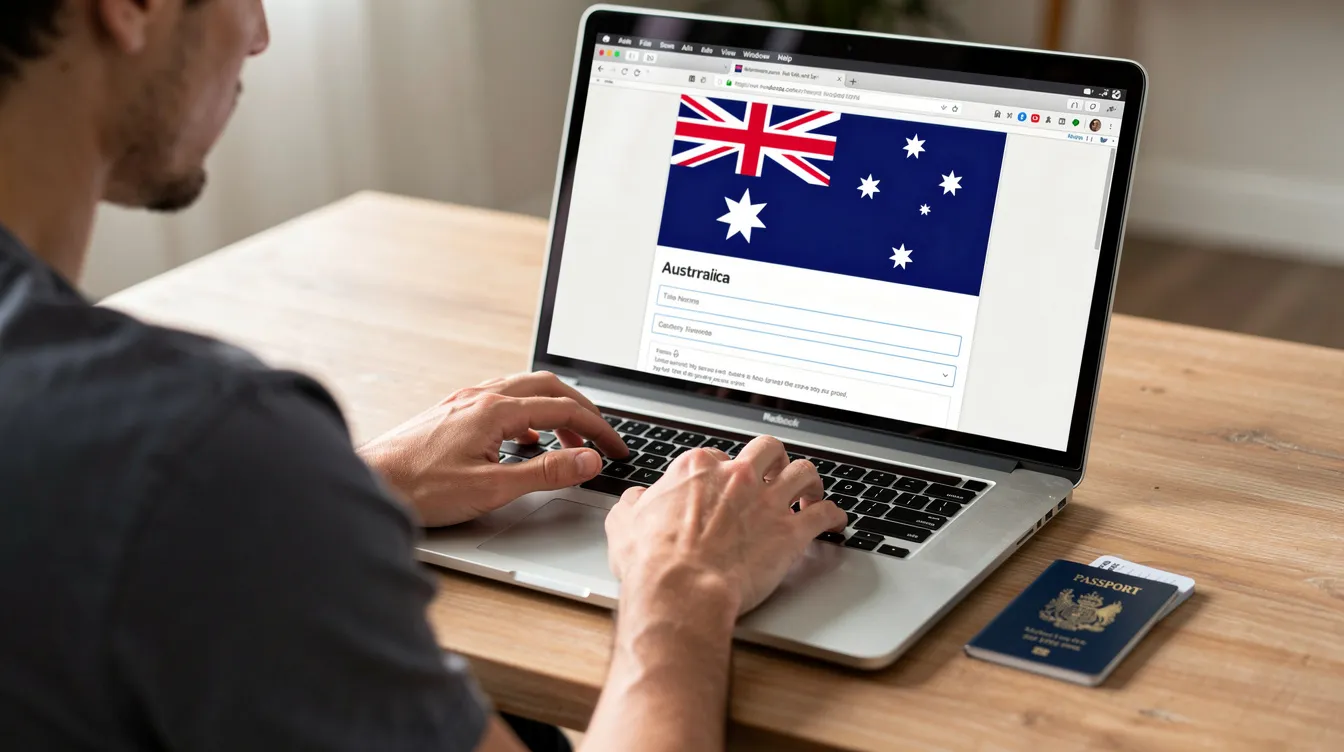
Some non-residents prefer to wait until they land. Maybe the visa details are not confirmed, the arrival city is uncertain, or the chosen bank does not support overseas onboarding.
Booking vs walk-ins: Banks in major cities like Sydney, Melbourne, Brisbane, Perth, and Adelaide generally accept walk-ins for new account opening. Booking helps if you need language support or a more complex setup. You can visit any nab branch or other biggest banks' locations.
What to bring:
Passport and visa grant letter
Local mobile number
Australian residential address (even temporary accommodation works - some banks accept a temporary address for non-residents like a hostel or hotel)
Foreign tax information
In-branch process: Staff perform the 100-point ID check, ask you to sign account terms, capture your signature and sometimes a photo, and help set up online banking, a mobile app, and card PINs.
Activation timelines: Most branches open a new account on the spot, giving you a BSB and account number immediately. A personalised debit card typically arrives within 3–10 business days at your address.
Language support: Bigger banks can arrange phone or in-branch interpreters and provide accessible formats for customers with disabilities.
Choose a branch near your accommodation, workplace, or university for easier follow-up visits and card collection.
Policies change regularly, so treat this as an illustrative 2024–2026 snapshot and always check each bank's latest eligibility criteria.
Commonwealth Bank allows many newcomers to open an everyday smart access account online before arrival. You can use an overseas address initially, then complete identity verification in-branch. Some visitor visa subclasses are excluded. Commonwealth Bank is often the first choice for international students due to its wide branch network.
NAB generally requires a physical visit to a nab branch to open an account. You need to plan to stay at least six months, provide an australian address and mobile number, and meet the 100-point ID check in person. Pre-arrival online opening has been reduced.
ANZ typically requires you to open a classic transaction account or ANZ Plus account via their app once you are in Australia. You will need an australian residential address, a local mobile number, and tax details. Pre-arrival options have been restricted in recent years.
Westpac offers the Westpac Choice everyday account for ages 14 and up. An australian residential address and local mobile are required. Some pre-arrival setup is possible if you are arriving within 14 days.
HSBC Australia offers an Everyday Global Account–style product that can be opened from overseas in some countries. It supports multiple currencies under one australian bank account and integrates global transfer tools - useful if you already bank with HSBC abroad.
Digital banks like ING and UBank generally require you to already be in Australia with a local address and mobile. Less practical for pre-arrival, but they can offer better savings rates or lower fees once you are settled.

The cheapest account is not always the best. Non-residents should balance monthly fees, minimum deposit rules, international transfer costs, and ATM access.
Monthly fees: Most australian bank accounts charge monthly fees in the range of AUD 4–6, though many banks charge monthly fees of $0 if you deposit at least $2,000 each month. Monthly fees are often waived for students under 30. No-fee accounts are common among australian banks, especially for newcomers.
Minimum deposit: The AUD 2,000 threshold roughly matches an average monthly salary for part-time workers. If you are a student or paid from overseas, look for accounts that do not tie fee waivers to deposit amounts.
ATM and transaction fees: Domestic atm withdrawals at your own bank are free. ATM withdrawal fees are around $2 for other banks' ATMs. Paper statements and over-the-counter withdrawals may also incur small charges. Many transaction accounts offer unlimited transactions at no extra cost.
International transfers: International money transfer fees can be waived for certain accounts, but standard bank-to-bank SWIFT transfers involve fixed fees plus an exchange rate markup. Compare options to save money on regular international payments.
How to choose: Consider whether you are an international student needing low fees, a temporary worker who will send money home regularly, or a long-term migrant who values branch access and earn interest on savings.
| Profile | Monthly Fee | Min. Deposit for Waiver | ATM Fees | Int'l Transfer Cost |
|---|---|---|---|---|
| Standard everyday | ~AUD 5 | AUD 2,000/month | Free (own bank) | High |
| Student / youth | AUD 0 | None | Free (own bank) | Similar |
| Global / multi-currency | AUD 0–15 | Varies (high) | Free (own bank) | Lower markups |
Banks must collect certain tax details from you, and your residency for tax purposes directly affects how interest from your australian bank account is taxed.
Tax File Number (TFN): Obtaining an australian tax file number can prevent high tax withholding on interest. You are not legally required to have one to open a bank account, but without it, banks withhold tax on interest at the top marginal rate. You can apply for a TFN through the australian taxation office once you arrive.
Non-resident withholding: If you are a non-resident for tax purposes, banks apply non-resident interest withholding tax - typically 10%, though this rate may be reduced under a tax treaty between Australia and your home country. This income tax withholding is usually final in Australia.
Declarations: Your bank will ask you to declare whether you are a tax resident of Australia or elsewhere. If you move from resident to non-resident status (or vice versa), notify your bank so they apply the correct withholding rate.
Worked example:
| Scenario | Interest Earned | Tax Withheld | Net Interest |
|---|---|---|---|
| Student with TFN, tax resident | AUD 400 | Included in tax return | ~AUD 400 |
| Student without TFN, non-resident | AUD 400 | Up to AUD 188 (47%) | ~AUD 212 |
| Non-resident with TFN, treaty country | AUD 400 | AUD 40 (10%) | AUD 360 |
This section is informational only. Seek personalised advice from a tax professional or the ATO if you have complex situations.
Many non-residents open a bank account in australia specifically so they can get paid in AUD, pay Australian bills, and send money back home efficiently.
Receiving funds: Share your BSB and account number with employers, universities, and flatmates. Overseas senders will also need your bank's SWIFT/BIC code to send money to your account. Once set up, you can receive money from anywhere.
Sending money overseas: Most banks offer international money transfers via online banking or in-branch. You can also use specialist transfer services for better rates. Compare the exchange rate and fees before committing.
Timing and costs: SWIFT transfers typically take 2–5 business days. Expect sending fees, possible intermediary bank charges, and a markup on the exchange rate. Grouping transfers into larger, less frequent amounts reduces per-transaction costs.
Tips for students and temporary workers:
Keep enough AUD in your account for local expenses
Time larger transfers when the exchange rate is favourable
Avoid frequent small transfers that rack up fees
Security: Always double-check recipient details before sending large amounts. Use two-factor authentication and bank alerts. Be cautious of scams requesting urgent international payments.
Example scenario: A UK citizen sends GBP to their new AUD transaction account before arrival, using SWIFT details. Later, they send money back from Australia to the UK each month to repay a student loan, comparing their bank's rate against specialist services to save money.
While a local bank account is essential for living in Australia, some non-residents also use non-bank options for flexibility or lower fees on cross-border payments.
Multi-currency financial apps and e-money providers let you hold, convert, and spend in multiple currencies - sometimes with local AUD account details. These can be useful for short stays, frequent cross-border payments, or situations where you cannot yet meet a bank's address requirements but need to hold foreign currency or AUD.
Key differences vs banks:
Funds may not be covered by Australia's financial claims scheme, which protects deposits in authorised banks up to AUD 250,000
Features like term deposits, overdrafts, or personal loans are uncommon
Some providers operate under different regulatory regimes
Many non-residents combine solutions: a traditional australian transaction account for salary, rent, and bills, plus a specialist multi-currency account for managing several currencies cheaply.
Always check the provider's licensing, safety of funds, and dispute-resolution options before relying on a non-bank service for large balances. If a provider is not an authorised deposit-taking institution, your money may not have the same protections as most australian bank accounts.

Use this chronological checklist to plan your australian bank account opening around your travel dates.
Pre-departure (1–3 months before arrival):
Research australian banks and account types
Decide whether to start an account online from overseas
Gather your passport, visa grant notice, overseas address proof, and foreign tax IDs
Check whether your chosen bank allows pre-arrival opening
Just before flying (1–2 weeks):
If you opened an account online, confirm your provisional BSB and account number
Test a small international transfer to verify details
Save your approval email and note which branch you will visit
First week in Australia:
Get an Australian SIM card and mobile number
Secure at least a temporary address
Visit your chosen bank branch with your passport and visa within six weeks to complete identity verification
First month:
Set up online banking and the mobile app
Link your debit card to apple pay or google pay
Arrange salary deposits with your employer
Provide your tax file number once issued
Ongoing:
Review your account fees and interest rate after 3–6 months
Consider adding a savings or term deposit account
Update your bank whenever your address, visa status, or tax residency changes
Keep records of major international transfers for tax purposes
With the right preparation, opening an australian bank account as a non-resident is straightforward. The entire application process can be completed within a few minutes online, and full activation usually takes just a few days after you arrive. Start gathering your identification documents now, choose the right bank for your situation, and you will be ready to hit the ground running when you land.