ACE Money Transfer
ACE Money Transfer
23 Oct 2026
If you or your family members hold an account with Maharashtra Gramin Bank, understanding how international money transfers work with this regional rural bank can save you time, money, and unnecessary stress. Unlike large commercial banks with global reach, MGB operates primarily as a domestic retail bank, so cross-border remittances involve a few extra steps to know.
This guide explains how Maharashtra Gramin Bank handles international transfers, the banking codes you need to get right, step-by-step instructions for sending and receiving funds, and how platforms like ACE Money Transfer can simplify the process.
Maharashtra Gramin Bank is a Regional Rural Bank formed on May 1, 2025, by merging the former Maharashtra Gramin Bank and Vidarbha Konkan Gramin Bank under India's "One State, One RRB" policy. As stated in its official procurement document, it had 748 branches across Maharashtra at the end of June 2025. MGB is sponsored by Bank of Maharashtra and serves rural and semi-urban communities. For international transfers, customers should confirm the available routing arrangements directly with the bank.
Maharashtra Gramin Bank's website provides information on domestic fund transfers but not on international remittances, which can leave customers unsure about their options. Inward remittances to Maharashtra Gramin Bank typically route through partner channels, specifically Bank of Maharashtra's nostro accounts and correspondent banks. For outward transfers, Maharashtra Gramin Bank generally routes outward remittances through the Bank of Maharashtra, which holds the SWIFT code "MAHBINBB" and has full foreign exchange capability.
Here is a quick summary of the main options available:
Inward via SWIFT/remittance partners: Funds sent from abroad land in Bank of Maharashtra's correspondent account and are then credited to the recipient's MGB branch account.
Outward via sponsor bank: Domestic customers wanting to send money abroad use Bank of Maharashtra's outward remittance facility.
Outward via ACE Money Transfer: Customers and NRIs can use online remittance platforms like ACE Money Transfer to send money through available payout methods in supported countries. Exchange rates fluctuate, and the rate you receive may differ from any rates quoted. Always check the live rate at acemoneytransfer.com before sending.
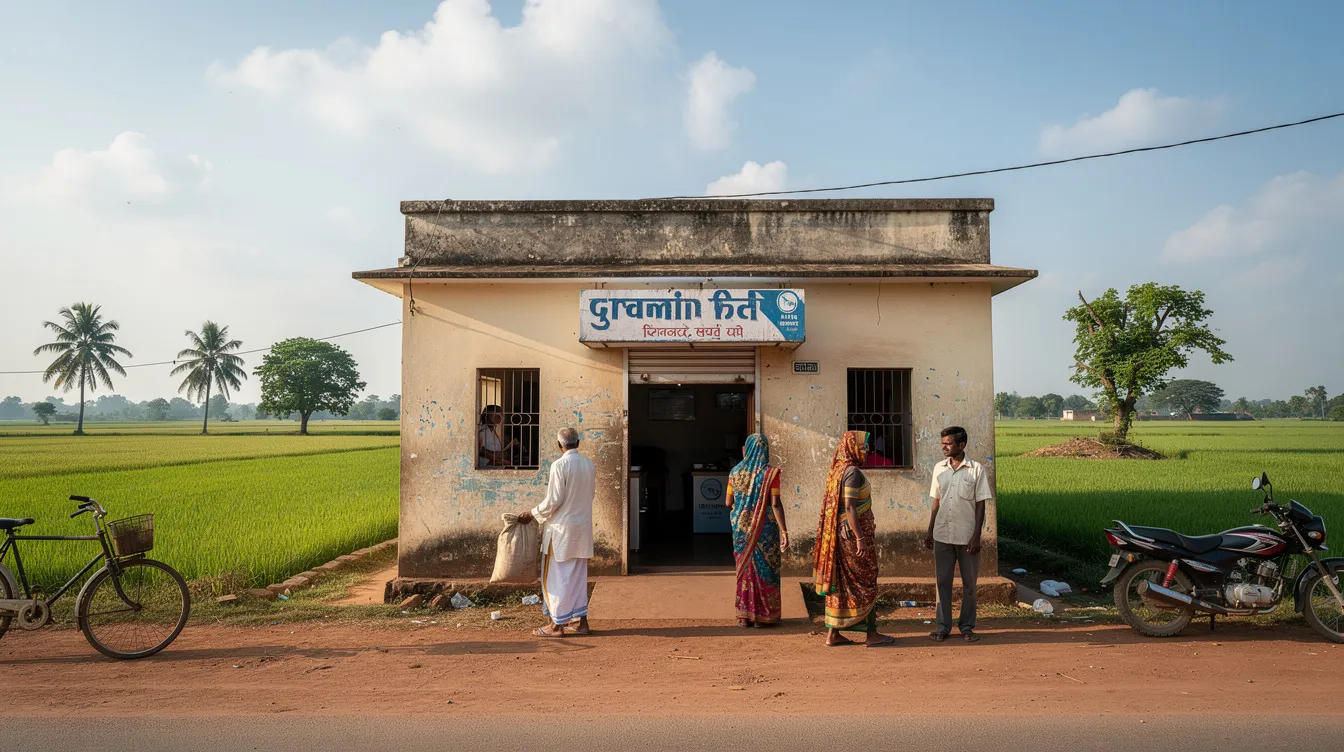
Accurate branch identifiers like IFSC codes and MICR codes are critical for routing both domestic and international remittances correctly to Maharashtra Gramin Bank accounts. A single wrong digit can result in failed transfers, delayed funds, or discrepancies that take days to resolve.
An IFSC code is an 11-character alphanumeric code assigned by the Reserve Bank of India to uniquely identify every bank branch participating in electronic funds transfer systems. IFSC codes are used for NEFT, RTGS, and IMPS transfers within India. For Maharashtra Gramin Bank, the IFSC code routes payments to the correct branch among its 748+ locations.
Here is how the code is structured:
| Position | Characters | Meaning |
|---|---|---|
| 1–4 | MAHG | Bank code (the first 4 characters of IFSC represent the bank) |
| 5 | 0 | Reserved character (the 5th character of IFSC is always '0') |
| 6–11 | e.g., 005401 | Unique branch code |
For example, the IFSC code "MAHG0005401" identifies the MGB branch in Gulmohar Colony, Ahmednagar. Here, "MAHG" identifies Maharashtra Gramin Bank, "0" is the standard placeholder, and "005401" pinpoints that branch.
When an international sender needs to transfer funds to an MGB account, they will typically require the sponsor bank's SWIFT code (Bank of Maharashtra's "MAHBINBB"). SWIFT codes consist of 8 to 11 letters and numbers and are used to identify banks and branches globally. However, the IFSC code is also needed so that once the funds enter the Indian banking system, they can be routed via RTGS and NEFT transactions to the correct MGB branch.
The MICR code is a 9-digit numeric code printed on Maharashtra Gramin Bank cheques using magnetic ink character recognition technology. It is used exclusively for cheque clearing and processing through India's Cheque Truncation System. Unlike the IFSC code, which powers electronic transfers, the MICR code applies only to physical cheques. You will find it printed at the bottom of your cheque leaves, and it encodes the city, bank, and branch information.
Always double-check the IFSC code before initiating any transfer - even a single wrong character can misroute your funds.
Keep the account name and number exactly as they appear in bank records to avoid discrepancies.
Confirm the MICR code only when dealing with cheques; it is not required for electronic or international transfers.
You can verify IFSC and MICR codes on the official Maharashtra Gramin Bank website, the RBI's IFSC directory, or in your passbook or cheque book.
Maharashtra Gramin Bank customers often receive remittances from countries such as the UAE, Saudi Arabia, Qatar, the UK, the USA, and Canada. These transfers are typically sent by family members working abroad, NRIs maintaining savings accounts, or for purposes such as education and medical payments in India.
Sender selects an international remittance service or foreign bank.
Enters the recipient's name as per bank records, Maharashtra Gramin Bank account number, IFSC code, and the required intermediary/sponsor bank SWIFT details (Bank of Maharashtra, SWIFT code "MAHBINBB").
Confirms the transfer currency (usually INR credit in India) and reviews fees and the exchange rate before sending money.
Share the correct account number and IFSC code with the sender.
Ask branch staff for updated correspondent bank or SWIFT details if the sender's bank requires them.
Check the passbook, SMS alerts, or mobile banking for incoming remittance credit.
To receive funds through digital services, a beneficiary must provide their account details, full name, account number, IFSC code, and branch address to the sender or remittance platform.
Inward remittances typically take 1–3 business days to reach an MGB account, depending on the sending country, intermediary banks involved, and compliance checks. Public holidays in either the sending or receiving country can extend this window, and transfers from less common currency corridors may take longer.
Many rural and semi-urban customers route outward international transfers through a linked sponsor bank (e.g., Bank of Maharashtra) that has direct SWIFT capability. Outward remittances from Maharashtra Gramin Bank require in-person processing at branches.
Customers may also use online money transfer services such as ACE Money Transfer to send money to eligible foreign bank accounts or cash-pickup locations in supported countries. ACE Money Transfer Limited is authorised and regulated by the UK Financial Conduct Authority (FCA) under reference number 506692 to provide payment services.
The RBI’s published Liberalised Remittance Scheme guidance lists the limit as US$250,000 per financial year (April–March) for resident individuals, subject to permitted purposes and applicable conditions. All transactions must comply with Reserve Bank of India and FEMA guidelines for foreign remittances. Form A2 is required for outward remittance applications under FEMA regulations, and additional documentation, such as Form 15CA/15CB, may be needed depending on the amount and purpose.
Verify the recipient's international bank details, including IBAN and SWIFT/BIC code.
Understand the full fee structure - transfer fees, exchange rate margin, and possible intermediary bank charges.
Watch the applied exchange rate carefully; a poor rate can cost more than the transfer fee itself.
Never share OTPs, CVV numbers, or internet banking passwords with anyone claiming to help with a transfer.
ACE Money Transfer is an online remittance platform that Maharashtra Gramin Bank customers and other Indian bank account holders can use to receive or send money internationally. It offers an alternative for cross-border payments, letting customers review available transfer methods, fees, and exchange rates before sending. Exchange rates and fees may vary by destination and payment method.
Here is how to get started with ACE Money Transfer:
Register or log in using email, Google, or Apple ID.
Choose the source country (e.g., UK, EU nations, Canada, Australia, Gulf countries) and destination (India).
Select a payout method such as bank deposit (into Maharashtra Gramin Bank or any major Indian bank), mobile wallet, or cash pickup.
When choosing bank deposit, enter the recipient's full name, bank account number, and IFSC code for Maharashtra Gramin Bank.
Add a payment reason and confirm the transfer details.
Pay with a debit card, credit card, or online bank transfer after reviewing the exchange rate and transfer fee.
Track your transaction in real-time using the reference tracking number provided.
When using ACE Money Transfer to send funds to a Maharashtra Gramin Bank account, the sender must provide accurate IFSC codes and account details so the money routes correctly via Indian payment rails such as NEFT, IMPS, or RTGS.

Accurate information, awareness of charges, and the use of regulated channels are the three pillars of safe, cost-effective cross-border transfers to or from Maharashtra Gramin Bank. Getting any of these wrong can mean lost funds, unexpected deductions, or compliance headaches.
Transfer costs vary by amount, payment method, and delivery option. Here are the main cost components to watch for:
Transfer fee: Bank of Maharashtra's published Schedule of Charges, effective 1 February 2026 and updated 9 March 2026, lists a 0.10% fee for non-trade MT103 outward remittances, with a minimum of ?100 and a maximum of ?1,000, plus applicable out-of-pocket expenses. Charges differ by transaction type, so check the relevant category before sending. ACE Money Transfer’s applicable fees can be reviewed on its official website.
Exchange rate margin: Banks and money transfer operators may apply an exchange rate that differs from the mid-market rate. The World Bank's Remittance Prices Worldwide data for India-to-Pakistan transfers, collected on 22–23 February 2024, recorded exchange-rate margins of 0.54% to 2.18% among the listed providers. This is a corridor-specific historical example, not a universal range; margins vary by provider, corridor and transaction.
Intermediary bank fees: International transfers routed through correspondent banks may incur additional charges. Whether these are deducted from the transfer amount depends on the payment route and charge arrangement.
Receiving bank charges: Bank of Maharashtra may apply inward-remittance or certificate fees depending on the transaction. Its current Schedule of Charges lists ?250 for an FIRC or encashment certificate on security paper. Confirm the applicable charges directly with the bank.
For comparison, Remitly has published a zero-fee promotion for eligible first transfers under specified terms and a stated promotion period ending 31 December 2026. Xe says most transfers arrive the same day, though some recipient banks may take 1–4 days; see its official transfer information. These statements are provider-specific and do not guarantee fees or delivery times for every transfer.
Compare the total cost, exchange rate and estimated delivery time for the same destination, amount and payment method before choosing a service. Rates, fees and delivery times vary by transaction.
KYC documentation is mandatory for international forex transactions at Maharashtra Gramin Bank, so ensure you have valid ID and address proof ready when initiating or receiving larger transfers.
Always verify the website or app URL of the service used to send money. Look for HTTPS and official domain names.
Never share internet banking passwords, CVV, or OTPs with anyone who calls or messages claiming to help with a transfer.
Use two-factor authentication and the official Maharashtra Gramin Bank and ACE Money Transfer mobile apps.
Here is a list of key practices to ensure your international transfers go smoothly:
Double-check all bank details, including the beneficiary name, account number, branch IFSC, and sponsor bank SWIFT code, before confirming any transfer.
Compare multiple options (bank wire vs. online remittance service) to find the best combination of fees and exchange rates.
The RBI's published Liberalised Remittance Scheme (LRS) guidelines state that resident individuals may remit up to US$250,000 per financial year (April to March) for permitted current or capital account transactions, subject to applicable conditions.
Maintain records of transaction receipts, SWIFT messages (where available), and ACE Money Transfer reference numbers.
Contact your Maharashtra Gramin Bank branch or ACE customer support promptly if any transfer is delayed or if you have questions about a transaction.
Be aware of exchange rate fluctuations between when you initiate and when the transfer settles; locking in a rate, where possible, can protect you.
For outward remittances, prepare Form A2 and any other required documents in advance to avoid branch delays.
Keep in mind that the future of international remittances for MGB customers may evolve as post-amalgamation system integration continues. Stay informed through your branch and official bank communications.

Maharashtra Gramin Bank does not have its own SWIFT code and routes all international transfers through its sponsor, Bank of Maharashtra.
Accurate IFSC codes and account details are non-negotiable for routing domestic and international funds successfully.
Inward remittances typically take 1–3 business days; outward remittances require in-person branch visits and FEMA-compliant documentation.
ACE Money Transfer provides international remittance services with payout options that may include bank deposit and cash pickup, depending on the sending country and destination. Check the available options for India to confirm which methods are currently supported for your transfer.
Always compare fees, exchange rates, and delivery times across providers before choosing how to transfer your funds.
Whether you are an NRI sending money home from the Gulf or a domestic customer funding overseas education, knowing how Maharashtra Gramin Bank international money transfer works puts you firmly in control of your finances. Get started with ACE Money Transfer today by exploring available transfer options and checking the applicable fees and exchange rate for your destination.
Disclaimer: This article is intended for general informational and educational purposes only and should not be construed as legal, regulatory, tax, business, or financial advice. While reasonable efforts have been made to ensure that all facts, figures, and data are accurate and valid as of the date of publication, no warranty or guarantee is given as to the ongoing completeness, accuracy, or currency of the information.
The content is based on information available at the time of publication. Regulations, government policies, market conditions, and service offerings may change over time and vary across jurisdictions and providers. As a result, some information may no longer be current or applicable. Readers should independently verify all information and consult qualified professional advisors before making any financial, legal, or business decisions.