
ACE Money Transfer
ACE Money Transfer

17 Jan 2025
Spain has topped global quality-of-life rankings for five consecutive years, and in 2026 the question isn't whether the country deserves its reputation - it's whether it matches your specific goals. This guide breaks down everything you need to know about living in Spain as an expat, digital nomad, retiree, or relocating family, with real 2026 data on costs, visas, healthcare, housing, taxes, and daily life.
Yes, Spain is a good country to live in - but how good depends entirely on what you're optimizing for. If you prioritize quality of life, climate, healthcare, and community over maximizing your salary, Spain delivers at a level few European countries can match. Spain consistently ranks highly for quality of life in global surveys, and in 2026 it holds the number one spot in the Expat Insider Quality of Life Index for the fifth year running. It also ranks 1st in the Digital Nomad Index, making it the world's most attractive base for location-independent workers.
The main pros are hard to argue with: a Mediterranean climate with over 300 days of sunshine annually, a cost of living roughly 25% lower than in the US, a public healthcare system ranked among the world's top 10, low crime rates, and a social life built around food, family, and time outdoors. A significant percentage of expatriates find Spain to be welcoming and friendly, and the relaxed lifestyle genuinely delivers on its promise.
The cons are equally real. The language barrier outside bigger cities can complicate daily tasks. Spanish bureaucracy is notoriously slow and paper-heavy. The job market pays below northern European averages, youth unemployment remains stubbornly high, and housing costs in Madrid, Barcelona, and coastal hotspots have surged in recent years. Summers are getting hotter - July 2026 tied with 2022 as Spain's hottest month on record.
Who benefits most? Retirees with pensions or passive income, digital nomads earning remotely in stronger currencies, EU citizens with freedom to work, and families seeking safety and community. Who might struggle? Anyone seeking a high-salary corporate career without fluent Spanish, or people who can't tolerate slow administrative processes and late schedules.
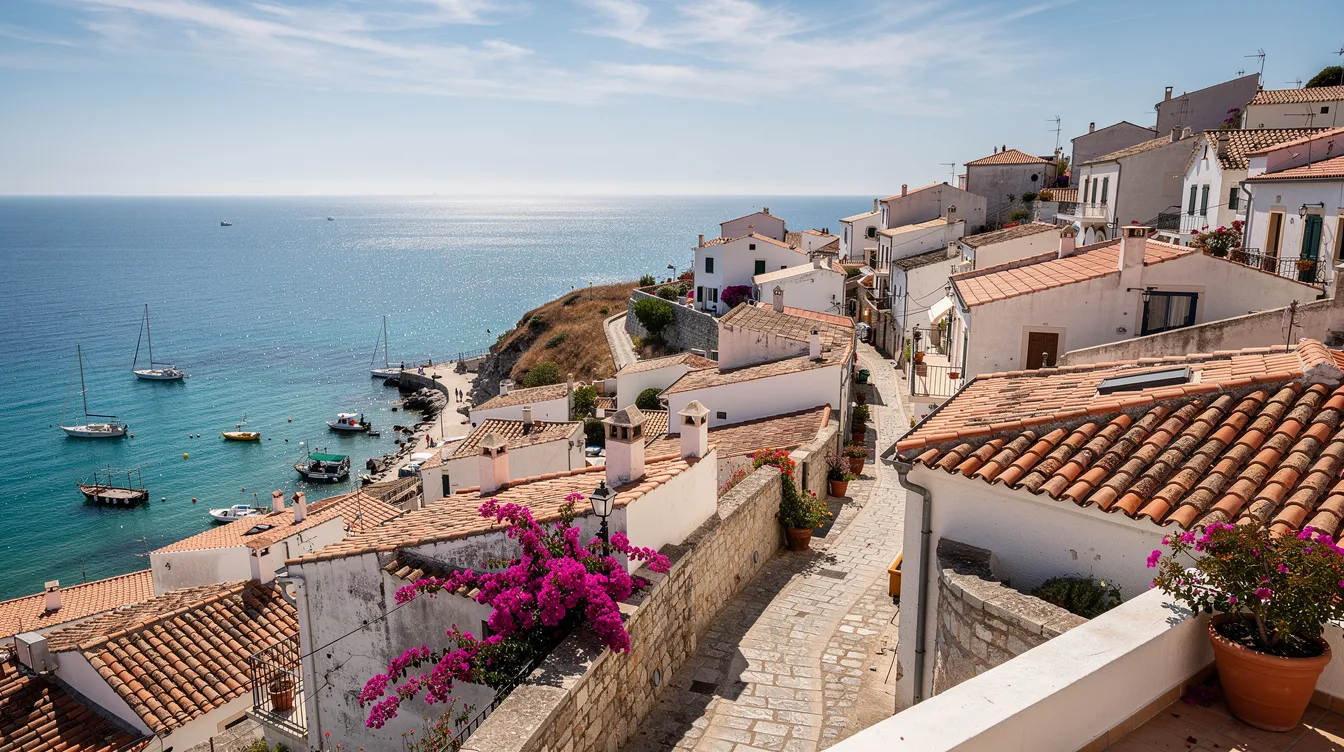
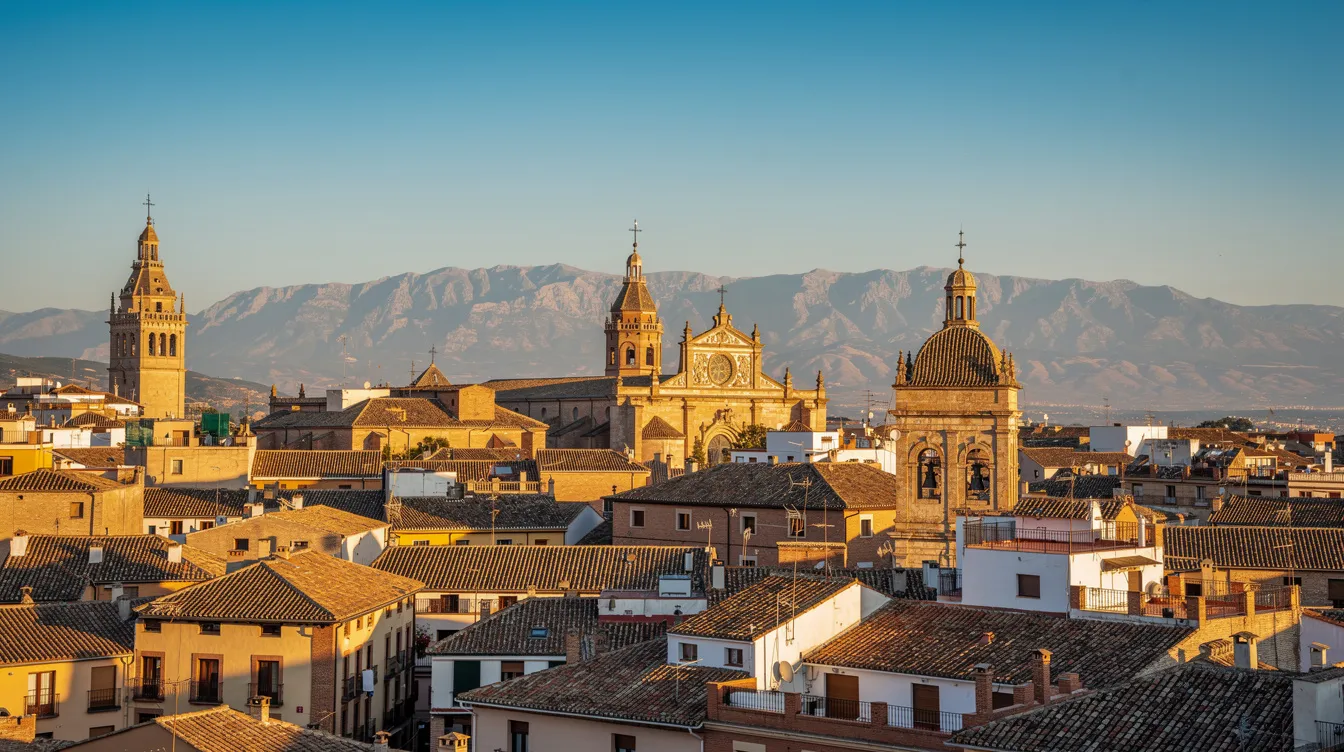
Spain is a modern European Union member state of roughly 48 million people, stretching from the Pyrenees to the Mediterranean Sea and the Atlantic coast, with island territories in the Canary Islands and Balearic Islands. Its major cities - Madrid, Barcelona, Valencia, Seville, Málaga, and Bilbao - each have their own economic personality and cultural identity. Beyond the cities, Spain has distinct regional identities and cultures across its various regions, from the green hills of the Basque Country and Galicia to the sun-baked plains of Castilla-La Mancha and the subtropical climate of the Canaries.
As of January 2026, 20.3% of Spain's population is foreign-born - over 10 million people. The largest expat communities include British, German, Moroccan, Romanian, and a growing wave of Latin American and North American nationals. These groups cluster along coastal provinces, in the major cities, and on the islands.
What draws them? The combination is unusually strong: a Mediterranean climate, relatively low cost of living compared to other western European countries, world-class healthcare, safety, and a geographic position that makes Spain a gateway to Europe, North Africa, and - through language and cultural ties - Latin America. Spain offers something for nearly every type of expat.
The diversity of expat profiles reflects this range. Retirees come for mild winters and affordable healthcare. Families are drawn by international schools, safety, and the child-friendly culture. Digital nomads use Spain's digital nomad visa to base themselves in cities like Valencia or Málaga. Corporate transferees arrive in Madrid and Barcelona. Entrepreneurs and investors historically took advantage of the golden visa program.
One important caveat: experiences vary dramatically. Living in Spain on the Costa del Sol as a retired couple is a completely different proposition from working a local contract in a small Andalusian town or raising bilingual children in Barcelona. This guide helps you understand those differences so you can make an informed decision.
Spain's advantages are not just marketing - they show up consistently in expat surveys and hard data. Here are the most concrete ones.
The climate is the headline draw. Spain enjoys over 300 days of sunshine annually in many southern and coastal areas, with Andalusia logging over 3,100 sunshine hours per year. Spain has nearly 5,000 kilometers of coastline, offering beach access from the Mediterranean to the Atlantic. Even in winter, temperatures along the southern coast and the Canary Islands remain mild enough for outdoor activities year-round.
Healthcare is genuinely excellent. Spain's healthcare system ranks among the world's top 10 for efficiency and outcomes, with life expectancy among the highest in the EU. Expats rate availability, quality, and affordability at around 83% satisfaction - well above the global average. Spain boasts a high-quality healthcare system that covers everything from primary care to specialist treatment.
The cost of living, while rising, still compares favorably with cities like London, Paris, or New York for a similar quality of life. Living costs in Spain are roughly 25% lower than in the US, and rent runs about 40% cheaper. You can eat a solid three-course menu del día for about €14 in most Spanish cities.
Spain is considered one of the safest countries in Europe with low crime rates. Violent crime is rare, and many expats - especially families and retirees - cite safety as a primary reason they chose Spain over other European countries.
Public transportation in Spain is efficient and affordable. High speed trains connect Madrid to Barcelona in under three hours, regional trains and metro systems serve all major cities, and monthly transit passes are reasonably priced.
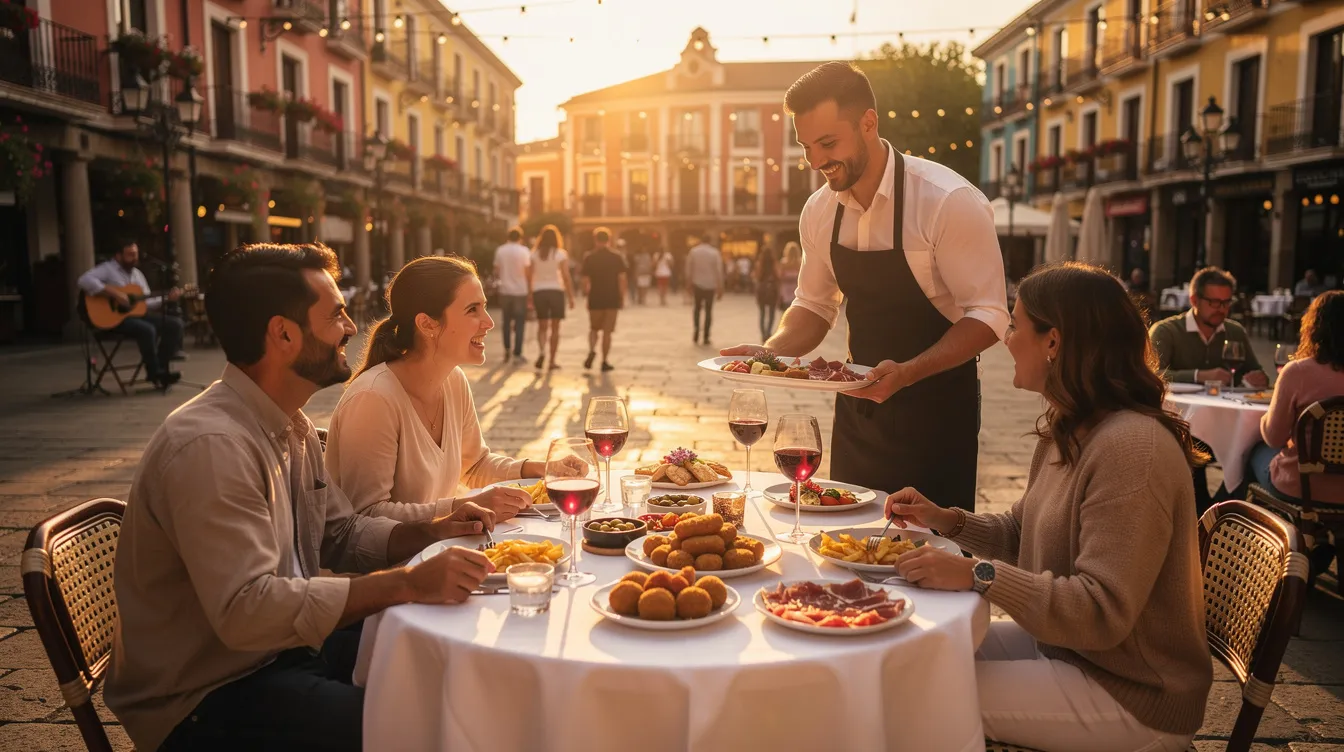
Spain has a vibrant food culture and social life centered around dining and community. The Spanish lifestyle revolves around shared meals, outdoor terraces, festivals, and strong neighborhood bonds. Spanish food is not just paella and sangria - regional Spanish cuisine spans pintxos in the Basque Country, cocido in Madrid, and extraordinary seafood along both coasts.
Finally, Spain's position within the European Union means easy travel across EU countries, plus direct connections to North Africa and the Middle East. The country's rich history, world class museums like the Prado and Guggenheim, and deep Spanish traditions make it culturally rewarding in ways that go far beyond the beach.
Spain is not perfect, and going in with realistic expectations matters more than enthusiasm.
The Spain language barrier is real. Outside Madrid, parts of Barcelona, and tourist-heavy coastal zones, English is uncommon in daily interactions. Official documents, medical appointments, school communications, and landlord negotiations typically happen in Spanish - or in Catalan, Basque, or Galician, depending on where you live. The language barrier can complicate daily tasks in Spain, from opening a bank account to understanding your utility bill.
Spanish bureaucracy is legendary for its slowness. More than half of expats report significant difficulties dealing with local authorities. Getting your NIE, registering your address, exchanging a driving license, or filing taxes involves multiple appointments, paper forms, and often contradictory instructions from different offices. Bureaucratic processes in Spain are often slow and complicated, and patience is not optional - it's a survival skill.
Salaries are lower than in northern Europe. The average gross salary across Spain sits around €2,600 per month (about €31,200 per year), and many sectors pay considerably less. While unemployment has improved from its crisis-era peak - unemployment in Spain was 16.55% as of January 2017 - non-EU migrant unemployment remains around 18.4%, and young people face particularly tough prospects. The job market rewards those with Spanish fluency and local networks.
In August, many businesses in Spain close for vacation. If you need a plumber, a notary, or even your favorite restaurant during the second half of summer, you may be out of luck. This annual shutdown surprises many newcomers.
Housing is increasingly expensive in popular areas. Madrid, Barcelona, the Balearic Islands, and parts of the Costa del Sol have seen rents and property prices surge well beyond what local salaries can support. Spain's housing market faces challenges with squatters and legal issues in some regions, adding complexity to property ownership.
Summers are getting hotter. July 2026 averaged 25.7°C nationwide - about 2.6°C above the 1991–2020 average - and heat waves now reach traditionally cooler northern regions. Older apartments often lack air conditioning.
These cons are manageable with preparation, language study, and a willingness to adapt. But they are not trivial, and dismissing them leads to frustration.
Daily rhythms in Spain run later than almost anywhere in Europe. Breakfast is light and late - coffee and toast around 9 or 10 a.m. Lunch is the main meal, typically between 2 and 3:30 p.m., and many businesses still close during this window in smaller towns. Dinner rarely starts before 9 p.m., and 10 p.m. is perfectly normal. Spanish people socialize in plazas, bars, and restaurants until late, including families with young children.
Cultural values lean heavily toward relationships. Family ties are strong, friendships are deep (if slow to build), and social life happens face-to-face over food and drinks. Punctuality in social contexts is relaxed - showing up 15 minutes late to a dinner is not rude, it's expected. In professional settings, things are more structured, but the pace still differs from northern European or American norms.
For Western expats, culture shock tends to be moderate rather than dramatic. The biggest adjustments are noise levels (Spain is loud, and that's considered normal), the late schedule, and the different relationship with time. Many newcomers initially find the pace frustrating, then gradually discover it's one of the best things about Spanish life.
Key cultural experiences help with integration. Semana Santa in Seville, Las Fallas in Valencia, San Fermín in Pamplona, and local patron saint fiestas across every town offer genuine windows into the rich culture. Locals appreciate foreigners who participate respectfully.
Adaptation strategies that work: embrace the late schedule instead of fighting it, join local sports clubs or hobby groups, learn basic social phrases early, and understand unwritten rules around greetings (two cheek kisses among friends, regardless of gender) and tipping (small change, not 20%).
Living in Spain with only English is possible in central Madrid, parts of Barcelona, some international pockets of Valencia and Málaga, and tourist-heavy coastal strips. But "possible" and "comfortable" are different things. If you venture beyond these zones - or need to handle anything administrative - you will hit the language barrier hard.
The official language of Spain is Castilian Spanish, but several regions have co-official languages that dominate daily life. Catalan is the primary language in Catalonia and much of the Valencia region. Basque (Euskera) prevails in the Basque Country. Galician is spoken throughout Galicia. In these regions, school instruction, government services, and local media often prioritize the regional language. Moving to rural Catalonia without Catalan is a bigger adjustment than many expats expect.
Common expat experiences follow a pattern: English works fine for restaurants, tourist services, and socializing with other expats. But paperwork at the town hall, conversations with your doctor, meetings at your child's school, and negotiations with your landlord all require Spanish at minimum. Having a Spanish speaking friend who can help with initial bureaucratic hurdles is invaluable, but it's not a long-term strategy.
Realistic proficiency goals vary by profile. A digital nomad staying 1–2 years should aim for conversational A2/B1 Spanish to handle daily life independently. A family settling long-term needs at least B1–B2 to navigate schools, healthcare, and community. A retiree in a coastal expat community can get by with less, but even basic Spanish dramatically improves quality of life.
Practical steps: take an intensive course in your first month, use language apps for daily practice, attend intercambio (language exchange) meetups - they're free and available in most Spanish cities - and choose bilingual service providers for critical tasks like healthcare and legal matters.
The cost of living in Spain remains one of its strongest selling points, though it's no longer the bargain it was a decade ago. The average monthly cost of living is €717.20 in 2026 for a single person before rent. A single person needs around €600–700 monthly, excluding rent, for groceries, transport, utilities, and basic entertainment. The cost of living in Spain is relatively low compared to Northern Europe and other western European countries.
Rent is the biggest variable. Rent for a one-bedroom apartment in city centers averages €1,000. Specific benchmarks for furnished one-bedrooms in 2026: Granada ~€700, Seville ~€800, Bilbao ~€950, Málaga ~€1,000, Valencia ~€1,050, Madrid ~€1,200, Barcelona ~€1,250. The cheapest cities for rent include places like Extremadura and Castilla-La Mancha, where an 80 m² flat runs €600–700.
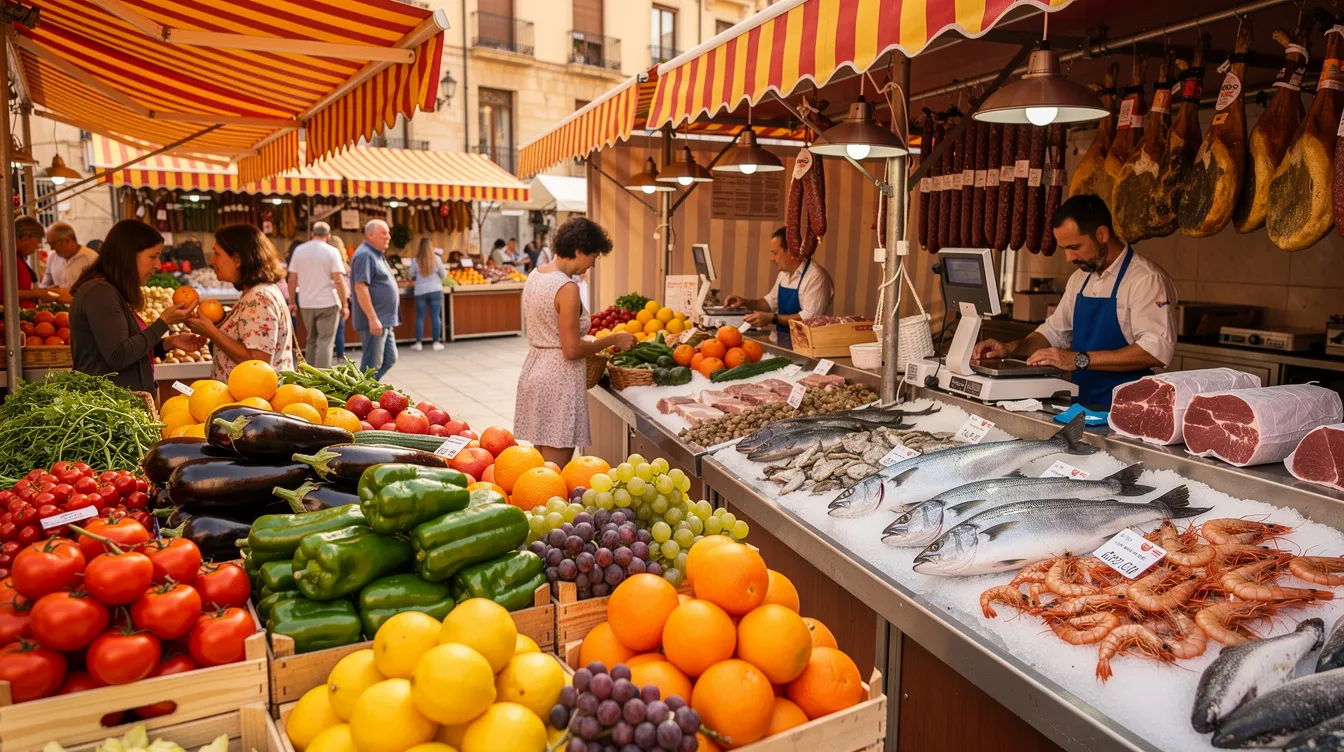
Groceries for a single person cost between €200 and €300 monthly, depending on diet and shopping habits. Spanish markets and discount supermarket chains keep fresh produce affordable. Monthly utility bills average €130 for an 85 m² apartment, covering electricity, water, gas, and internet. Dining out costs around €14 for an average meal at a mid-range restaurant, and a menu del día (three-course lunch with a drink) often runs €12–15.
Private health insurance costs between €50 and €300 per month, depending on age, coverage level, and provider. International schools, if needed, add significantly to the budget - typically €6,000–€18,000 per year depending on the institution.
Compared to the US, UK, Germany, or Scandinavia, Spain delivers noticeably more for your money on housing, food, and healthcare. Imported goods and electronics may cost slightly more, but day-to-day expenses are lower across the board. Plan your budget carefully before moving, including one-off settlement costs: deposits (typically two months' rent), furniture, visa fees, and initial private insurance premiums.
Spain's job market in 2026 has bright spots and persistent weaknesses. The strongest demand sits in tech hubs in Madrid and Barcelona, renewable energy, engineering, healthcare, and multilingual customer support centers. Tourism and hospitality employ large numbers but pay modestly. The business environment is improving for startups, but traditional industries remain hierarchical and slow-moving.
The average gross salary is approximately €2,600 per month nationally, with Madrid salaries running about 15% above that average. Employment income in fields like tech or finance can reach €40,000–€60,000 gross annually for experienced professionals, but many businesses pay well below that. Temporary contracts and part-time work remain common, particularly for younger workers and migrants.
Spanish work culture values in-person relationships and long lunches. The standard workweek is around 40 hours, and work life balance scores well in expat surveys - about 68% satisfaction versus 62% globally. Remote work has grown significantly, especially in international companies, but most local firms still expect physical presence.
EU citizens can live and work in Spain without a visa, giving them a significant advantage in the job market. Non-EU nationals need an employment contract and a work permit, which limits options. The EU Blue Card requires a job offer and a university degree for highly skilled roles.
Practical advice for job seekers: learn Spanish to at least B2 level, target multinational employers with English-language operations, explore remote roles with companies outside Spain, and network through coworking spaces and professional meetups. Many expats find that the combination of remote work plus Spanish living costs is far more rewarding than chasing a local employment contract.
Spain offers several residency paths, and choosing the right one depends on your income source, nationality, and long-term plans.
The digital nomad visa (established under Law 28/2022) targets non-EU remote workers employed by or freelancing for companies outside Spain. The Spain Digital Nomad Visa requires €2,850 monthly income (200% of the Spanish minimum wage as of January 2026). At least 80% of income must come from non-Spanish sources. The visa can be granted for up to three years when applied for in-country and is renewable. Family members can be included, with additional income thresholds: roughly €916 for one dependent and €305 for each additional dependent.
The non-lucrative visa suits retirees and people with passive income who don't plan to work in Spain. The Non-lucrative Visa requires €2,400 monthly income and comprehensive private insurance. It does not permit employment in Spain.
The student visa allows enrollment in Spanish educational institutions and limited part-time work. EU citizens simply register as residents after three months. Residency permits can lead to Spanish citizenship after 10 years of continuous legal residence (shorter for nationals of certain Latin American countries). The golden visa, historically tied to significant property or financial investment, has undergone modifications in recent years - check current status before relying on this route.
Typical application steps include gathering documents (criminal background checks, proof of income, health insurance), applying at your local Spanish embassy or consulate (or in-country for some visa types), and waiting for approval. Processing times vary from weeks to several months.
Many remote workers combine the digital nomad visa with favorable tax planning options. Professional advice on both immigration and taxation is strongly recommended before committing to any route.
Spain operates a progressive personal income tax system, with rates that vary slightly by autonomous community. Tax residents - generally anyone spending 183 days or more per year in Spain, or whose center of economic interests is located there - are taxed on worldwide income.
Spain income tax rates for 2026 range from approximately 19% on the first bracket up to 47% on high incomes, with regional surcharges adding variation. Employment income and self-employment income are taxed at these progressive rates. Spanish sourced income for non-residents is taxed at a flat rate, typically 24% (19% for EU/EEA residents).
Capital gains from investments and property sales are taxed separately, with rates ranging from 19% to 28% depending on the amount. Spain has double taxation treaties with dozens of countries, which can prevent you from being taxed twice on the same income - critical for expats maintaining investments or pensions from their home country.
A special regime often called the "Beckham Law" allows eligible newcomers to pay a flat rate on Spanish sourced income for up to six years, provided they meet strict criteria around prior non-residency and type of employment. This can be advantageous for high earners relocating on an employment contract.
Other taxes to be aware of include property tax (IBI), wealth tax (applied in some regions on net assets above a threshold), VAT at 21% on most purchases (reduced rates on food and essentials), and potential inheritance tax implications for long-term residents.
The bottom line: consult a qualified tax advisor who understands cross-border taxation before moving, especially if you have significant assets, remote income, or plan to buy property. Spain's tax system is navigable, but surprises are expensive.
Opening a Spanish bank account is one of the first practical steps after arriving. You need it to pay rent, utilities, taxes, and receive salary or pension payments. Relying solely on foreign cards means higher fees, currency conversion losses, and landlords who won't accept your payments.
Spain distinguishes between resident and non-resident accounts. Non-residents can open a bank account before full relocation, but they may face higher maintenance fees and more restrictions. Resident accounts offer better terms once you have your NIE and proof of address.
Typical documents required:
Passport or national ID
NIE (foreigners' identification number)
Proof of address in Spain
Sometimes proof of income or an employment contract
Branch opening hours are often limited to weekday mornings (8:30 a.m. to 2 p.m.), though online banking apps from major Spanish banks increasingly offer English interfaces and 24/7 access. Appointments (cita previa) are usually required.
For international transfers and multi-currency needs, many expats and digital nomads combine a Spanish bank account with global fintech tools to save money on conversion fees. The key pitfall: requirements differ by bank, and some branches may request documents others don't. Persistence and flexibility help.
Spain's healthcare system is a genuine strength. The public National Health System (SNS) is tax-funded, decentralized by region, and generally free or low-cost at the point of use for legal residents. Public healthcare is free for legal residents and EU citizens who are covered by their home country's system or contributing to Spanish social security.
Expats can access public healthcare by contributing to social security through employment or self-employment. Non-working residents may join through the Convenio Especial scheme in some cases. Emergency treatment is available to everyone, including undocumented immigrants - a point that distinguishes Spain's healthcare system from many other European countries.
Many expats choose private healthcare for shorter waiting times, English speaking doctors, and more flexibility in choosing specialists and hospitals. Private health insurance costs between €50 and €300 per month, depending on age and coverage. For context, a comprehensive plan for a 35-year-old typically runs €80–€120 monthly.
Most visa types - including the digital nomad visa, non-lucrative visa, and some student visa routes - require comprehensive private insurance with no co-payments during the initial period. This private insurance serves as your primary coverage until you qualify for the public healthcare system.
Spain's top hospitals in Madrid, Barcelona, and other major cities rank well internationally. The public healthcare system provides excellent primary care, specialist treatment, and emergency services, though waiting times for non-urgent procedures can be longer in some regions. Understanding your local health center's registration process is important - you'll be assigned a general practitioner based on your address.
Spain's education system follows a clear structure: Infantil (ages 0–6, including early childhood education), Primaria (6–12), ESO (12–16, compulsory secondary), and Bachillerato (16–18, pre-university) or vocational training (FP).
Schools come in three types:
Public (colegios públicos): Free, zoned by catchment area, taught in Spanish or regional languages. Excellent for integration but challenging if children arrive without the language.
Semi private schools (concertados): Partially government-funded, often Catholic, with modest fees. A middle ground that many expat families consider.
Private schools (colegios privados): Fully fee-paying, with more autonomy over curriculum and language of instruction.
For expat families, international schools in major hubs offer British, American, or International Baccalaureate curricula taught largely in English. The best international schools are concentrated in Madrid, Barcelona, Valencia, Málaga, and Alicante. Sotogrande International School near Gibraltar is well-known among expat families in southern Spain. Annual fees range from roughly €6,000 to €18,000, with additional costs for transport, meals, and extracurricular activities.
Choosing between public and international schools depends on your children's ages, language background, budget, and expected length of stay. Younger children (under 8) typically adapt to Spanish-language schooling within 6–12 months. Older teenagers may benefit from English-medium international schools to avoid disrupting their academic trajectory.
Spain's public transport network is among the best in Europe. High speed trains (AVE) connect Madrid to Barcelona in 2.5 hours, to Seville in 2.5 hours, and to Valencia in under 2 hours. Regional trains, intercity buses, and domestic flights fill the gaps. Madrid, Barcelona, Valencia, Bilbao, and Seville all have extensive metro and tram systems, with integrated monthly passes typically running €40–€70.
For daily commuting in major cities, public transport is the low cost, practical choice. Many city residents never need a car. In Madrid and Barcelona, combined metro-bus passes make commuting both affordable and efficient.
Driving rules for expats depend on nationality. EU licenses are valid indefinitely. Non-EU licenses are valid for six months (or the duration of your visa), after which you need to exchange or take a Spanish driving test. The process involves booking a cita previa with the DGT (traffic authority), and waiting times can stretch to several weeks.
Regional variation matters: owning a car becomes necessary in rural areas, smaller towns, and the islands, where bus and train coverage is limited. In city centers, parking is expensive and traffic congestion makes driving less appealing. Many expats in bigger cities rely on a combination of metro, walking, cycling, and occasional car-sharing services.
Foreigners can buy property in Spain without special requirements - no residency or citizenship needed. This openness has made Spain one of Europe's most popular markets for international buyers. Foreign buyers purchased 69,412 properties in Spain in 2024, and demand continues.
The 2026 housing market shows sharp contrasts. In Q1 2026, property prices surged by 14.3–18.4% year-on-year in hotspots like Madrid, Barcelona, and the Balearic Islands. The average price to buy a house in Spain is around €450,000, though this varies enormously: San Sebastián commands ~€6,400/m², Madrid ~€6,000/m², and Barcelona ~€5,200/m². For historical context, property prices in Spain fell by 40% after the 2008 recession, so the market has clearly recovered and then some.
Key steps for buying property:
Obtain your NIE (foreigners' identification number)
Open a Spanish bank account
Hire an independent lawyer (essential - do not rely on the seller's)
Sign a reservation contract and pay arras (deposit, typically 10%)
Complete at the notary and register the property
Non-resident buyers typically access financing at 60–70% loan-to-value, with slightly higher interest rates than residents. Always verify that the property is free of debts, liens, or legal issues before signing anything.
Whether buying property in Spain makes sense depends on your timeline. For stays under 3–5 years, renting is usually more practical. For longer-term plans, buying can be financially advantageous - especially with property prices rising in desirable areas. Buying may also tie into residency routes, though the golden visa program's terms have evolved. Professional legal and financial advice is non-negotiable.
The rental market in 2026 is competitive, especially in major Spanish cities and along the coasts. The average rent for an 80 m² flat in Spain hit €1,131 per month in July 2026, with Madrid at ~€1,542, the Balearic Islands at ~€1,526, and Catalonia at ~€1,366. Inland regions like Extremadura and Castilla-La Mancha offer significantly cheaper options at €600–€730.
Landlords typically request:
Passport and NIE
Employment contract or proof of funds
Recent payslips or bank statements
Sometimes a guarantor, especially for foreigners without Spanish rental history
Deposits are usually one to two months' rent, paid upfront. Some landlords ask for additional guarantees like a bank guarantee (aval bancario), particularly in Madrid and Barcelona where demand far exceeds supply.
Short-term tourist rentals have reduced long-term housing stock in popular areas, driving up prices and competition. Review contracts carefully: standard long-term contracts (typically five years for individuals) include provisions for annual rent updates, maintenance responsibilities, and termination conditions.
Practical tips: start searching 1–2 months before your move, use reputable agencies and established portals, learn key Spanish rental vocabulary (fianza, contrato de arrendamiento, gastos de comunidad), and never send deposits before seeing a property in person or through a trusted contact. Scams targeting foreign renters do exist.
Spain's diversity means there's no single "best" city - it depends on your priorities.
Valencia is ranked 1st globally for expats' satisfaction, offering affordable rents relative to its quality of life, a Mediterranean climate, excellent food culture, beaches, and a growing tech scene. It's increasingly the top choice for digital nomads and young professionals seeking a balance of cost and lifestyle.
Madrid is home to over 1 million foreign nationals, roughly 14% of its population. It's Spain's economic engine, with the strongest job market, highest salaries, world class museums, and the most extensive public transport system. The trade-off: higher rents, hotter summers, and a faster pace than the coast.
Barcelona has a foreign population of over 400,000, about 25% of its residents. Its creative and tech sectors attract international talent, and the city combines beaches with cosmopolitan urban life. The bilingual environment (Catalan and Spanish) can be a bonus or a barrier. Property prices and rents are among Spain's highest.
Málaga has over 400,000 foreigners, about 23% of its population. Located on the Costa del Sol, it offers sunshine, beaches, a growing expat community, and increasingly good digital infrastructure. It's a magnet for retirees and remote workers alike, though summer heat can be intense.
Seville's expat community is around 65,000, roughly 3.3% of the city. It offers deep Spanish traditions, lower costs than Madrid or Barcelona, and an authentic Andalusian lifestyle. The summer heat (regularly above 40°C) is the main drawback.
Bilbao and the Basque Country offer a green, cooler alternative with excellent gastronomy (pintxos culture), strong regional identity, and higher-than-average salaries. The trade-off is more rain and fewer sunshine hours.
The Canary Islands provide year-round mild temperatures, a subtropical lifestyle, and favorable tax conditions. They're popular with digital nomads and retirees seeking escape from both northern winters and mainland summer heat.
Before committing, explore multiple locations using short-term rentals to test how each area fits your priorities - climate, work, schooling, social life, and outdoor activities.
Spain's family-friendly culture is not an abstraction - it's visible everywhere. Children are welcomed in restaurants, bars, and plazas well past 10 p.m. Parks and playgrounds are plentiful, and community bonds are strong, especially in smaller towns and family-oriented neighborhoods.
Safety reinforces this. Spain is considered one of the safest countries in Europe, with violent crime rates well below the EU average. Many expat families cite this as a decisive factor.
Childcare options include public nurseries (guarderías), private daycare, and informal arrangements. Public nursery fees are income-based and can be very affordable, but waiting lists exist in popular areas. Private daycare runs €300–€600 per month depending on the city.
An interesting data point for long-term settlers: 78% of people living in Spain own their homes, reflecting a culture that values stability and roots. Expat families who plan to stay long-term often find this ownership culture reassuring.
Children typically adapt quickly. Those enrolled in local schools acquire Spanish (and regional languages) within a year, often becoming bilingual faster than their parents. The main challenge for expat families is managing two or three languages at home and school while maintaining connections with extended family abroad.
Spanish cuisine is one of the country's greatest assets for daily life, not just for tourism. The food culture spans tapas bars in Andalusia, pintxos crawls in San Sebastián, paella in Valencia, hearty cocido in Madrid, and extraordinary fresh seafood along both the Mediterranean and Atlantic coasts. The Mediterranean diet - olive oil, vegetables, legumes, fish, and moderate wine - contributes to Spain's world-leading life expectancy.
Weekly supermarket bills for a single person typically run €50–€75. Groceries for a single person cost between €200 and €300 monthly, depending on whether you shop at discount chains (Mercadona, Lidl, Aldi) or specialty shops and markets. The menu del día at a neighborhood restaurant - a three-course lunch with bread and a drink - usually costs €12–€15, making dining out costs around €14 for an average meal.
Daily shopping routines often involve neighborhood markets and bakeries for fresh items, supplemented by larger supermarket runs. Opening hours vary: many businesses still close between 2 and 5 p.m. in smaller towns, and Sunday trading is limited in most regions.
Dietary restrictions are manageable in bigger cities, where vegetarian, vegan, gluten-free, halal, and kosher options are increasingly available. In smaller towns, options narrow considerably - having some kitchen independence helps.
Spain's geographic diversity is extraordinary for a single country. The Mediterranean coast runs from Catalonia to Andalusia. The Atlantic coast shapes Galicia and the Basque Country. The central Meseta plateau dominates the interior. The Pyrenees form the French border, and the Sierra Nevada in the south hosts Europe's most southerly ski resort. The Canary Islands sit off the northwest coast of Africa with a subtropical climate entirely their own.
This translates to a Mediterranean climate along the eastern and southern coasts - hot, dry summers and mild winters. The north gets more rain, cooler summers, and green landscapes. The central plateau experiences continental extremes: scorching summers and cold winters. The Canary Islands maintain year-round temperatures between 18–25°C.
The outdoor activities this enables are a major reason people choose Spain. Beach life along the Mediterranean Sea, hiking in the Pyrenees and Picos de Europa, cycling across Valencia's flat terrain, skiing in Sierra Nevada, and surfing in the Basque Country are all within reach. Year-round outdoor terraces in most cities make even a simple coffee feel like a lifestyle upgrade.
Climate affects practical decisions: air conditioning is essential in southern and central Spain during summer, and heating matters in older apartments during winter - especially in Madrid and inland cities. Those coming from colder climates in northern Europe often underestimate the central Spanish winter.
Making friends with Spanish people requires time and effort, but it's rewarding. Spaniards tend to maintain tight-knit social circles formed in childhood, and breaking in takes patience. However, those who invest in learning the language, joining local activities, and showing up consistently find that friendships are deep and lasting.
Many expats initially build social connections through the expat community - which is large and well-organized in most major cities. Coworking spaces, language exchange meetups (intercambios), sports clubs, volunteering, and parents' associations at schools all serve as practical entry points.
The typical expat trajectory: people come for the climate and cost of living, but they stay because of the social life, community feel, and the relaxed lifestyle. Spain ranks highly in "Ease of Settling In" and "Local Friendliness" in international surveys.
Concerns around discrimination exist, as in any country, but most foreigners report feeling accepted when they respect local customs, make efforts with Spanish, and participate in community life. Integration is easier in diverse cities like Madrid, Barcelona, and Valencia, and can take longer in smaller, more traditional communities.
Moving to Spain changes your financial picture. Lower everyday expenses are the upside, but new tax exposures - particularly on investments and global income - require planning.
Capital gains for Spanish tax residents are taxed at progressive rates from 19% to 28%, depending on the gain amount. This applies to stock sales, property disposals, and other investment income. If you're holding a portfolio or planning to sell assets, understanding these brackets before establishing tax residency saves money.
Spain has numerous double taxation treaties with countries across Europe, the Americas, and beyond. These treaties allow residents to offset taxes paid abroad against Spanish liabilities, preventing double taxation on the same income. This is particularly relevant for retirees receiving pensions from abroad, or digital nomads with clients in multiple countries.
For comparison, some expats weigh Spain against destinations like Costa Rica or Portugal, which have their own tax advantages. Spain's combination of quality of life, EU membership, and infrastructure often tips the balance, but the tax picture is part of the equation.
If you're considering large investments, starting a business, buying property, or planning early retirement in Spain, professional cross-border tax and financial planning is essential. The wealth tax, regional variations, and interaction between Spanish and foreign tax obligations create complexity that generic advice can't address. Save money by getting proper advice early rather than fixing mistakes later.
So, is Spain a good country to live in? For the right person, it's one of the best in the world. Spain delivers exceptional quality of life, a healthcare system that works, a climate that makes outdoor living feel natural, and a culture that prioritizes human connection over productivity metrics. Living in Spain means trading some earning potential and administrative efficiency for genuine daily enjoyment.
Spain is best suited for retirees with pensions or investment income who want affordable, high-quality healthcare and mild weather. It's ideal for digital nomads and remote workers leveraging the digital nomad visa and earning in stronger currencies. EU citizens looking for a lifestyle upgrade within the European Union find Spain hard to beat. And families seeking safety, community, and a slower pace will find permanent residency here deeply satisfying.
The challenges are real: the language barrier requires active effort to overcome, the job market won't match northern European salaries, housing costs in popular areas keep rising, and Spanish bureaucracy tests everyone's patience. Understanding Spain's tax system - including implications for capital gains, wealth tax, and employment income - requires professional guidance.
Concrete next steps if you're seriously considering the move:
Plan a 2–4 week scouting trip to at least three different regions, testing climate, cost, and culture firsthand.
Consult an immigration specialist to identify the right residence permit or visa for your situation - apply through your local Spanish embassy if outside Spain.
Work with a cross-border tax advisor to understand your obligations, including any double taxation treaties that apply.
Draft a realistic monthly budget covering rent, healthcare (private or public), schooling, transport, and daily expenses.
Start learning Spanish now - even basic conversational ability transforms your experience from tourist to resident.
Spain rewards those who come prepared, stay flexible, and embrace what the country genuinely offers. In 2026, that offer remains one of the strongest in the world.