ACE Money Transfer
ACE Money Transfer

17 Mar 2025
The Netherlands combines a high quality education system with tuition fees that, for many programmes, run well below what students pay in the UK or the United States. This guide breaks down exact costs, names the most affordable universities, and identifies the cheapest cities for international students planning to study abroad in 2026.
Dutch universities offer quality education taught in English at tuition rates that undercut most Anglo-Saxon alternatives. But your total annual cost depends on two factors: your nationality (EU/EEA vs non-EU/EEA) and the city where you live. Tuition fees and living costs in the Netherlands can vary by thousands of euros depending on the city of study.
Here is what a typical year looks like for international students in 2026:
EU/EEA students: about €2,694 in tuition fees plus €10,000 to €14,000 in living expenses, for a total of roughly €12,700 to €16,700 per year.
Non-EU students: about €7,000 to €22,000 in tuition fees plus similar living costs, bringing the annual total to roughly €17,000 to €36,000.
No public university in the Netherlands is tuition-free for international students. But many Dutch universities offer scholarships for international students, and part-time work can offset living expenses. The label "cheapest university" usually points to a combination of affordable tuition fees, a budget-friendly city like Groningen, Enschede, Nijmegen, Tilburg, or Eindhoven, and a reasonable monthly cost of living.
| Student Category | Tuition per Year | Living Costs per Year | Total per Year |
|---|---|---|---|
| EU/EEA student | ~€2,694 (statutory) | ~€10,000–€14,000 | ~€12,700–€16,700 |
| Non-EU/EEA student | ~€7,000–€22,000 | ~€10,000–€13,500 | ~€17,000–€35,500 |
| UK/US (for comparison) | £20,000–£35,000 / $30,000–$60,000+ | €12,000+ | €35,000+ |
Average living costs in the Netherlands range from €10,000 to €13,500 yearly, making the country competitive with other European countries for affordable tuition fees compared to the UK or US.
Beyond affordable tuition, Dutch universities rank among top universities globally in engineering, business administration, life sciences, and data science. In 2026, more than 2,000 English-taught degrees are available across both research universities and universities of applied sciences, making the Netherlands one of the largest hubs for international education in Europe.
Key advantages:
Globally recognized institutions like Delft University of Technology, University of Amsterdam, and the University of Groningen appear in top-ranked universities lists for computer science, artificial intelligence, environmental sciences, and health sciences.
Practice-oriented teaching at HBO institutions gives students practical training and internship experience during their bachelor's degree.
Nearly everyone in the Netherlands speaks English, which reduces barriers to student life and day-to-day navigation.
The Dutch government regulates tuition for EU/EEA students through a statutory fee, keeping public university costs lower than in many other European countries.
Exchange programs with universities worldwide add international relations and mobility options to most degree tracks.
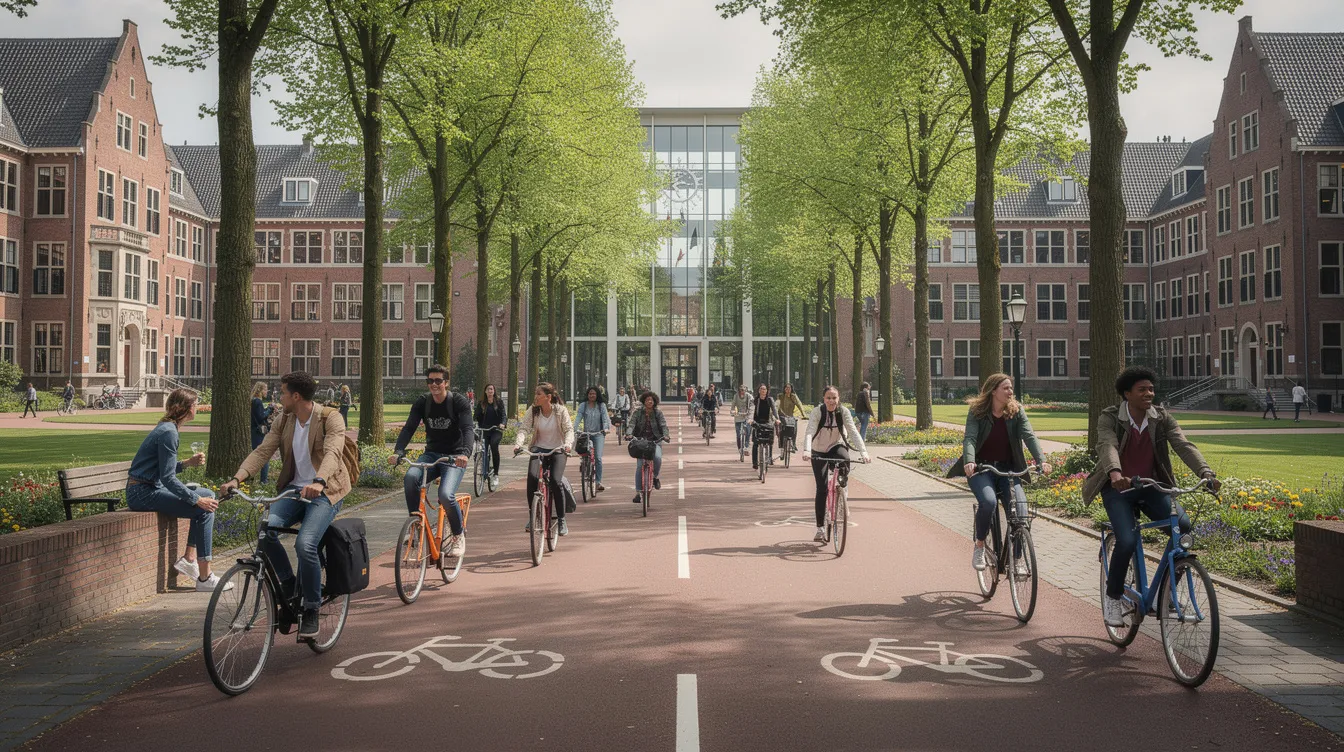
The Dutch government sets a statutory tuition fee each academic year for domestic and international students holding EU/EEA, Swiss, or Surinamese nationality. For the 2026-2027 academic year, that fee is €2,694 at every public university, whether research university or university of applied sciences. Public universities charge around €2,500 per year for EU students (the exact statutory figure is €2,694 in 2026-2027).
Non-EU students pay institutional fees set independently by each university. These fees vary by programme and field. Tuition fees for international students range from €7,000 to €9,500 at the lower end (humanities, social sciences, some applied programmes) up to €22,000 or more for engineering, medicine, and business. Private institutions like some business schools charge around €10,000 to €15,000 for all students regardless of nationality, which rarely makes them the cheapest universities.
One policy change to note: the half-price first-year discount ended after the 2023-2024 academic year. From 2024-2025 onward, all students pay the full statutory or institutional fee from year one.
| Fee Category | Annual Tuition (2026-2027) |
|---|---|
| EU/EEA statutory fee | €2,694 |
| Non-EU humanities / social sciences | ~€7,000–€13,000 |
| Non-EU engineering / business / medicine | ~€13,000–€30,000+ |
Research universities (WO) tend to carry higher institutional fees than HBO for non-EU students, but several remain among the most affordable universities when you factor in reputation, scholarship options, and location. The tuition fees ranging below use 2025-2026 and 2026-2027 published figures; they increase yearly, so always verify on official university sites.
Radboud University (Nijmegen): Radboud University has competitive tuition fees for international students, with programmes in life sciences, artificial intelligence, and communication science starting around €7,500 per year for non-EU bachelor's students. Radboud University offers scholarships covering up to 50% of tuition fees, and the university also reduces institutional fees to statutory rates for certain categories such as Ukrainian displaced students. Nijmegen itself has low-cost student housing and great public transport.
University of Groningen: With 11 faculties and dozens of international programmes, non-EU bachelor fees sit around €11,800 for many fields. The university offers competitive tuition fees relative to its global ranking, and Groningen's living expenses are well below Amsterdam's. The University of Groningen is home to strong programmes in media studies, communication and media studies, and environmental sciences.
Maastricht University: Known for problem-based learning and strong programmes in international business and international relations, Maastricht University has tuition fees starting from €8,500 per year for non-EU students in its lowest institutional fee band. Higher bands reach €18,400 for technical programmes.
Utrecht University: Utrecht University offers affordable tuition fees for EU students at the standard €2,694 statutory rate. Non-EU bachelor's tuition starts around €9,800 to €11,000 for social sciences, law, and environmental studies. The university is one of the oldest university institutions in the Netherlands, founded in 1636.
Leiden University: Strong in law, humanities, and international relations, Leiden charges competitive tuition fees for EU/EEA students and provides scholarship opportunities for non-EU applicants to offset higher institutional fees.
Erasmus University Rotterdam: Erasmus University Rotterdam has affordable tuition fees for EU students. For non-EU students, institutional fees for bachelor's programmes start around €13,500, but scholarships from the Erasmus School of Economics and RSM can reduce tuition fees for top applicants. Some Dutch universities have specific programs for international students with lower tuition rates, and Erasmus fits that pattern in its social sciences offerings.
Universities of applied sciences generally offer lower tuition rates for non-EU students compared to research-intensive universities. Dutch universities of applied sciences focus on practical education and often feature slightly lower baseline fees for international programs. Their degrees in business, engineering, IT, and health sciences include mandatory internships and industry placements.
Saxion University of Applied Sciences: With campuses in Deventer, Enschede, and Apeldoorn, Saxion University offers tuition fees starting at €7,800 per year for non-EU bachelor's students, rising to about €9,360 in 2026-2027. Popular programmes include applied IT, hospitality, and engineering. Saxion also offers the NL Scholarship (€5,000) and a Talent Scholarship (€2,500) for first-year non-EU students.
Hanze University of Applied Sciences (Groningen): Hanze University is known for affordable tuition for business and engineering programmes. Located in Groningen, where Groningen has a student population of 25%, students benefit from some of the lowest living costs among major Dutch cities.
Fontys University of Applied Sciences: A large HBO with campuses in Eindhoven, Tilburg, and Venlo, Fontys offers competitive tuition fees and strong technical programmes in IT, engineering, and business administration. Eindhoven offers a low cost of living for students, and Tilburg has a lower cost of living than Amsterdam.
Breda University of Applied Sciences: Government-funded with a focus on international education, Breda's programmes in game design, tourism, and media studies start around €6,500, making it one of the cheapest universities for certain creative and applied fields.
The Hague University of Applied Sciences: Programmes in international business and public management carry fees around €9,000 to €10,000 for non-EU students. The student body is one of the most diverse in the Netherlands.

Which institution qualifies as the "cheapest university" shifts depending on nationality, study level, and subject. But several names appear repeatedly among budget-friendly universities for non-EU students.
Saxion University of Applied Sciences: Non-EU bachelor's tuition from about €7,800 to €9,360, covering applied IT, hospitality, and engineering. A strong option among budget friendly universities.
Radboud University: Some humanities and social sciences master's programmes for non-EU students fall in the €9,000 to €11,000 range. Radboud University offers programs with tuition fees around €7,500 per year for certain bachelor's tracks.
Maastricht University: Non-EU bachelor's in arts and social sciences sit in the lowest institutional fee band at about €8,500 to €13,200.
University of Groningen: Average tuition fees around €11,800 for non-EU bachelor's in non-lab fields, combined with low living costs, produce a strong total-cost package.
Breda University of Applied Sciences: Starting around €6,500 for game design and tourism, Breda represents one of the absolute lowest-tuition options among best affordable universities.
For EU/EEA students, all public Dutch universities charge the same €2,694 statutory fee, so the "cheapest" comes down to living costs and personal budgeting. Always check 2 to 3 specific programme pages per university for the most recent tuition figures in euros rather than relying on currency conversions.
Rent is the single largest expense for students in the Netherlands, and choosing an affordable city can save more money per year than any tuition discount. Students spend between €800 and €1,200 monthly on living costs in cheaper cities, while Amsterdam, Utrecht, and Rotterdam are high-cost living cities where monthly expenses reach €1,200 to €1,500 or more.
Groningen: Student rent runs €400 to €600 per month for shared housing. The city has a student population of 25%, creating a dense network of affordable restaurants, bike culture, and social events.
Enschede: Home to the University of Twente and a Saxion campus, Enschede is known for its affordable housing and student community. Housing costs run below Randstad averages.
Nijmegen: Compact enough that most students bike everywhere. Nijmegen has low-cost student housing and great public transport, keeping transport costs near zero.
Tilburg: Tilburg University and Fontys are both here. Tilburg has a lower cost of living than Amsterdam, with rents and daily expenses well below Randstad levels.
Eindhoven: A tech hub hosting Eindhoven University of Technology and Fontys. Eindhoven offers a low cost of living for students plus part-time jobs in tech and logistics.
Living costs in smaller student cities like Groningen or Nijmegen are lower than in Amsterdam or Utrecht. Here is a sample monthly cost breakdown:
| Expense | Affordable City (e.g. Groningen) | Amsterdam |
|---|---|---|
| Rent (shared room) | €300–€600 | €650–€1,200+ |
| Food and groceries | €170–€225 | €200–€300 |
| Public transport | €55–€80 | €70–€110 |
| Health insurance | €100–€160 | €100–€160 |
| Study materials, leisure | €150–€200 | €200–€300 |
Rent for student housing averages between €500 and €850 monthly nationwide. Food and groceries cost around €170 to €225 monthly. Public transport costs about €55 to €110 monthly, though many students skip it entirely by cycling.
Scholarships can cut tuition and living expenses for non-EU students by thousands of euros. About 40% of international students receive financial aid in the Netherlands through university grants, government programmes, or external funding.
Holland Scholarship: The Holland Scholarship provides €5,000 for non-EU students starting a bachelor's or master's at a participating Dutch university. This one-time grant applies to the first year.
Orange Tulip Scholarship: Country-specific funding from Nuffic that can cover tuition and sometimes living costs for students from selected regions.
University-specific scholarships: The University of Twente Scholarship, Amsterdam Merit Scholarship, and Radboud Scholarship Programme each reduce tuition for top non-EU applicants. Many Dutch universities offer scholarships that reduce tuition fees by 25% to 100%.
Erasmus+ grants: Available for exchange programs that bring students to the Netherlands for one or two semesters.
EU/EEA students who work at least 56 hours per month in the Netherlands may qualify for DUO student finance, which includes loans, supplementary grants, and a student public transport card. This financial aid can cut the monthly cost of higher education substantially.
Choosing affordable universities and affordable cities is step one. Daily habits determine whether the Netherlands stays within your budget.
Working while studying:
EU/EEA students can work without hour limits. Many take on 10 to 20 hours per week in hospitality, retail, or campus jobs.
International students can work part-time up to 16 hours per week with a TWV work permit, or full-time during June, July, and August. Your employer applies for the permit.
Cutting living expenses:
Book housing early through official university housing services. Last-minute rentals cost more.
Use a bike instead of public transport to save money; €50 to €100 per month stays in your pocket.
Cook at home, buy supermarket discount brands, and join student associations that offer subsidized meals and events.
Choose basic health insurance and buy textbooks secondhand or borrow digital copies from the university library.
Many universities run budgeting workshops and assign international student advisors to help with cost management during the academic year.
Cost must be weighed alongside entry requirements and career goals. The cheapest university is not always the right fit for your field.
Academic prerequisites: a secondary school diploma for a bachelor's degree (minimum GPA often 2.5 to 3.0 on a 4.0 scale), or a relevant bachelor's for a master's (GPA 3.0 to 3.5 at many institutions).
English proficiency: most English-taught degrees require IELTS 6.0 to 6.5 or TOEFL iBT 80 to 90.
Financial proof: non-EU/EEA visa applicants typically must demonstrate funds covering tuition plus at least one year of living costs. Documentation includes bank statements, sponsor letters (SOP, LOR for academic references), and proof of scholarship if applicable.
Programme choice influences cost directly. Humanities, social sciences, and business programmes carry lower institutional fees than engineering, medicine, or lab-intensive sciences. Compare at least 3 to 4 affordable programs in your field across both research universities and universities of applied sciences to find the right balance of cost, ranking, and teaching style.
Which is the cheapest university in the Netherlands for international students right now? For non-EU bachelor's students, Saxion University of Applied Sciences (from about €7,800) and Breda University of Applied Sciences (from about €6,500 for select programmes) are among the cheapest universities. Among research universities, Radboud University offers some programmes around €7,500. The exact cheapest option depends on your subject and the academic year.
What is the minimum monthly cost for student life in an affordable Dutch city? In cities like Groningen, Enschede, or Nijmegen, students can manage on about €800 to €900 per month. That breaks down roughly to €300 to €500 for rent in shared housing, €170 to €225 for food, €55 to €80 for transport, and €100 to €160 for insurance.
Are there tuition-free options for international students in Dutch universities? No public university in the Netherlands is tuition-free for international students. Scholarships from institutions or programmes like the Holland Scholarship can bring out-of-pocket tuition close to zero, but there is no systemic free option.
Do EU/EEA students really pay the same tuition at all public universities? Yes. The statutory fee of €2,694 in 2026-2027 applies at every government-funded institution. Cost differences for EU/EEA students come from living expenses and any surcharges on special-feature programmes.
Is it cheaper to study at a university of applied sciences than a research university? For non-EU students in non-technical fields, HBO tuition often runs €7,000 to €10,000 per year, while research university institutional fees start around €9,000 and go above €20,000 for technical subjects. HBO is typically cheaper, but some WO humanities programmes fall in similar ranges.
Which Dutch cities are cheapest for international students? Groningen, Enschede, Nijmegen, Tilburg, and Eindhoven consistently rank among the most affordable cities for students, with monthly costs €300 to €500 below Amsterdam levels.
What is the cheapest course type in the Netherlands? Humanities, social sciences, and non-lab business degrees tend to carry the lowest institutional fees for non-EU students, often in the €7,000 to €11,000 range.
Always verify tuition and living cost information on official university and Dutch government websites, as figures change each academic year.
Affordable universities in the Netherlands exist across both research and applied science categories. The total cost equation has three variables: tuition fees, city living costs, and scholarship or work options.
Key takeaways:
EU/EEA students benefit from the flat €2,694 statutory fee, so city choice drives affordability.
Non-EU students should look at universities of applied sciences and less expensive cities for the most budget-friendly options. Tuition fees for international students range from €7,000 to €9,500 at the lower end of the spectrum.
Scholarships and smart budgeting can cut annual costs by €5,000 or more.
Student life in the Netherlands is international and well-organized. Choosing an affordable university does not mean sacrificing high quality education or campus experience. Shortlist 3 to 5 universities, compare exact programme fees and monthly cost estimates, and contact admissions offices for the latest 2026-2027 tuition information before you apply.