ACE Money Transfer
ACE Money Transfer

17 Sep 2024
Since the rise of self-service banking in the 1980s, atm security has become one of the most critical concerns for financial institutions worldwide. With roughly 3 million automated teller machines deployed globally, the stakes are enormous. Every machine represents a potential target, and research suggests that 85% of ATMs are vulnerable to network attacks.
So what exactly are atm security features? They are the combined physical, electronic, and software controls designed to protect three core assets: the cash inside the machine, the card data passing through it, and the customers who use it. Key features of ATM security include anti skimming technology and encrypted communication, working together to block fraudulent transactions and physical attacks.
The threats are varied. Criminals deploy skimming overlays, jackpotting malware, explosive gas attacks, and ram raids. They evolve just as quickly as modern atms do. ATMs employ a multi-layered security approach to protect users and transactions, combining security modules, pin verification systems, tilt sensors, vibration detectors, and fraud monitoring software into a cohesive defense.
This article walks through the practical security measures that banks and ATM deployers use today, with concrete examples of how each layer works to protect your money, your data, and your safety.
Understanding where vulnerabilities exist starts with understanding how the machine works. A typical ATM consists of five core components: a card reader that reads the magnetic stripe or EMV chip, a pin pad where users enter their pin code, a cash dispenser loaded with cassettes of banknotes, an internal computer running the ATM's operating system and application logic, and a network connection linking the machine to the bank or transaction processor.
A standard withdrawal follows a predictable flow. The customer inserts their atm card, the card reader captures card data, the user enters a PIN on the encrypting pad, and the encrypted PIN block travels through the internal controller over a secure network to the bank for authorization. Once approved, the controller commands the cash dispenser to release money.
Vulnerabilities exist at every stage. The card reader is the classic target for data theft devices. The pin pad can be overlaid with fake keypads or watched by hidden cameras. Communication lines can be attacked through man-in-the-middle techniques or malware. ATM malware can be installed via external devices like USB drives plugged into the service area. Processor spoofing uses an emulator to approve ATM requests, bypassing genuine bank authorization entirely.
The machine itself has two distinct zones: the heavily reinforced safe (vault) housing cash cassettes, and the upper service area containing the computer, drives, and network hardware. The service area is often less physically protected, making it the preferred entry point for criminals installing jackpotting malware. These logical attacks, first widely reported around 2014, exploit conventional atm software by interfacing with the XFS (Extensions for Financial Services) layer to issue dispense commands without legitimate authorization. Whitelisting software only allows authorized software to run on ATMs, but many legacy machines lack this protection.
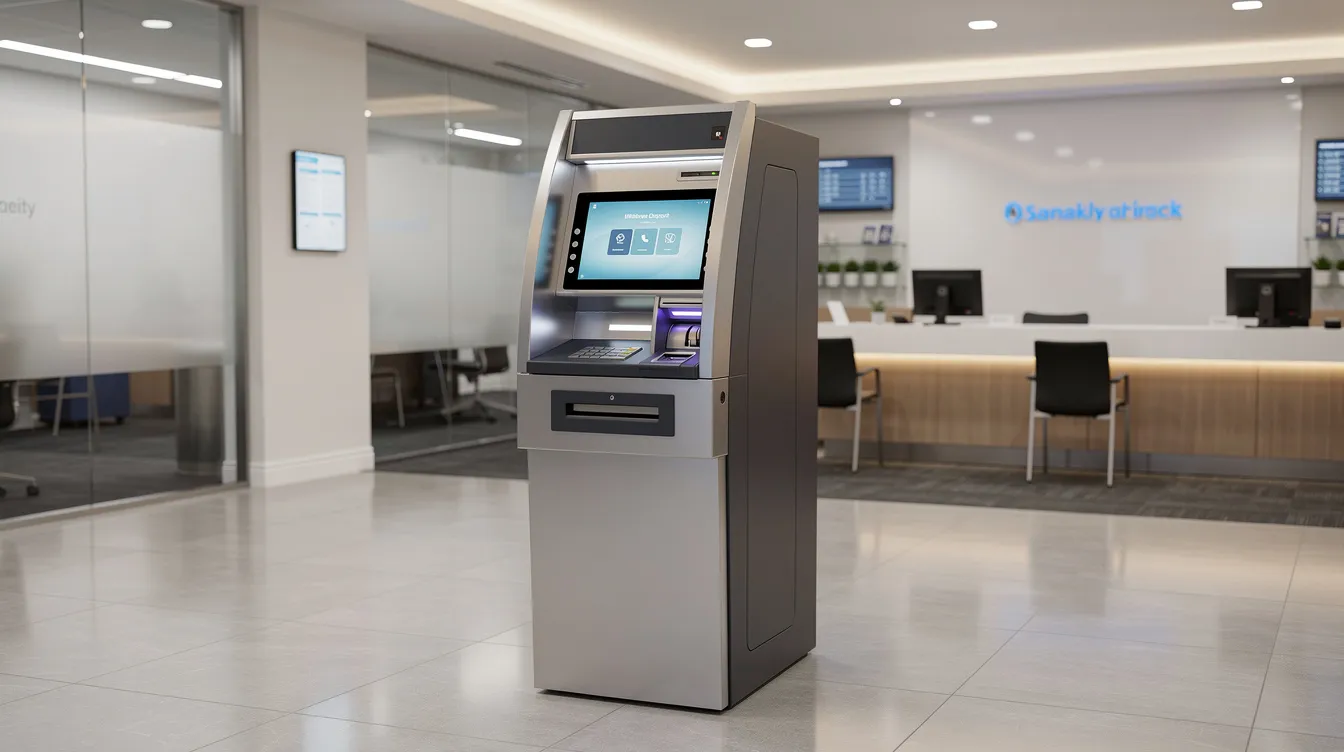
Atm crime falls into three broad categories: logical attacks, card data theft, and physical attacks against the machine itself.
Logical attacks involve installing malware through physically accessible ports, swapping hard drives, or exploiting remote access to ATM management systems. Black-box attacks connect unauthorized peripheral devices directly to the cash dispenser, issuing dispense commands that bypass normal transaction logic. According to an FBI alert from early 2026, of roughly 1,900 jackpotting incidents since 2020, over 700 occurred in 2025 alone, with losses exceeding $20 million. The Ploutus malware family is a prime example-criminals use it to perform transactions that empty cassettes in minutes.
Card data theft remains one of the most persistent security threats. Skimmers can read card data from the magnetic strip by sitting over the card entry slot. Deep-insert devices and shimmers target EMV chip readers from inside the slot, making visual detection nearly impossible. Credit card fraud can involve concealed cameras to capture PINs, often hidden in brochure holders or fake panels near the pin pad. Fake bezel faceplates and PIN pad overlays collect data from unsuspecting users.
Cash trapping protection includes reinforced shutters on cash dispensers, but criminals still attempt to block the dispensing slot and retrieve notes after the customer walks away.
Physical attacks range from brute force to explosive. Ram raids use vehicles to crash into machines. Pull-out attacks employ chains to rip ATMs from foundations. In Europe, explosive gas and solid explosive attacks rose by 16% in 2022, with more than 60% of total losses attributed to explosives. Between 2010 and 2019, physical attacks in selected European countries climbed from about 2,000 to over 4,500 incidents annually.
Social engineering and card trapping (like the "Lebanese loop") trick customers into leaving their bank card behind, enabling criminals to access the victim's bank account.
The first line of defense is the ATM's physical construction. ATM safes are built with certified grades of steel and composite materials, often compliant with EN 1143-1, which defines resistance levels against drilling, cutting, and explosives. Safe doors frequently include relocking devices that engage automatically if forced entry is detected. Reinforced safes and tamper-resistant locks make ATMs resistant to physical attacks.
Anchor systems bolt machines to foundations using anti-ram and anti-pull-out structures. Outdoor and drive-up ATMs often sit on reinforced concrete pads specifically designed to withstand vehicle impact.
Secure enclosures add another layer. ATM booths, vestibules, and SR1 through SR6 rated security rooms with armoured doors protect atms installed in lobbies and backrooms of bank branches. These enclosures limit external exposure and control who can access the service area.
Additional protections include gas attack suppression modules that vent or neutralize explosive gas, anti-cutting plates around vulnerable areas like the card reader bezel, and safe door overlays that resist cutting tools.
Surveillance cameras monitor ATM areas to deter crime and assist investigations. Most modern atms feature built-in cameras that capture images linked to each transaction, supplemented by external CCTV covering the surrounding area and service doors. Strategic placement minimizes blind spots and ensures footage is available for forensic analysis.
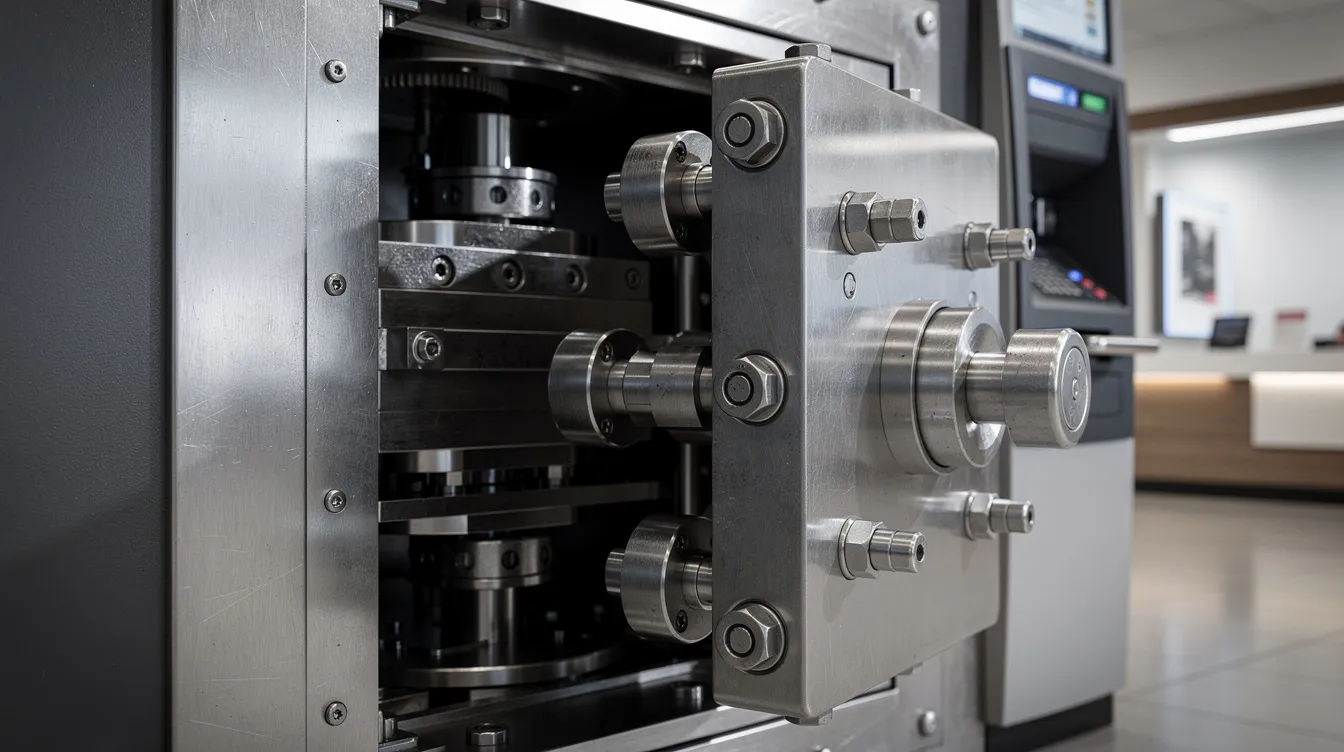
Sensor systems are an essential layer that detects physical tampering early and relays alerts before criminals succeed.
Vibration sensors detect attempts to open ATMs by sensing drilling, grinding, or impact on the safe wall or door. Advanced models use pattern recognition to distinguish normal mechanical operations-like cash being dispensed-from attack-level vibrations, reducing false alarms during routine service.
Tilt sensors recognize attempts to steal ATMs by detecting changes in the machine's orientation. If the ATM is being tipped, lifted, or pulled beyond a set threshold, the sensor triggers atm alarms and can cut power or lock the vault. These are especially important for outdoor installations.
Temperature sensors detect thermal tampering of ATMs, such as cutting torches or welding attacks on the safe. Gas sensors monitor for explosive gas buildup pumped into the safe cavity. When thresholds are exceeded, these sensors can automatically disable cash access and alert monitoring centers.
Door-open sensors and safe-door contacts identify unauthorized opening of maintenance doors or vault compartments outside approved service windows.
Modern ATMs monitor for tampering and disable themselves or alert banks if detected. All sensor data feeds into local security modules or embedded microcontrollers that log events, disable operations, and transmit real-time alerts over secure telemetry to remote monitoring centers or law enforcement. This integration ensures that tampering attempts generate an immediate response rather than going unnoticed.
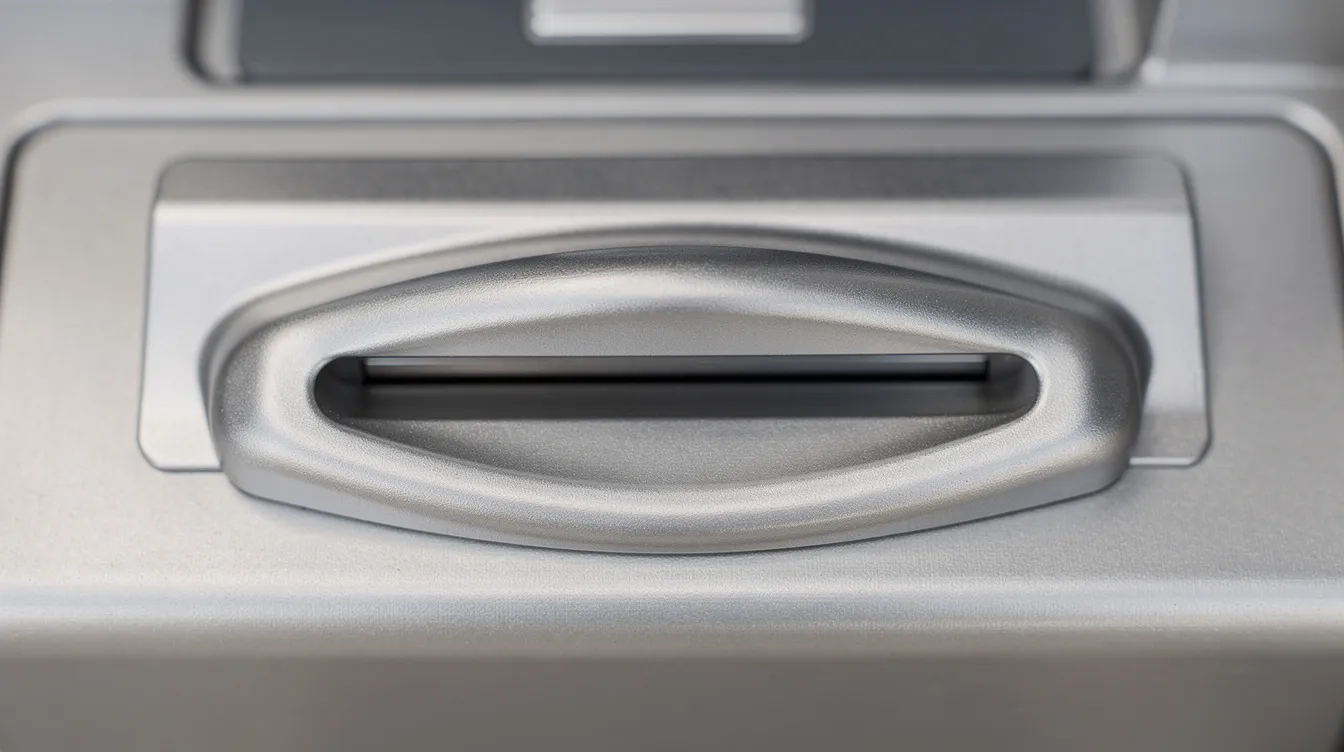
Protecting card data-both magnetic stripe and chip information-is a cornerstone of atm security measures. Anti-skimming devices detect unauthorized devices that record card data, forming one of the most visible layers of protection on modern machines.
Active jamming units mount around the card reader mouth and emit signals that disrupt illegal skimmer electronics. When a foreign device is detected, these units can disable the reader or trigger an alarm. Anti-skimming technology includes hardware that detects or blocks skimming devices through motion sensing, impedance monitoring, or detecting added mass on the bezel.
Deep-insert anti skimming mechanisms are circuit boards embedded inside the card entry slot itself. They detect foreign inserts like shimmers that sit between the chip contacts and the reader. Modern ATMs include anti-skimming devices to prevent data theft, and bezel designs have evolved to make overlay attachment physically difficult.
On the software side, ATMs monitor card reader behavior for anomalies-unexpected read timing, unusual impedance patterns, or repeated read retries-that may indicate a skimmer or shimmer is present. When suspicious activity is flagged, the machine can disable itself and require inspection.
Card verification uses an RFID reader for authorization in contactless-enabled machines, adding another method of data authentication beyond traditional insertion. Regardless of the read method, data processed by the card reader is encrypted within the security module before transmission, so even if the internal bus or network connection is compromised, intercepted card data remains unintelligible without the proper cryptographic keys.
When a customer enters their pin code, the encrypting PIN pad (EPP) immediately transforms the cleartext entry into an encrypted PIN block. Pin verification requires a 4 to 12 digit secret code, and pin pads are encrypted to prevent exposure during transmission. The ATM itself never handles the clear-text PIN beyond the pad's secure boundary-neither the machine's computer nor bank staff ever see it.
The encrypted PIN block travels to a Hardware Security Module (HSM) for verification. Hardware Security Modules store cryptographic keys securely inside the ATM and at the host, handling PIN block decryption, key translation, and secure key storage. For online pin verification, the system connects to a central database for verification at the issuer or processor. For offline pin verification, the ATM compares the entered PIN against the stored PIN on the chip card using secure internal rules.
Modern ATMs utilize strong encryption to secure sensitive transaction data. Algorithms like Triple DES (3DES) and AES protect PIN blocks, while TLS encryption protects data in transit between the ATM and the bank's central network. Key management follows strict protocols: initial key injection under dual control, periodic key rotation, and automatic key destruction if the tamper-responsive hardware enclosure is breached.
EMV chip card support enhances the security of ATM transactions against cloning. EMV chip technology prevents card cloning by using unique transaction codes-a cryptogram generated for each transaction that cannot be replayed. This is a significant improvement over magnetic stripe-only cards, where cloned data could be used repeatedly for fraudulent transactions.
Data security extends to the software layer as well. Whitelisting ensures only authorized applications run, and information stored on the ATM's drives is encrypted at rest. This procedure makes it far harder for criminals to extract usable data even with physical access to the hardware.
ATMs must comply with multiple security standards for safe transactions. The regulatory landscape involves overlapping frameworks that govern everything from how data is encrypted to how devices resist physical tampering.
PCI DSS is the main standard for payment card security. It requires protection of cardholder data at rest and in transit, network segmentation, vulnerability management, access control, and detailed logging across all payment terminals, including ATMs. PCI PA-DSS defines requirements for payment card applications, ensuring the software running on ATMs doesn't store prohibited data and handles authentication correctly.
PCI PTS regulates security requirements for PIN entry devices, including encrypting PIN pads and card readers. These standards mandate physical tamper resistance, firmware integrity, and secure reading and exchange of data. The newest PCI PTS HSM v5.0, published in 2026, strengthens cryptographic requirements and addresses cloud deployment and remote administration.
Beyond PCI, regional guidelines from organizations like ATMIA and EAST track fraud trends and recommend defenses against explosive and ram-raid attacks. Financial institutions and independent deployers invest in regular audits, device certification, and penetration testing to verify compliance and identify weaknesses. The challenge lies in legacy ATM estates-machines that may not meet the highest level of current standards-where retrofitting is expensive and complex.
The global atm market is moving toward sophisticated technology that layers additional authentication and detection capabilities on top of traditional controls.
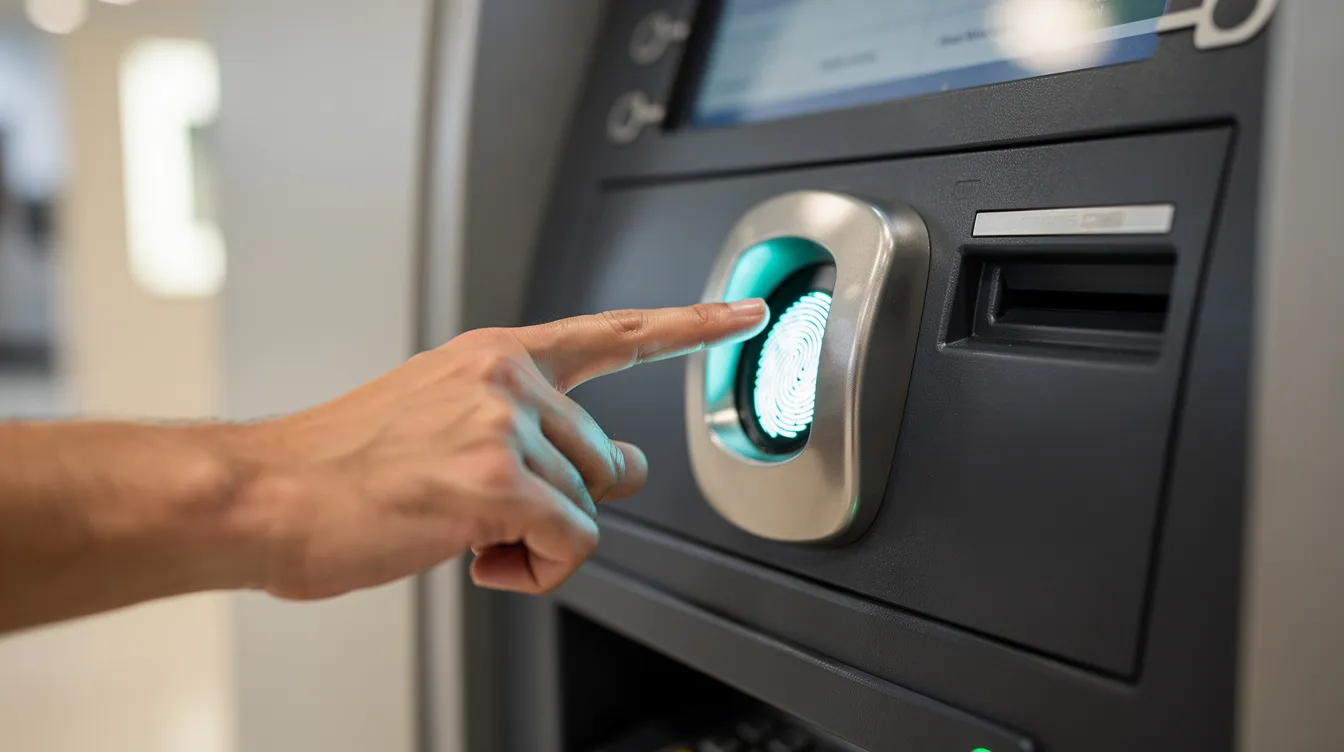
Biometric authentication is gaining traction. Fingerprint verification matches user fingerprints against a database (sometimes called database fingerprints), adding a physical factor that cannot be easily stolen or replicated. A user's fingerprint provides personal identification that is unique and persistent. Face recognition technology identifies users without passwords, using cameras to match facial geometry against stored templates. These biometric methods reduce dependency on PINs alone but require secure storage of biometric templates and robust liveness detection to prevent spoofing with photos or silicone molds.
AI-driven fraud detection is another leap forward. Banks analyze ATM transactions for unusual behavior to detect fraud, using machine learning models that correlate transaction patterns, device telemetry, and user behavior. Real-time monitoring alerts banks of suspicious activity at ATMs, enabling rapid response before losses accumulate. ATM transaction alerts notify users of account activity in real-time through mobile banking apps and SMS, giving customers an immediate signal if unauthorized access occurs.
Integrated video monitoring platforms link each transaction to corresponding camera images and sensor events, supporting investigation of physical tampering, card trapping, or cash disputes.
The trend toward contactless and cardless ATM access-via NFC cards, mobile wallets, and QR codes-eliminates some card skimming vectors entirely by removing the need to insert a bank card into a reader. Modern machines equipped with an rfid reader can authorize transactions without any physical card contact, closing off traditional skimming entirely.
Even the most secure system still relies on customers following basic security hygiene. Here are practical steps that reduce your risk every time you use an ATM:
Shield the pin pad. User precautions such as PIN cover can reduce fraud risk at ATMs. Use your free hand or wallet to block the view of your password entry from cameras or bystanders.
Inspect the machine. Before inserting your card, check the card reader and bezel for loose, bulky, or misaligned parts. If anything looks unusual, use a different ATM and report it to the bank.
Choose safe locations. Well-lit locations increase user safety at ATMs. Prefer machines inside bank branches or monitored lobbies over isolated outdoor units.
Monitor your accounts. Regularly check your bank account statements and enable mobile banking alerts. If you detect an unauthorized transaction, report it to your bank immediately.
Guard your PIN. Never share your pin code, write it on your atm card, or use easily guessed sequences. Be cautious of anyone offering unsolicited "help" during your transaction-this is a common social engineering tactic criminals use to identify your credentials and steal your money.
Use modern, well-maintained ATMs. Machines at established bank branches are more likely to have up-to-date anti skimming devices and active surveillance than independent machines in convenience stores.
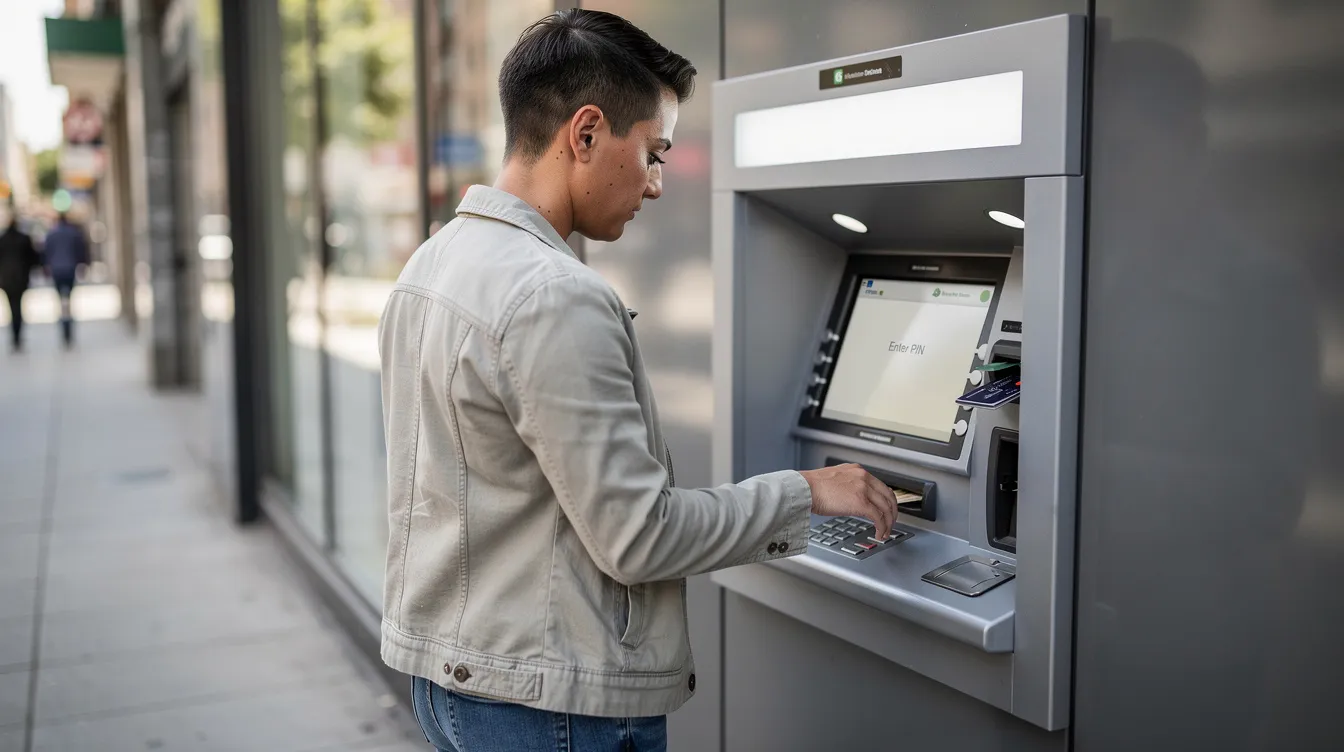
Effective atm security is never a single solution. It is a layered strategy where reinforced safes, encrypted communication, smart sensors, card and PIN safeguards, and advanced monitoring each reinforce the next. No individual feature is sufficient on its own, but together they create a system where criminals must defeat multiple independent defenses to succeed.
The concept of "defense in depth" is central. Physical protection stops brute-force attacks. Encryption and security modules protect sensitive data even if the network is compromised. Sensors detect tampering attempts in progress. AI-driven analytics and real-time monitoring identify suspicious activity before losses compound. Each layer compensates for the limitations of the others.
As payment technology evolves-contactless transactions, biometric authentication, remote management-both security threats and security measures will continue to adapt in parallel. Financial institutions, ATM deployers, and technology providers must regularly review their security posture, update software, patch vulnerabilities, and test incident response plans.
Maintaining customer trust in automated teller machines requires continuous investment in robust security features, compliance with evolving standards, and clear user education. The ATM remains a critical piece of the global market for financial transactions-and keeping it secure is everyone's responsibility.