17 Feb 2025
Found an old money order tucked away in a drawer? You're not alone. In most cases, a money order does not expire, but it may lose value over time because many issuers start charging monthly service fees after one to three years; USPS money orders are the main exception and keep their full value indefinitely. If you found an old money order or use money orders to pay bills, send money, or accept payment, the key issue is not just whether it is still valid, but whether waiting could reduce what you can cash or deposit.
Below, you'll see how long money orders are good for by issuer, when fees begin, how money orders compare with checks, how abandoned property laws can affect old money orders, how to verify whether one is still valid, where to cash or deposit it, how replacements work if it is lost, and the steps that help protect its value.
Most money orders do not have an expiration date. However, that doesn't mean they hold their full value forever. Money orders can incur monthly service fees if uncashed, and after enough time, state law may reclassify the funds as abandoned property.
Here's how the three major issuers handle aging money orders:
A Western Union money order may start incurring a non refundable service charge after just one year of inactivity, often around $1.50 per month.
A MoneyGram money order typically begins charging dormancy fees after one to three years, depending on the state where it was purchased.
A USPS money order - the notable exception - keeps its full value indefinitely, with no service fees ever deducted.
It is best to cash or deposit money orders as soon as possible. The safest window is within one year of the purchase date to avoid any chance of fees, complications, or refusal by a financial institution. If you can deposit the funds into a bank account within 30 to 60 days, even better.
A money order is a prepaid paper payment instrument that functions as guaranteed funds. Unlike personal checks, which are drawn from a checking account and can bounce if funds are insufficient, a money order is paid for upfront. The issuing institution holds the money until the recipient cashes it.
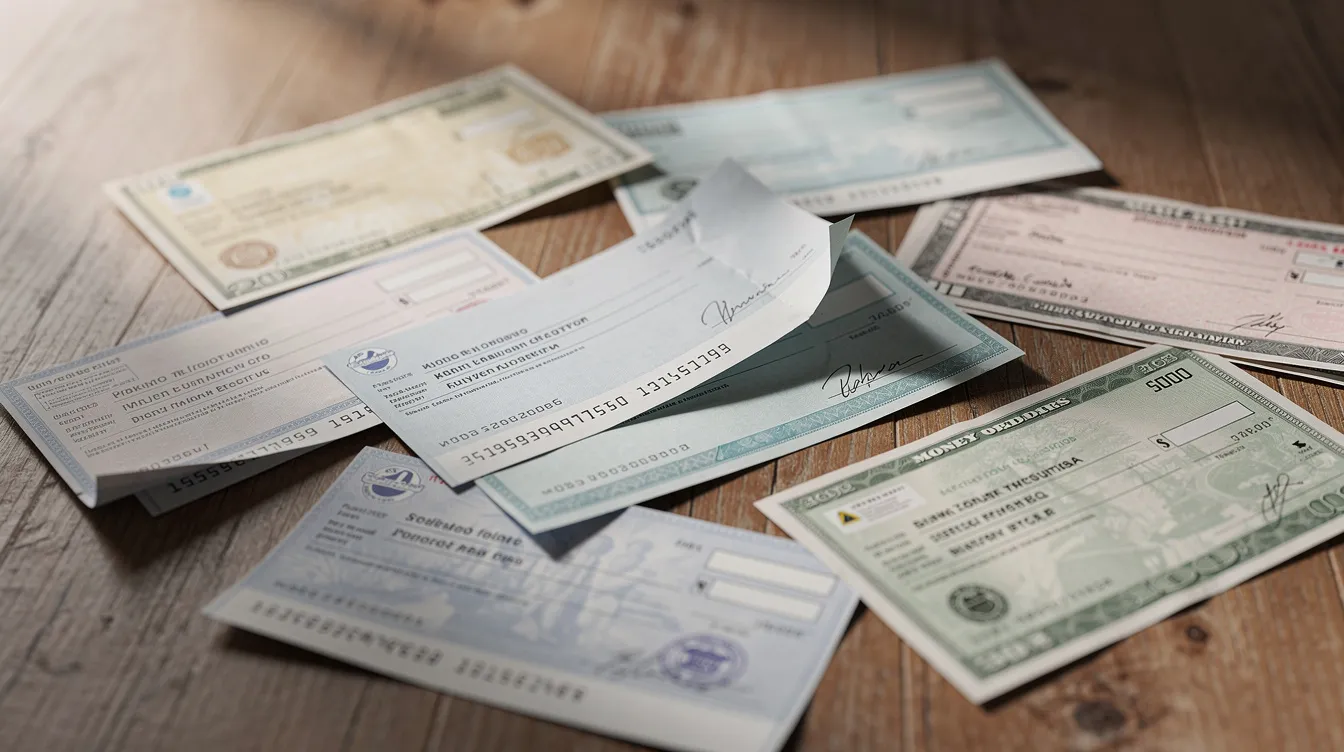
Here's how money orders compare to similar instruments:
Personal checks are tied to your checking or savings account. They can bounce if there isn't enough money in the account, and most banks treat them as "stale" after 180 days.
A cashier's check is also prepaid and guaranteed, but it's issued by a bank or credit union from its own funds and is typically used for larger transactions.
Because money orders are prepaid and not tied to a bank account, they don't bounce. That's why landlords, government agencies, and private sellers often list them among accepted payment methods. Money orders can be purchased for up to $1,000, and money order fees typically range from $1 to $5 depending on the issuer. You can buy a money order at banks, post offices, or stores - including grocery stores and convenience stores - using cash or a debit card. No bank account needed.
In most cases, money orders do not have a strict expiration date. Unlike a personal check that becomes stale-dated after roughly six months, the physical money order usually remains negotiable indefinitely.
But here's the catch: money orders do not expire but can lose value over time. The issuer may begin charging nonrefundable service fees after a set period - often one to three years of inactivity. And after several more years, the remaining balance may be turned over to the state as unclaimed property.
So when people ask "do money orders expire?" the real question is usually: "does a money order lose value or become harder to cash the money order over time?" The answer depends on the issuer and the state where the money order was purchased.
Many issuers set an expiration period typically between 6 months and 1 year for when fees begin - not when the instrument becomes void. Meanwhile, UK Postal Orders expire 6 months from the date of issue, which is a much stricter policy than what you'll find in the United States.
Always check the fine print on the front or back of the money order. Look for language about dormancy fees, service charges, or any printed expiration date before assuming the instrument is still worth its face value.
Each issuer has its own rules, so the answer to how long is a money order good for changes depending on where and how you purchased it.
A postal money order from the United States Postal Service has no expiration date. There are no dormancy or service fees that reduce the principal amount, even after decades. You can cash a USPS money order or deposit it at any post office or at many banks. USPS charges $1.45 for money orders under $500, making it one of the most affordable options. International money orders from USPS were discontinued in 2024, so current considerations apply only to domestic money orders.
Western Union money orders also carry no fixed expiration date. However, Western Union deducts service charges from uncashed money orders - typically a monthly fee starting after one to three years, depending on the state. Over long periods, these fees can reduce the value to zero even though the paper documents technically still exist.
MoneyGram money orders similarly have no strict expiration date. Dormancy fees often begin after one year of inactivity. After several years, unclaimed balances may be transferred to the state as abandoned property.
Policies vary widely. Some banks or retail stores may refuse to cash older money orders due to internal policies. Others may treat aging money orders like stale cashier's checks and require verification or reissuance. If you hold a bank or credit union money order, call the issuing institution and ask about their specific rules and any fee schedule.

There's an important distinction between a true expiration date - when the money order becomes void - and dormancy or service fees that chip away at the balance while the instrument technically remains valid.
Typical fee language on a money order reads something like "subject to service charge after 1 year" or "monthly service fee deducted from principal after 2 years." Service fees may apply after one to three years of inactivity, depending on the issuer and your state.
Here's how fees play out in practice:
A $500 Western Union money order that starts incurring a $1.50 monthly fee after one year would lose $18 per year. If you cash it two years late, you'd receive roughly $464 instead of the original $500. Service charges may reduce money order value after one year.
A $30 MoneyGram money order subject to $1.50 per month starting in year two would be completely depleted in about 20 months. Service fees can deplete a money order's value completely in cases like this.
Money orders can lose value due to service fees after three years or more, and these fees usually stop only once the remaining value hits zero.
USPS domestic money orders are the clear exception - no fees, ever. The face value stays intact regardless of how long the postal service money order sits uncashed.
The takeaway: even if you believe money orders expire never, dormancy fees can deliver the same practical result. Cash or deposit promptly.
Beyond issuer rules, state unclaimed property laws add another layer of complexity to very old, uncashed money orders.
After a set dormancy period - often three to seven years - the issuer may be required to turn remaining funds over to the state's unclaimed property office. Once that happens, the money order itself might no longer be honored by the issuer because the funds now sit with the state. Unclaimed money orders may be classified as abandoned property after 3 to 5 years, depending on the state.
Some states regulate uncashed money orders under abandoned property laws and may cap how much the issuer can charge fees before escheatment. Some states treat uncashed money orders as abandoned property and require notice to the owner before the transfer.
If a very old money order is rejected by the issuer:
Contact the unclaimed property department for the state where the money order was purchased.
Search the state's unclaimed funds database using the purchaser's or payee's name.
File a claim, providing copies of the money order and any receipt as proof.
This process can take weeks or months but may be the only way to recover money from a money order that has been dormant for many years.
Even if money orders typically don't have a clear expiration date, it's smart to check the status and current value before trying to cash them - especially if the money order is more than a year old.
Here's how to check the status with the issuer:
Call the customer service number printed on the money order.
Use the issuer's online tools. USPS, Western Union, and MoneyGram each offer ways to check the status by entering the serial number and purchase amount. Some issuers also support a QR code or tracking number for recent money order purchases.
Visit the location where the money order was purchased and ask a retail associate to verify whether it has been cashed or canceled.
Have these items ready before you start a money order inquiry:
The money order serial number
The purchase date and the exact amount
The original money order receipt, if available
Keep the receipt for tracking the money order's status. If the money order has already been cashed, the issuer can typically provide the date of payment and sometimes a copy of the front and back - useful if you suspect a fake money order or fraud. The issuer can also tell you whether any service fees have been deducted and the remaining value you can expect.
Once you confirm a money order is still valid, you have several options depending on its condition, age, and your situation.
Present the money order at a bank, credit union, check cashing stores, or the issuer's location (the post office for postal money orders). Bring a government-issued photo ID. Some banks charge a small fee to cash money orders for non-customers.
You can endorse and deposit a money order into a checking account or savings account just like a regular check. Funds may be placed on hold for several business days, especially for large or older money orders. This is a straightforward way to send funds to your own account.
If a money order is lost or stolen and has not been cashed, the purchaser can usually request a replacement. A stolen money order should be reported immediately. The common steps are:
Fill out a money order inquiry form with the issuer.
Pay a processing fee - replacing a lost USPS money order costs $6.95.
Wait 30 to 60 days for the investigation.
The original purchase receipt is critical here because it contains the serial number needed to file a claim and track the money order loss. For very old money orders, visit a branch of the issuer or your bank, where staff can help navigate extra verification steps.

Different payment types age differently, and understanding the distinctions can help you choose the right instrument for each situation.
| Feature | Money Order | Personal Check | Cashier's Check |
|---|---|---|---|
| Prepaid? | Yes | No | Yes |
| Tied to bank account? | No | Yes | No (bank's own funds) |
| Can bounce? | No | Yes, if insufficient funds | No |
| Typical validity | No fixed expiration; fees may apply | ~6 months (stale-dated) | No fixed expiration; bank policies vary |
| Purchase limits | Up to $1,000 | No standard limit | No standard limit |
| Typical cost | $1–$5 | Free with most accounts | $5–$15 |
Personal checks can bounce if funds are insufficient, and banks typically refuse them after six months. Money orders are prepaid, so they won't bounce, making them a safe alternative for payees. A cashier's check also won't bounce but is generally reserved for larger transactions like home purchases.
Wire transfers can cost around $25 for domestic transactions, making money orders a more affordable way to send money for smaller amounts. Electronic payments and a money order online purchase offer convenience, but money orders offer a secure way to pay bills or send money without needing a checking or savings account.
When to use each:
Money orders: small to medium domestic money transfers, no bank account needed, simple situations
Cashier's checks: large transactions where the payee wants strong bank-backed assurance
Personal checks: everyday payments with parties you know and trust
For personal finance decisions about which instrument to use, consider consulting a tax advisor or legal counsel if large sums or complex situations are involved.
Money orders offer a secure way to send funds, but poor handling or delays can cause money order loss or reduced value. Here are the practices that protect your money.
Treat money orders like time-sensitive items. Encourage both the sender and recipient to cash the money order or deposit it within 30 to 60 days. If you can't act immediately, set a calendar reminder. The refunded amount on an old money order may be less than you expect if fees have accumulated.
Fill out the recipient's name and your name on the money order immediately at purchase. Never leave fields blank.
Keep the detachable receipt separate from the physical money order in case it's lost or stolen.
Avoid mailing money orders in untracked envelopes. Use tracked or insured mail through the postal service.
Never purchase multiple money orders beyond what you need. Stick to purchase limits and buy only the exact amount required.
Act quickly. Use your receipt to start an inquiry with the issuer. Investigations commonly take 30 to 60 days, and there will likely be a processing fee. Report suspected fraud to local law enforcement and, if relevant, to the issuer's fraud department.
Buy only when needed, cash promptly, save receipts, and verify legitimacy before accepting or attempting to cash a money order from someone you don't know.
Most domestic money orders, especially those from USPS, do not have a fixed expiration date. Many non-postal money orders from Western Union, MoneyGram, or other issuers start incurring dormancy fees after one to three years, which can erode or eliminate their value entirely. State unclaimed property laws can move very old balances from issuers to state treasuries, changing how you recover the money. It's always wise to cash a money order or deposit it into a bank account as soon as possible. Keeping your receipt and checking the status with the issuer protects you if the money order is lost, stolen, or questioned.
Review the specific terms printed on your own money order. When in doubt, contact the issuing company or bank before relying on an old instrument. Money order purchases are affordable - money orders typically cost between $1 and $5 - but the value they carry deserves prompt attention.
With timely cashing and a few basic precautions, money orders remain one of the most reliable and secure ways to send or receive domestic money.