ACE Money Transfer
ACE Money Transfer
22 Oct 2026
City Union Bank is a private sector bank in India, founded in 1904 and headquartered in Kumbakonam, Tamil Nadu. With over a century of banking heritage, the bank offers a full range of services including retail accounts, NRI banking, forex remittances, and corporate solutions. For hundreds of thousands of customers across India, it remains a trusted institution for both domestic and cross-border financial needs.
An international money transfer is the process of sending funds across borders, typically involving currency exchange from one denomination to another. Whether you need to send money to a family member in India, pay tuition fees abroad, cover medical bills, support freelancing payments, or handle business imports and exports, the cost of the transfer fee, the applied exchange rate, and delivery speed all determine how much money actually arrives.
In this guide, you will learn how to send money online to a City Union Bank account, how recipients in India receive money, and how ACE Money Transfer can be used to send money internationally as an alternative to traditional bank wires.
There are two primary ways to transfer money from overseas directly into a City Union Bank account: a traditional international bank transfer via the SWIFT network, or through an online remittance provider like Ace Money Transfer. Both methods require accurate recipient information to avoid delays in international wire transfers.
Here is what you need before initiating a transfer:
Recipient's full name (exactly as registered on the bank account)
City Union Bank account number
IFSC code for the domestic leg of the transaction
City Union Bank's SWIFT/BIC code: CIUBIN5MXXX (Head Office, Chennai)
Branch name and address
Beneficiary details typically include the recipient's full name and contact information
Purpose of remittance
You can send USD to City Union Bank in India from countries like the UK, USA, Canada, Australia, and the EU. Your local bank or remittance platform converts the funds into INR and deposits them into the recipient's account.
Funds sent through international transfers may take 2 to 5 working days to reach the beneficiary's account. Telegraphic transfer is the default method for international payments processed via SWIFT. Same day or next day delivery is possible when using card-funded online platforms, depending on compliance checks and time zone differences. Always verify fees and the exchange rate before confirming, as these directly affect how many rupees arrive.
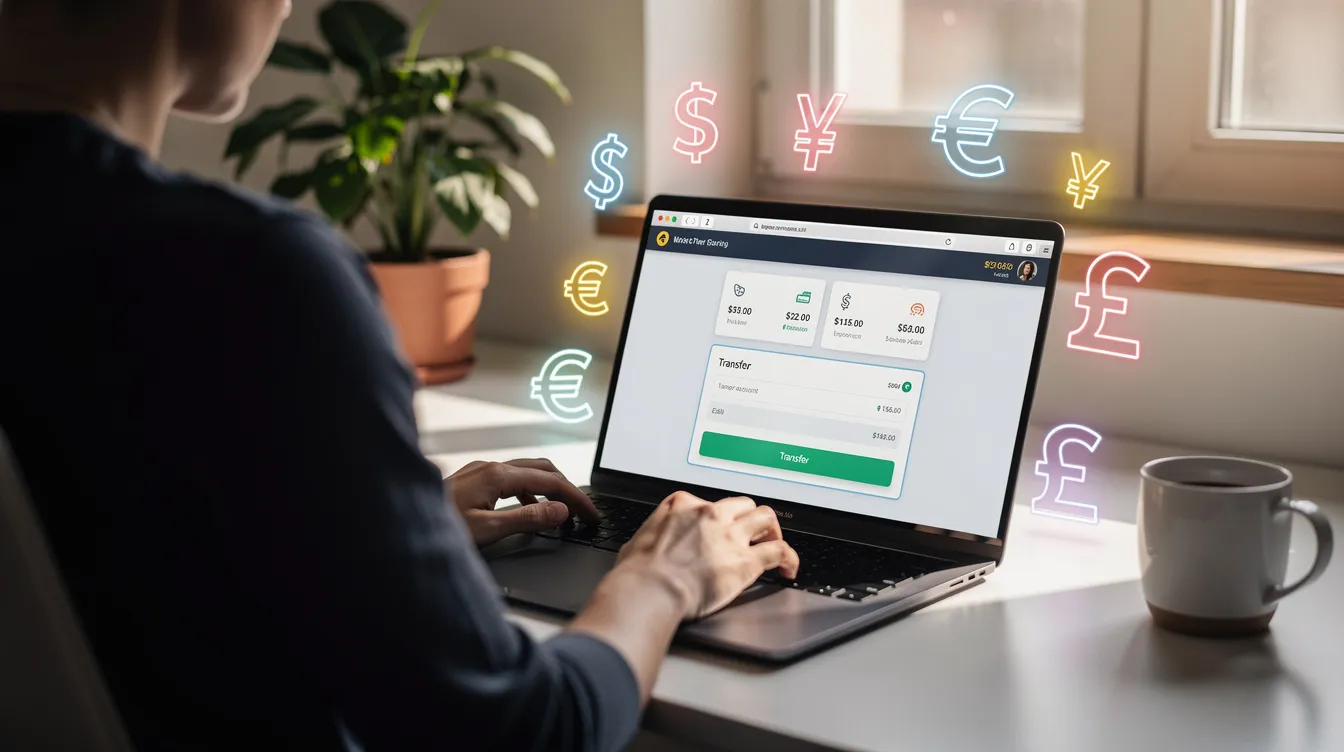
ACE Money Transfer is an online remittance platform that lets customers send money from multiple countries to India, directly into City Union Bank accounts or as cash pickup at authorised agent locations where available. It is a fully digital service accessible via website or app.
ACE Money Transfer provides international transfers with applicable exchange rates, fees and estimated delivery times available to review before confirming a transaction. Other providers, including Western Union, also offer international money transfer services. Compare the available rates, fees and delivery estimates before choosing a provider.
ACE Money Transfer supports three payout methods:
Bank Deposit – Funds go directly to the recipient's City Union Bank savings or current account
Mobile Wallet – Funds are credited to supported digital wallet accounts, with delivery times varying by wallet provider and transfer circumstances.
Cash Pickup – Over-the-counter cash collection at authorised partner branch locations
Customers can fund their transfer from abroad using a debit card, credit card, or online bank transfer, depending on their country of residence. Transfers are typically credited to City Union Bank accounts on the same day or within 24–48 working hours, subject to AML/KYC checks. You can also track your international money transfer in real time from the ACE Money Transfer app or website using a unique reference number.
Here is how to send money to a City Union Bank account using Ace Money Transfer:
Step 1 – Register: Create a free Ace Money Transfer account online or via the app using your email, Google, or Apple ID. Once your registration is complete and your identity is verified (KYC documentation varies by sending country), your account is activated and ready for transactions.
Step 2 – Choose destination country: Select India as the destination country and pick "Bank Deposit" as your payout method. If a dropdown appears, choose City Union Bank as the recipient bank.
Step 3 – Enter recipient details: Input the recipient's full name as it appears in their bank records, their City Union Bank account number, and the correct IFSC code. Accurate recipient information is crucial to avoid delays.
Step 4 – Select payment method: Choose from debit card, credit card, or online bank transfer. Note that card payments may process faster, while bank transfers can take up to 2 working days to clear. Transfer fees depend on the amount and payment method selected.
Step 5 – Add payment reason: Select a valid purpose such as "family maintenance," "education fees," or "medical expenses." This step is required to comply with foreign exchange regulations in both the sending and receiving countries.
Step 6 – Confirm and pay: Review the exchange rate, fees, total amount to pay, and the exact INR amount to be credited to the City Union Bank account. Once satisfied, click "Pay Now" to initiate the transfer.
Step 7 – Track your transfer: Ace Money Transfer provides a transaction reference or tracking code. Share this with your recipient so they can also monitor the status-from "Awaiting Funds" through "Sent for Payout" to "Credited."
Indian residents can transfer money abroad from their City Union Bank accounts using the Liberalised Remittance Scheme, which allows cross-border money transfers for permitted purposes. Outward remittances are governed by the Reserve Bank of India's guidelines.
Under LRS, eligible residents can remit up to USD 250,000 per financial year (1 April–31 March) for overseas education, travel, family support, medical treatment, and permitted investments. Unrestricted international remittance can be provided for bona fide trade or personal receipts beyond this schedule, subject to separate approvals.
To initiate an outward remittance at City Union Bank:
Hold a savings or current account
Submit KYC documents; regulatory compliance for remittances may require documentation such as a PAN card, Aadhaar, or passport
Fill in the LRS declaration and specify the correct purpose code
City Union Bank supports online and branch initiation for international transfers
Transfer fees for outward remittances typically include a service charge of around 0.30% of the amount (minimum ?750, maximum ?10,000) plus SWIFT charges of approximately ?1,000. Tax Collected at Source applies on foreign outward remittances exceeding specific thresholds. The bank calculates the rupee amount debited using the TT selling rate on the day the transfer is processed.
The exchange rate is the single biggest variable affecting how much money your recipient actually collects. City Union Bank publishes forex rates every working day, and City Union Bank publishes its forex rates daily so customers can schedule transfers around favourable movements. City Union Bank supports the currency INR for transfers.
Inward remittances (receiving money): According to City Union Bank’s official website, the USD Telegraph Transfer (TT) buying rate was ?93.75 per USD on 16 October 2026, at 10:00 AM. Rates are indicative and subject to market conditions. Check the official City Union Bank website for the latest published rate, as the rate applicable to your transaction may differ.
Outward remittances (sending money abroad): The USD TT selling rate at City Union Bank is ?97.00. Sending USD 1,000 would cost you roughly ?97,000 plus applicable fees.
The exchange-rate margin at City Union Bank is 1% to 2.5%, and City Union Bank's exchange-rate margin is a significant cost-especially on larger transactions. City Union Bank's forex rates are subject to market changes throughout the day.
Additional costs to note:
City Union Bank lists inward remittance charges of ?500 for amounts up to ?5 lakh, ?1,000 for amounts above ?5 lakh and up to ?10 lakh, and ?1,500 for amounts above ?10 lakh for non-individual customers. Charges are subject to the bank’s published fee schedule
Intermediary bank charges may apply in addition to the main transfer fees
Foreign currency conversion may incur additional fees under applicable regulations
Goods and Services Tax applies to service charges for international transfers, and foreign-exchange conversions incur an 18% GST in India
In contrast, ACE Money Transfer displays the applicable exchange rate and transfer fee before you confirm your transaction. Always check the effective rate by comparing the total amount sent with the amount your recipient receives after applicable charges.
Rates and fees may vary. Visit acemoneytransfer.com for current rates.

When dealing with international transfers linked to City Union Bank accounts, understanding both the payment method on the sending side and the payout method on the receiving side saves time and money.
Sending side (funding the transfer via ACE Money Transfer):
Debit cards – widely available across the UK, EU, and other corridors
Credit cards (Visa, Mastercard) – may attract extra card-issuer fees
Online bank transfer – available depending on the sender's country
Receiving side: For transfers directed to City Union Bank via Ace, the primary payout option is bank deposit directly into the recipient's savings or current accounts. Separately, City Union Bank supports inward remittances through SWIFT transfers, NRI remittance arrangements, and partner exchange houses in Gulf regions. Inward remittances typically do not have a maximum cap but require documentation and compliance. While some providers like Remitly offer zero fees for new customers sending money, the total cost depends on exchange rate margins too.
Card-funded online transfers to City Union Bank often credit faster than bank-funded ones. Bank-to-bank SWIFT transactions can take 1–3 working days.
Recipients can confirm they have received money through SMS or email alerts from City Union Bank, passbook updates, mobile banking, internet banking, or ATM mini statements. Senders should share the reference number and estimated delivery time so the recipient can visit their branch or check online if needed.
City Union Bank operates as a bank in India, while ACE Money Transfer Limited is authorised and regulated by the UK Financial Conduct Authority (FCA). International money transfers require compliance verification under foreign exchange rules, and verifying documentation is part of the processing steps for international money transfers.
KYC and AML checks exist for a reason. For larger transactions, you may need to provide proof of identity, source of funds, and purpose of remittance. This applies whether you send or receive money through any regulated channel.
Safety tips:
Double-check City Union Bank account numbers and IFSC codes before confirming
Never share passwords or OTPs with anyone, including persons claiming to be bank staff
Only access the official website or app of Ace Money Transfer and City Union Bank
Cost-saving tips to be a smarter sender:
Compare exchange rates and fees across providers before you send money online
Consider transfer providers like ACE Money Transfer that may use direct payment partners to reduce intermediary bank involvement
Consolidate transfers-send fewer, larger payments rather than many small ones where the fee structure makes it worthwhile
Schedule transfers on working days to avoid weekend or public holiday delays
Using regulated online remittance partners does not break compliance. Funds still reach the recipient's City Union Bank account with full audit trails maintained. Whether you rely on a direct City Union Bank international transfer or an ACE Money Transfer transaction, evaluate your priorities: speed, cost, and convenience. For friends and family counting on those funds in India, comparing exchange rates and transfer fees across providers may help reduce the total cost, depending on the amount, transfer route and provider.
Disclaimer: This article is intended for general informational and educational purposes only and should not be construed as legal, regulatory, tax, business, or financial advice. While reasonable efforts have been made to ensure that all facts, figures, and data are accurate and valid as of the date of publication, no warranty or guarantee is given as to the ongoing completeness, accuracy, or currency of the information.
The content is based on information available at the time of publication. Regulations, government policies, market conditions, and service offerings may change over time and vary across jurisdictions and providers. As a result, some information may no longer be current or applicable. Readers should independently verify all information and consult qualified professional advisors before making any financial, legal, or business decisions.