
ACE Money Transfer
ACE Money Transfer
26 Aug 2025
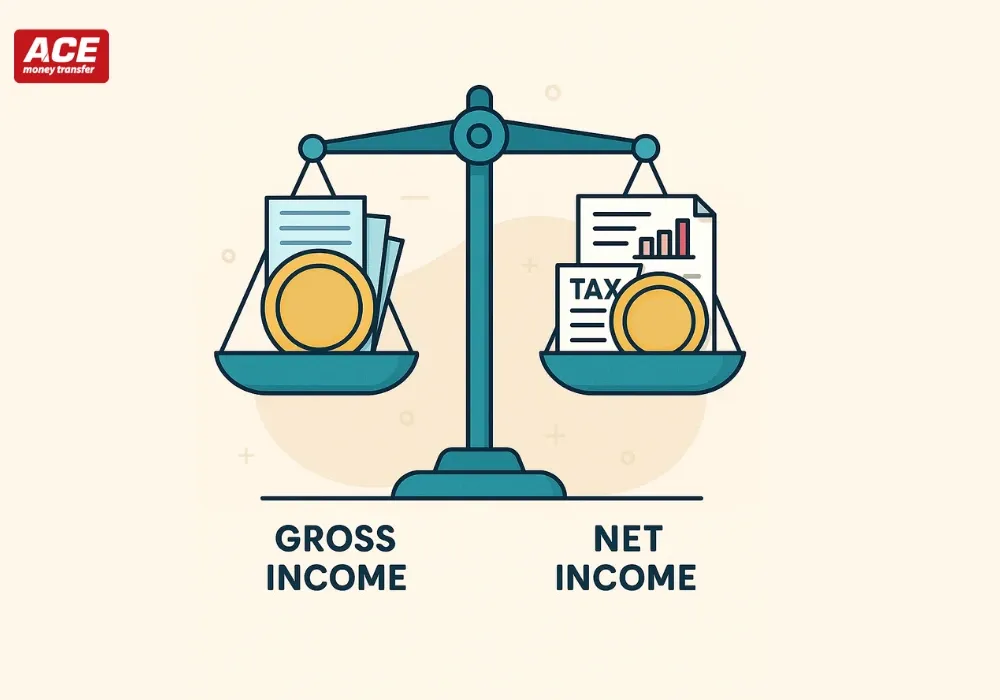
When you look at your payslip, you might notice two key numbers. One is bigger and looks exciting, while the other is smaller—the amount that actually lands in your bank account. People call these two figures gross income and net income. It is important to know the difference, especially when you budget, apply for loans, or send money online to your family abroad.
The difference between gross income and net income shapes how much you actually earn, how much you can spend, and how financial decisions affect your daily life.
Net income is the money you actually get to keep after deductions. Think of it as your “spendable income.” It is the figure you see in your bank account each month.
Common deductions include:
Example 1: If your gross salary is £2,500 per month in the UK, after taxes and deductions, your net income could be around £2,000.
Example 2: A freelancer in the US who earns $4,000 may only take home about $3,200 after paying income tax and Medicare.
Research Insight: As per April 2024, the average gross salary was £37,430, but net pay was lower after deductions.
Net income matters because it directly impacts your everyday life. It tells you how much money you can use for bills, groceries, savings, or sending money abroad.
The gap between gross and net income is not just a number—it has a real impact.
Budgeting
Loan and Mortgage Applications
That’s why expat workers should check both gross and net income before taking long-term loans like car finance, mortgages, or new credit cards.
You earn gross income before anyone deducts anything. It includes:
Example 1: If you earn €3,000 per month plus a €500 performance bonus, your gross income is €3,500.
Example 2: If a small business owner earns $60,000 in revenue, that full amount counts as gross income. Business expenses reduce the net income.
Gross income is important for:
When you look at your payslip, you’ll often see both figures.
For international workers, understanding these sections is even more important. It helps them plan how much money is available to save, spend, or send money online to their loved ones.
For people working abroad, the difference between gross and net income is critical. Gross tells you what you earn on paper. Net shows what truly reaches your bank account. That difference affects rent, food, transport, and remittances.
Want to learn more about personal income? Read our full guide: Understanding Personal Income.
The difference between gross and net income is more than numbers. It affects your lifestyle, savings, and financial decisions. Knowing how much you actually take home helps you budget better, borrow responsibly, and plan for the future.
The real power lies in understanding how gross and net income differ, because it decides how much money you can actually spend or save every month.
No matter if you are an employee, freelancer, or small business owner, understanding gross and net income is important. It helps you manage your money better and avoid surprises. For millions of expats worldwide, this knowledge makes money management and sending money home easier and more reliable.
For expats and overseas workers, the difference between gross and net income is not just about payslips—it directly shapes how much money they can save, invest, and send money online to support families abroad. Knowing gross and net income helps employees, freelancers, and small business owners plan better. It helps them avoid money stress and make smarter choices.
If you send money to India, Pakistan, Nigeria, Nepal, or other countries, it's important to understand the gap. This knowledge helps you transfer money online safely. It also helps you make wise decisions. It also helps you avoid hidden surprises.
Your employer takes out taxes, insurance, pensions, and other deductions before you receive your pay.
They usually check both, but net income is more important for measuring repayment ability.
No. Taxable income is used to calculate tax owed. Net income is what you keep after taxes and all deductions.
By using online salary calculators for their country, which show estimated take-home pay after tax.
Yes, any money you earn before expenses and taxes counts toward your gross income.