
ACE Money Transfer
ACE Money Transfer
18 Jul 2025
When a Moroccan worker crosses borders to earn in France, it’s not just a job—it’s a quiet promise to their family, a daily hustle wrapped in longing, and a mission powered by hope. For many migrant workers, sending money back home is more than a transaction—it’s an emotional lifeline.
While living away from home is tough, access to reliable money transfer services allows Moroccan workers in France to support their families efficiently and stay emotionally connected.
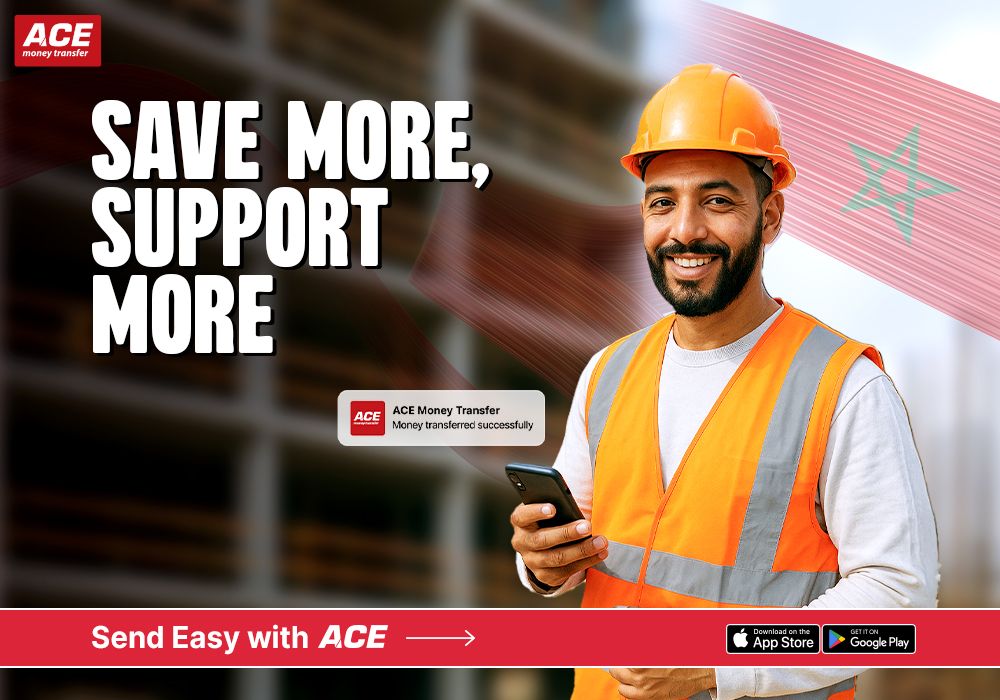
Every morning before sunrise, Yassine—a 33-year-old Moroccan father—laces up his worn work boots in a small apartment on the outskirts of Lyon. He sips a quick cup of mint tea, thinks of his wife and two kids back in Casablanca, and heads out to the construction site where he’s worked for the last two years. His hands are calloused, his French is basic, and his lunch is usually packed from the night before—but his purpose is crystal clear: send money to Morocco every month so his children can go to school and his mother can get her insulin.
Yassine’s story isn’t unique. It mirrors the reality of thousands of Moroccan workers in France—men and women who trade comfort for responsibility. They're not just building roads or cleaning offices; they're rebuilding futures, one euro at a time. The long hours, missed birthdays, and quiet dinners are balanced by the joy of knowing that their remittances are keeping the lights on and dreams alive back home.
According to the World Bank, remittances to Morocco hit MAD 117.7 billion in 2024, making up a vital part of the nation’s GDP. Many Moroccan workers take on roles in agriculture, hospitality, or construction. The pay isn't glamorous, and neither are the jobs, but they’re meaningful. For every transfer made, there’s a deep emotional reward: helping a younger sibling finish college, paying off the family’s mortgage, or simply buying fresh fruit for the kids.
With high living costs in France and limited earnings, Moroccan expats are always looking for ways to save every euro. The key is choosing a money transfer service that is both cost-effective and quick.
Here’s what most migrants consider before sending funds:
Many banks still charge hefty fees and have slower delivery times. Digital money transfer services are gaining popularity for offering instant bank transfer features, especially among young, tech-savvy Moroccans.
Sending money abroad might sound easy, but expats in France face multiple hurdles, especially first-timers:
Some platforms advertise zero fees but offer poor exchange rates. This results in recipients receiving less money.
Many traditional services take 2–3 business days, which is stressful during emergencies.
Older expats often struggle with mobile apps or French interfaces, making money transfer services difficult to navigate.
Not all services partner with local banks or cash pickup locations in rural areas, where many recipients live.
As of July 2025, digital remittance services dominate the market. Here’s a breakdown of the most popular ways Moroccans are sending money home:
Even in the face of homesickness, every successful remittance feels like a virtual hug sent across borders. For Moroccan expats in France, it’s not just about earning—it’s about giving, sharing, and staying connected.
While living away from home is tough, access to reliable money transfer services allows Moroccan workers in France to support their families efficiently and stay emotionally connected.
Whether you’re standing in a factory in Marseille or behind a counter in Lyon, every hard-earned euro has meaning—and with the right transfer service, it also has impact.
Instant bank transfer options through ACE Money Transfer offer one of the quick and most reliable methods to send money to Morocco instantly.
The money sent by expats to Morocco is often used by families for basic expenses. These include costs for food, health, and education.
Yes, if you choose a licensed and regulated provider with strong data protection, such as ACE Money Transfer. Your transactions will be safe.